
Ingrown toenail (onychocryptosis) is one of the most common conditions treated in a podiatry clinic. Although initially it manifests only as discomfort while walking or pressure in footwear, over time it can lead to severe inflammation, swelling, bacterial infection, the formation of granulation tissue, and significant limitation of daily activities.
At Ambasada Urody Clinic & Spa, we begin the treatment of ingrown toenails with a detailed diagnosis of the cause of the problem. This allows us to select a therapy that not only brings immediate relief but also reduces the risk of recurrence. Depending on the severity of the changes, we use modern podiatric methods, including specialized orthonyxia braces, tamponade, proper nail treatment, and individual care recommendations.
Our goal is to preserve the natural nail and restore its proper growth path, whenever possible.
WHY DOES A NAIL START TO GROW IN?
Nail ingrowth is rarely the result of a single cause. Most often, it is the result of the coexistence of several mechanical and anatomical factors.
The most common causes include:
- incorrect nail trimming by rounding the sides
- wearing too tight or narrow footwear
- foot and toe deformitiesgenetic predispositions regarding the shape of the nail plate
- pincer nails or severely curved nails
- mechanical nail injuriesintense sports activity
- excessive sweating of the feet
- chronic pressure during standing work
- disturbances in gait biomechanics
- deformities resulting from previous injuries or surgical procedures.
Identifying the actual cause is crucial for the effectiveness of treatment and limiting the risk of re-ingrowth.
WHAT DOES THE TREATMENT OF INGROWN TOENAILS INVOLVE?
Each case requires an individual assessment. There is no single method effective for all patients, therefore therapy is selected after a thorough examination of the nail, nail folds, and an assessment of foot biomechanics and factors contributing to recurrence.
During the visit, a podologist can perform:
- thorough diagnostics of the degree of nail ingrowth and assessment of inflammation
- safe treatment of the ingrown nail fragment
- cleaning the nail folds of remaining plate fragments
- removal of elements causing pressure and inflammation
- application of a specialized relieving tamponade
- application of preparations supporting regeneration and limiting the development of microorganisms
- selection of an appropriate orthonyxia brace straightening the nail growth path
- instruction on home care and prevention of recurrence.
In the case of extensive inflammation, granulation tissue, or severe infection, therapy can be divided into several stages. The priority is first to calm the inflammatory process, and then to permanently correct the direction of nail growth.
WHO IS INGROWN TOENAIL TREATMENT INTENDED FOR?
An ingrown nail can occur at virtually any age. The earlier appropriate therapy is implemented, the greater the chance of avoiding complications and surgical treatment.
Indications for a visit include, among others:
- nail pain during walking pain from footwear pressure
- redness of the nail fold
- swelling around the nail
- recurrent inflammation serous or purulent discharge
- bleeding of the nail area
- formation of granulation tissue
- chronically ingrown nail
- nail ingrowing after trauma
- recurring problem despite previous treatment
- ingrown nails in children and adolescents
- ingrown nails in physically active people
- prevention of recurrence after previous surgical treatment.
Quick consultation allows starting therapy at a stage when treatment is less invasive, shorter, and definitely more comfortable.
WHAT EFFECTS CAN BE EXPECTED AFTER TREATMENT OF AN INGROWN TOENAIL?
Professional treatment of an ingrown toenail aims not only to eliminate pain, but above all to eliminate the cause of the problem and restore proper nail growth. The effects of the therapy depend on the severity of the ingrowing, the presence of inflammation, the type of method used (e.g., an orthonyxia brace), the rate of nail growth, and adherence to the podologist's recommendations.
The most commonly observed effects of treating ingrown toenails are:
- immediate or rapid pain relief when walking and wearing footwear, thanks to the removal of pressure caused by the ingrown nail,
- reduction of inflammation of the nail folds, reduction of redness, swelling, and soreness of the tissues,
- healing of wounds and damaged tissues around the nail, and resolution of oozing and purulent lesions, if present,
- elimination of chronic skin irritation by the ingrowing edges of the nail,
- gradual correction of the nail growth path thanks to the use of an orthonyxia brace, which allows the nail to grow back in the correct direction,
- reducing the risk of recurrence of the ingrown nail by removing the cause of the problem and implementing appropriate prevention,
- regaining the comfort of walking, practicing sports, and daily activities without pain and discomfort,
- the possibility of wearing closed, also more fitted footwear, without the feeling of pressure and discomfort,
- improvement in the appearance of the nail and nail folds along with the progressive regeneration of tissues,
- reducing the risk of the need for surgical removal of the nail, especially when podological treatment is implemented early enough.
Many patients feel the first effects of treating an ingrown toenail already during the first visit, because removing the cause of the pressure brings quick relief. However, complete correction of the nail growth path requires time and regular follow-up visits. The nail grows on average about 1-2 mm per month, which is why full therapy can last from several months until the healthy plate completely grows back. The durability of the effects is also determined by correct nail trimming, properly selected footwear, elimination of factors favoring ingrowing, and regular preventive podological care.
CONTRAINDICATIONS FOR INGROWN TOENAIL TREATMENT
Most podiatric procedures can be performed safely, however, the course of action depends on the patient's current state of health.
Relative contraindications include:
- uncontrolled diabetes with serious complications
- severe blood clotting disorders
- acute infections requiring systemic treatment
- extensive tissue damage requiring surgical consultation
- certain cancers during intensive treatment (individual qualification).
Each case is assessed individually during a consultation.
RECOMMENDATIONS AFTER INGROWN TOENAIL PROCEDURE
Proper post-treatment care significantly affects the healing rate and the effectiveness of the entire therapy.
We most commonly recommend:
- keeping the nail area clean
- using preparations recommended by the podologist
- protecting the nail from injuries
- wearing comfortable footwear with a wide toe box
- limiting excessive pressure on the treated toe
- regular follow-up visits
- not removing the brace or tamponade on your own
- cutting nails in accordance with the podologist's instructions
- contacting the clinic in case of increased pain, swelling, or the appearance of discharge.
Regular follow-up allows monitoring the nail straightening process and modifying the therapy if necessary.
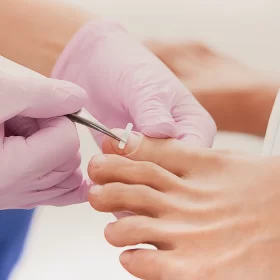
Clamps to correct ingrown nails have been known for over 60 years. They fix the diseased nails by flattening the nail plate or changing the track of the nail’s growth. Properly prepared staples in several sizes adapts to the shape of the nail.
 Main effects: nail shape correction, stabilization of growth direction.
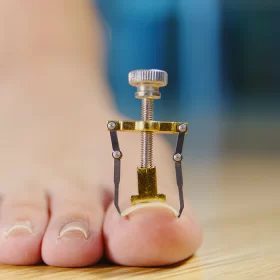
As many as 15% of the population suffer from ingrown nails. Arkada’s Cube has become increasingly popular among patients suffering from this disease because it allows for complete cure and gest rid of the annoying discomfort. The client’s health and satisfaction is in the eyes of the creator of this tool, the best proof that Arcade’s cube is an absolute revolution in the treatment of ingrown nails.
Main effects: non-invasive treatment correcting the shape of the nail.

Just a few years ago, many patients associated an ingrown toenail primarily with a painful surgical procedure. Today, the possibilities of podiatry are much greater. In most cases, we can help effectively by using modern, conservative treatment methods that allow us to gradually restore proper nail growth, while ensuring patient comfort during the entire therapy process.
What I always emphasize to my patients is the fact that the treatment of an ingrown toenail does not end the moment the pain subsides. We achieve true success when the nail starts to grow properly and the problem does not return after a few months. That is why I attach such great importance to regular monitoring of the effects of therapy and education on proper foot care. Even the best procedure will not replace conscious prevention.
In my work, the most important thing is combining effectiveness with an individual approach. Every patient has a different story, different causes of the problem, and different expectations, which is why there is no single treatment plan suitable for everyone. It is this comprehensive approach that allows us to achieve lasting results and ensures that patients regain not only the comfort of walking, but also the confidence that their problem has been resolved at its source.
DOES AN INGROWN TOENAIL ALWAYS REQUIRE A SURGICAL PROCEDURE?
No. In the vast majority of cases, an ingrown toenail can be effectively treated with podiatric methods, without the need for surgical removal of a fragment or the entire nail plate. However, consulting a podiatrist early enough is crucial. The earlier the treatment of an ingrown toenail is started, the greater the chance of quickly controlling the inflammation, relieving pain, and preserving the natural nail.
Modern podiatry uses effective, minimally invasive treatment methods, such as specialized nail treatment, tamponade, and orthonyxia braces, which gradually correct the growth path of the nail plate. Surgical treatment is considered primarily in very advanced or recurrent cases, or when previous conservative methods have not brought the expected results. Therefore, in most situations, a visit to a podiatrist is the first and most important stage of effective ingrown toenail treatment.
DOES PUTTING A BRACE ON AN INGROWN TOENAIL HURT?
The application of an orthonyxia brace is a minimally invasive procedure and in most cases well-tolerated by patients. The attachment of the brace itself does not require disrupting the nail plate or making incisions, so there is usually no need for anesthesia. On the contrary – many patients feel significant relief immediately after the procedure, because the brace gently lifts the edges of the ingrown nail and reduces pressure on the nail folds.
If severe inflammation, swelling, or granulation tissue is present before the visit, the first stage of treatment is to reduce the inflammation and relieve pressure on the painful tissues. Thanks to this, further therapy is much more comfortable. The type of brace is always selected individually to match the shape of the nail, the degree of its deformity, and the severity of the problem.
HOW LONG DOES INGROWN TOENAIL TREATMENT LAST?
The duration of treatment for an ingrown toenail depends on many factors, including the degree of nail plate deformity, the presence of inflammation, the rate of nail growth, and the chosen method of therapy.
In most cases, the first effects in the form of pain reduction appear already during the first visit or within a few days from the start of treatment.
However, complete correction of the nail growth direction requires patience. Nails grow relatively slowly – on average about 1–2 mm per month – therefore, therapy using an orthonyxia brace can last from several months until the healthy plate completely regrows. Regular follow-up visits allow monitoring of treatment progress and modifying the therapy if necessary.
CAN AN INGROWN TOENAIL RETURN?
An ingrown nail can recur if the cause of the problem is not eliminated. The most common factors contributing to recurrence include improper nail trimming, wearing footwear that is too tight, foot deformities, mechanical injuries, and individual predispositions related to the structure of the nail plate.
Professional podiatric treatment is not limited solely to eliminating pain. A podologist assesses the cause of the ingrown nail, selects the appropriate method of therapy, and provides recommendations regarding daily care and prevention. Compliance with these recommendations and regular follow-up visits significantly reduce the risk of the problem recurring and help maintain the correct growth path of the nail.
CAN YOU PLAY SPORTS WITH AN INGROWN TOENAIL?
In many cases yes, however, the ability to return to physical activity depends on the severity of the changes and the type of sport practiced. Intense running, team sports, or disciplines requiring a heavy load on the feet can aggravate symptoms and hinder healing, especially if inflammation is present.
After a podiatric procedure or the application of an orthonyxia brace, most patients can return to daily activities relatively quickly. In the first days, however, it is recommended to limit excessive loading of the treated toe and to wear comfortable footwear. During the visit, the podologist determines when a safe return to training is possible and how to reduce the risk of the nail ingrowing again.
CAN AN INGROWN TOENAIL BE CURED WITH HOME REMEDIES?
Home remedies can bring temporary relief at a very early stage of the problem, however, they do not eliminate the cause of the ingrown toenail. Cutting the sides of the nail yourself, prying up its edges, or using sharp tools often leads to deepening of the injury, increased inflammation, and increases the risk of infection.
If pain, redness, swelling, or discharge appears, it is worth consulting a podologist as soon as possible. Appropriately early implementation of ingrown toenail treatment usually allows to avoid more advanced therapy methods and significantly shortens the time needed to completely resolve the problem.
WHEN SHOULD YOU GO TO A PODIATRIST WITH AN INGROWN TOENAIL?
It is worth scheduling an appointment with a podiatrist at the very first symptoms of an ingrown toenail. Warning signs include pain when walking, redness of the nail fold, swelling, sensitivity to touch, and discomfort when wearing footwear. Over time, discharge, inflammation, granulation tissue, or infection may also appear.
The earlier the treatment of an ingrown toenail begins, the greater the chance of quickly resolving the problem using conservative methods. Early intervention helps limit the development of inflammation, reduce the risk of complications, and avoid surgical treatment. Therefore, it is not worth waiting until the pain becomes so severe that it hinders daily functioning.
IS AN INGROWN TOENAIL DANGEROUS?
An ingrown toenail may initially cause only minor discomfort, but left untreated, it often leads to much more serious problems. As the edge of the nail digs deeper and deeper into the nail fold, skin damage and the development of inflammation occur. Pain, swelling, redness, as well as difficulty walking and wearing footwear appear.
In advanced cases, bacterial infection, abscess formation, and so-called granulation tissue, which is excessively overgrowing inflammatory tissue around the nail, may occur. Particular caution should be exercised by people suffering from diabetes, circulatory disorders, or reduced immunity, as even minor skin damage can heal slower in their case and increase the risk of complications. Early treatment of an ingrown toenail by a podiatrist usually allows for quick management of the problem and prevents its further development.
CAN AN INGROWN NAIL CAUSE INFLAMMATION AND SUPPURATION?
Yes. Inflammation is one of the most common consequences of an ingrown toenail. When the edge of the nail plate damages the skin of the nail fold, the continuity of the tissues is disrupted. The resulting wound becomes a site through which bacteria naturally living on the skin can penetrate into the tissues, leading to the development of an infection.
The symptoms of inflammation are pain, redness, swelling, increased warmth around the nail area, and difficulty walking. In more advanced cases, purulent discharge, bleeding, and granulation tissue, which is excessively growing inflammatory tissue, may appear. The longer the problem remains untreated, the greater the risk of worsening changes and more complex treatment. That is why it is not worth waiting for the symptoms to subside on their own. Early podiatric consultation helps to inhibit the development of inflammation, reduce pain, and start effective treatment of the ingrown toenail before more serious complications occur.