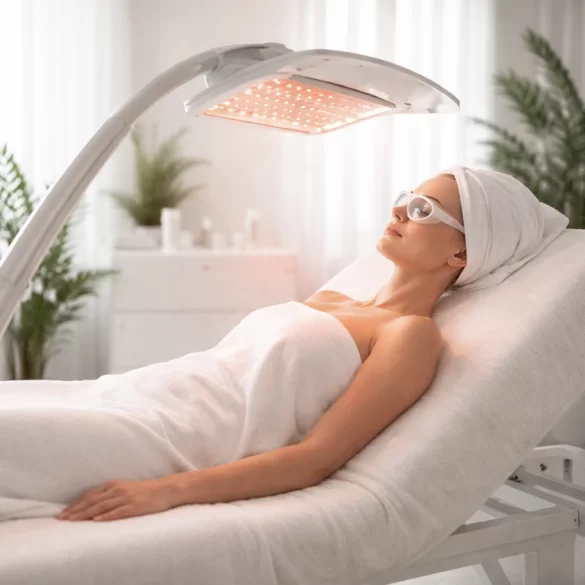
NIR (Near Infrared Radiation) is the range of electromagnetic radiation with a wavelength of approximately 700–1400 nm, used in aesthetic medicine, dermatology, and physiotherapy for controlled tissue heating. NIR energy penetrates through the epidermis and is absorbed in the deeper layers of the dermis, where it induces a thermal effect leading to the contraction of collagen fibers and stimulation of neocollagenesis (formation of new collagen). In clinical practice, this technology is used to improve skin tightness, reduce laxity, contour facial features, and support cellulite and skin sagging therapies. Treatments using NIR are considered non-ablative procedures, meaning there is no damage to the surface of the epidermis.
NIR - what is it
Near-infrared (NIR) is a part of the electromagnetic spectrum that lies just beyond visible light. Unlike UV radiation, it does not directly damage the DNA of cells but works through controlled heating of tissues.
In aesthetic medicine, the mechanism of NIR includes:
- Selective heating of the dermis to a temperature of approximately 40–45°C.
- Immediate shortening of collagen fibers (shrinkage effect).
- Activation of fibroblasts – the cells responsible for the synthesis of type I and III collagen.
- Stimulation of angiogenesis (the formation of new blood vessels).
- Improvement of microcirculation and tissue metabolism.
The biological effect depends on:
- wavelength,
- energy density (fluence),
- exposure time,
- epidermal cooling.
Unlike ablative lasers, NIR does not cause controlled damage to the epidermis but works deeper, inducing collagen remodeling without a recovery period. For this reason, it is classified as a non-ablative thermolifting procedure.
NIR - What the procedure looks like
The procedure utilizing near-infrared is an outpatient procedure and usually lasts from 20 to 60 minutes, depending on the treatment area.
Procedure Stages:
- Consultation and Medical Qualification
Assessment of skin laxity, subcutaneous tissue thickness, and exclusion of contraindications (e.g., pregnancy, active inflammation, cancer, metal implants in the treatment area).
- Skin Preparation
Cleansing and, if necessary, application of conductive gel.
- NIR Energy Application
The device's applicator is moved over the skin in a continuous or spot motion. The patient gradually feels increasing, deep warmth.
- Temperature Control
Modern systems are equipped with temperature sensors that prevent overheating of the epidermis.
- End of Procedure
The skin may be temporarily red (erythema usually lasting up to a few hours).
Immediate Effects:
- subtle skin tightening,
- improvement in elasticity,
- smoothing of fine wrinkles.
Delayed Effects (4–12 weeks):
- increased skin density,
- improved facial contour,
- reduction of laxity.
To achieve the full effect, a series of 3–5 treatments at intervals of 3–4 weeks is recommended.
NIR (Near-Infrared) – Treatments
NIR technology is used in various areas of aesthetic therapy:
1. Face Thermolifting
- improvement of facial contours,
- reduction of cheek laxity,
- tightening of neck and chin skin,
- smoothing of wrinkles.
2. Body Skin Firming
- post-pregnancy belly,
- arms,
- thighs,
- knee areas.
3. Combined Therapies
In clinical practice, NIR is often part of a combined therapy with:
- radiofrequency (RF),
- HIFU,
- mesotherapy,
- stimulating treatments (e.g., biostimulators).
The Beauty Embassy in Warsaw offers technologies utilizing deep, controlled tissue heating effects in procedures such as:
- ZAFFIRO and Deep IR (infrared IR lifting),
- microneedle radiofrequency (e.g., DeAge EX),
- Pellevé RF,
- face and body thermolifting treatments.
The proper selection of technology depends on:
- the biological age of the skin,
- the degree of laxity,
- the desired effect (lifting vs. tightening).
