Skin glycation
back to main page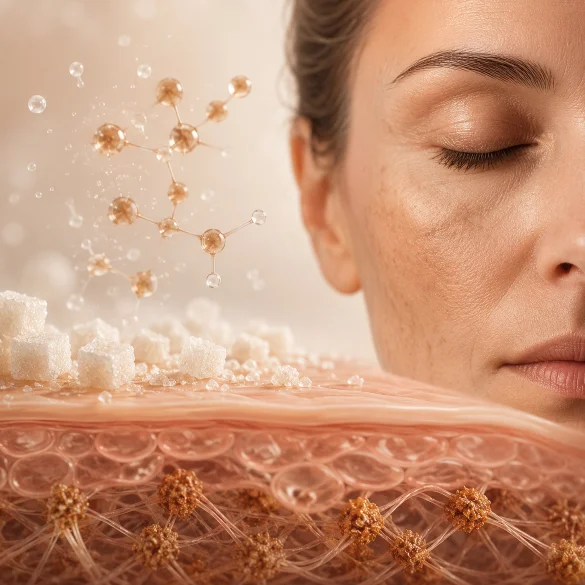
Skin glycation is a biochemical process involving the non-enzymatic binding of sugars with proteins, lipids, or nucleic acids in body tissues. Within the skin, this phenomenon primarily affects collagen and elastin fibers, which are responsible for the firmness, elasticity, and structural integrity of the skin. As a result of glycation, so-called advanced glycation end products (AGEs, Advanced Glycation End Products) are formed, which disrupt cellular function and accelerate aging processes. Glycation is currently recognized as one of the key mechanisms of intrinsic skin aging, alongside oxidative stress, chronic inflammation, and extracellular matrix degradation.
Skin glycation - what it is
The glycation process occurs spontaneously in the body and does not require the involvement of enzymes. It involves the permanent attachment of simple sugar molecules, mainly glucose and fructose, to structural skin proteins. Proteins with a long biological lifespan, especially type I and III collagen and elastin, are the most susceptible to glycation.
In the initial phase, unstable chemical compounds are formed, which over time transform into stable structures referred to as AGEs. These products accumulate in tissues with age and negatively affect the functioning of the skin.
Glycation leads to:
- loss of elasticity of collagen fibers,
- increased skin stiffness,
- deterioration of regenerative abilities,
- weakening of microcirculation,
- intensification of oxidative stress and inflammation.
This process occurs throughout the body, but in the skin, it has a particular aesthetic significance, as it directly affects facial appearance, tissue tension, and the rate at which signs of aging appear.
Skin glycation - how it proceeds
The glycation mechanism is multi-stage and develops gradually over the years. Initially, sugar molecules react with the amino groups of proteins, forming so-called Schiff bases. Subsequently, these structures are transformed into more stable intermediate products, and ultimately into advanced glycation end products.
AGEs form additional chemical cross-links between collagen fibers, which cause:
- skin stiffening,
- reduced elasticity,
- impaired collagen remodeling,
- disruption of fibroblast function.
Fibroblasts, i.e., the cells responsible for the production of collagen and elastin, lose their metabolic activity in an environment of intensified glycation. The skin regenerates less effectively, heals more slowly, and becomes more susceptible to damage.
Additionally, AGEs activate RAGE (Receptor for Advanced Glycation End Products) receptors, which intensify inflammatory processes and oxidative stress. This creates a self-perpetuating mechanism: the greater the glycation, the greater the cellular damage and the faster the tissue aging.
In clinical practice, the glycation process is associated with:
- deterioration of skin quality,
- loss of density,
- increased laxity,
- deepening of wrinkles,
- a sallow or yellowish skin tone.
Skin glycation - what accelerates it
Although glycation is a natural process associated with age, its rate can significantly increase under the influence of environmental and lifestyle factors. Chronically elevated blood glucose levels and a diet rich in simple sugars and highly processed products are of the greatest importance.
The most important factors accelerating glycation include:
Metabolic factors
- hyperglycemia,
- insulin resistance,
- type 2 diabetes,
- visceral obesity,
- chronic inflammation.
Nutritional factors
- excessive sugar consumption,
- a high-glycemic index diet,
- frequent consumption of sweets and sweetened beverages,
- fried and grilled food rich in exogenous AGEs.
AGEs are formed particularly intensively during high-temperature thermal food processing, especially during frying, baking, and grilling.
Environmental factors
- UV radiation,
- tobacco smoking,
- air pollution,
- chronic oxidative stress,
- lack of sleep.
Ultraviolet radiation additionally intensifies oxidative processes, which work together with glycation in the degradation of the skin's supporting fibers. Therefore, photoaging and glycation very often occur in parallel.
Skin glycation - impact on appearance and aging
Glycation affects not only the structure of the skin, but also its visual features. Skin with a high amount of AGEs products becomes less taut, thinner, and more dull. A loss of natural radiance and the appearance of a grayish-yellow skin tone are also characteristic.
The most common aesthetic symptoms associated with glycation include:
- loss of firmness,
- deepening of wrinkles,
- increased laxity,
- sagging of the facial oval,
- reduced elasticity,
- deterioration of skin quality after weight loss.
Collagen fibers damaged by glycation become brittle and stiff, making the skin respond worse to natural regenerative processes and rejuvenating procedures. In practice, this means slower tissue reconstruction after aesthetic treatments and a reduced ability of the skin to regain tightness.
The glycation process also plays an important role in phenomena such as:
- gravitational aging of the face,
- loss of volume,
- skin laxity after weight loss,
- “Ozempic face” associated with rapid loss of adipose tissue.
In aesthetic medicine, it is observed that patients with increased metabolic stress often exhibit faster biological skin aging than their chronological age would indicate.
Skin glycation - can it be inhibited?
Completely stopping glycation is not possible, as it is a natural element of the metabolism and aging of the body. However, it is possible to significantly slow down its course through appropriate preventive and therapeutic measures.
Of the greatest importance are:
- stabilization of glucose-insulin balance,
- a low glycemic index diet,
- limiting simple sugars,
- reduction of chronic inflammation,
- sun protection,
- physical activity,
- an adequate amount of sleep.
In dermatology and aesthetic medicine, procedures supporting skin reconstruction and fibroblast stimulation are also used. The most commonly used include:
- regenerative mesotherapy,
- tissue biostimulators,
- microneedle radiofrequency,
- fractional laser therapy,
- therapies stimulating neocollagenesis,
- treatments improving microcirculation and skin metabolism.
Substances with antioxidant and anti-glycation effects are also important, including:
- vitamin C,
- carnosine,
- alpha-lipoic acid,
- resveratrol,
- polyphenols,
- retinoids.
Modern aesthetic medicine increasingly treats glycation as one of the key mechanisms of biological skin aging, requiring simultaneous metabolic, dermatological, and regenerative action.

