
Fillers are one of the most effective methods for restoring a youthful, harmonious appearance to the face, as well as correcting wrinkles and volume deficits. These are substances injected intradermally or subcutaneously, which, by lifting and shaping the skin surface, allow for smoothing out folds, wrinkles, and precise contouring of the face. Depending on the chosen technique and filler, the effects can be immediately visible or gradually increase as a result of stimulating regenerative processes and collagen production.
Thanks to a wide selection of available solutions - from classic fillers based on hyaluronic acid, through hybrid preparations, to advanced volumetric lifting techniques - it is possible to achieve both very natural, subtle effects and more pronounced rejuvenation and facial contouring results. Each treatment is individually tailored to the patient's needs, and a properly chosen method allows for safe and precise restoration of youthful firmness and a fresh, rested appearance to the skin.
THE SECRET OF THE V-EFFECT - NATURAL ARCHITECTURE OF A YOUTHFUL FACE
A young face is V-shaped, the younger the face is, the firmer the skin is, the contours are clearer and the face is symmetrical. With age, the V shape is reversed. No matter how good our genes are, all skin types eventually lose their elasticity. The proportions change, the volume decreases. The cheeks are drooping, the chin is sagging, and the face oval widens downwards. Consequence: the symmetrical V shape turns around, and our age is more and more visible on the face, no matter how young we feel.
The V effect is the improvement of skin volume for a youthful appearance of the face. In addition to reducing individual wrinkles, the face needs to regain its volume. With the appropriate treatments, the face will obtain the optimal V shape and wrinkles will be naturally reduced.
WHO ARE FILLERS FOR AND WHEN TO USE THEM?
Treatments using fillers are one of the pillars of modern aesthetic medicine, as they allow for simultaneous action on the level of facial structure and skin quality. The contemporary therapeutic approach is moving away from spot "wrinkle filling" towards comprehensive work with the aging process – its causes, and not just the symptoms. An individual facial analysis is of key importance here, including an assessment of volume, tissue tension, skin quality, and proportions.
In practice, this means that fillers are used in a very wide spectrum of indications – both as an element of anti-aging prophylaxis and advanced rejuvenation and modeling therapy.
Treatments are particularly recommended in the case of:
- the appearance of static wrinkles and fixed furrows – such as nasolabial folds or marionette lines, which result from the loss of tissue support
- gradual loss of volume in the cheeks, temples, and midface – leading to a change in proportions and a "tired" appearance
- sagging of the facial oval and disturbance of its contour – resulting from gravity and the weakening of support structures
- skin laxity and a decrease in its density – especially in the case of thin and aging skin
- the presence of shadows and hollows in the eye area (tear trough) – which give the face a sad or exhausted expression
- the need to improve the proportions and harmony of facial features – including modeling of the chin, jawline, or lips
- facial asymmetry – both congenital and resulting from aging processes
- the first signs of aging – as a preventive measure, slowing down tissue degradation
- deterioration of skin quality – dehydration, loss of elasticity and healthy tone
It is worth emphasizing that fillers are used both in younger people who expect a subtle enhancement of natural features, and in patients with more advanced changes requiring reconstruction of the facial structure. Properly planned therapy allows for multi-level action – restoring balance, proportions, and freshness to the face, without an artificial effect.
EFFECTS OF FILLER TREATMENTS
The effects of filler therapy result from a combination of mechanical action (volume replenishment and tissue support) and biological action (stimulation of regenerative processes). This makes it possible to achieve results that not only improve appearance but also have a real impact on skin condition and facial structure.
Results are visible relatively quickly; however, their full potential reveals itself over time – especially in the case of preparations with biostimulating effects.
Patients observe:
- clear smoothing of wrinkles and furrows – through the restoration of volume and rebuilding of support for soft tissues
- improvement of the facial oval – lifting of sagging structures and restoration of a distinct contour
- restoration of volume in the mid-face area – which translates into younger, more harmonious proportions
- modeling of facial features – including precise definition of the jawline, chin projection, and lip shape
- increased skin tension and firmness – particularly with the use of fillers with biostimulating effects
- reduction of dark circles and hollows under the eyes – providing the effect of a rested, fresh look
- improvement of skin quality – its hydration, elasticity, and structure
- correction of asymmetry and improvement of facial proportions – subtly, without over-exaggeration
- a natural rejuvenation effect – the face looks younger while maintaining its identity and individual features
Properly selected and administered fillers allow for an effect that is consistent with facial anatomy and the patient's individual beauty. It is precise qualification, the doctor's experience, and a strategic approach to therapy that determine whether the result will be elegant, natural, and long-lasting.
SELECTION OF PREPARATIONS FOR SKIN NEEDS AND FACIAL STRUCTURE – THE BASIS FOR NATURAL, HARMONIOUS RESULTS
Selecting the appropriate preparation for wrinkle filling and facial modeling is a key stage of therapy planning and directly determines the quality and longevity of the results. In clinical practice, there is no single „universal” filler – each of them performs a specific function: it can restore volume, stimulate the skin to regenerate, or improve its hydration and elasticity. Proper qualification is based on the analysis of the degree of advancement of aging processes, tissue condition, and the expected aesthetic result. The following summary organizes the choice of preparations in a clear and substantive manner, making it easier to understand when and why we use specific solutions.
|
Type of preparation |
When to use (indications) |
Treatment areas |
Main therapeutic effect |
Nature of action |
|---|---|---|---|---|
|
Hybrid fillers (calcium hydroxylapatite, polylactic acid, PLLA + HA) |
- skin laxity - loss of firmness and density - sagging facial oval - advanced signs of aging - need for a natural effect without excessive volume |
- facial oval - cheeks - jawline - neck |
- skin densification - improvement of tension - biological lifting |
collagen biostimulation + gradual tissue remodeling |
|
Hyaluronic acid – light (lowly cross-linked) |
- fine wrinkles - skin dehydration - first signs of aging |
- eye area - cheeks (superficial) - fine lines |
- smoothing - hydration - improvement of microstructure |
superficial action, integration with the skin |
|
Hyaluronic acid – medium (flexible) |
- moderate folds - marionette lines - lip modeling |
- nasolabial - folds - mouth area - lower face |
- smoothing of wrinkles - natural filling |
balance between elasticity and volume |
|
Hyaluronic acid – dense (volumetric / structural) |
- loss of volume - change in facial proportions - need for lifting |
- cheeks - chin - jawline - temples |
- volume restoration - contour improvement - lifting effect |
mechanical tissue support |
|
Autologous fillers (plasma, fibrin, plasma gel) |
- thin, demanding skin - anti-aging prevention - need for regeneration - sensitive areas |
- eye area - face - neck - cleavage |
- regeneration - skin quality improvement - subtle densification |
natural biostimulation and repair processes |
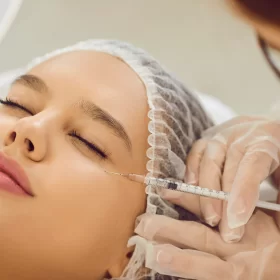
Hyaluronic acid is the most commonly used filler that immediately smoothes wrinkles, restores tissue volume, and improves facial contours, providing a natural rejuvenating effect. Thanks to its volumizing action, it effectively shapes the cheeks, temples, chin, and jawline, emphasizing facial proportions and improving skin appearance. In addition to its filling effect, hyaluronic acid stimulates the skin from within, encouraging skin regeneration. It increases tissue density, moisture, and elasticity, making the skin firmer, tighter, nourished, and radiant. The effects last from several months to a year, and the procedure is safe, quick, and requires no downtime.
 Main effects: smoothing wrinkles, face shape correction, modeling.
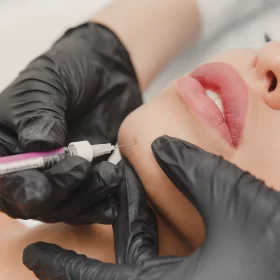
Hybrid fillers are innovative preparations that combine immediate filling effect with long-term skin regeneration. By combining hyaluronic acid and biostimulators, the treatment not only restores volume and improves facial contours but also stimulates the skin for intensive regeneration. Hybrid fillers sculpt cheeks, temples, jawline, and chin, providing a natural rejuvenating effect. Additionally, they stimulate collagen production, improving skin firmness, elasticity, and hydration. The effects are long-lasting and can last for several months, ensuring comprehensive improvement in skin condition.
Main effects: correction of wrinkles and folds, stimulation of natural collagen, reshaping and rejuvenation of the face.
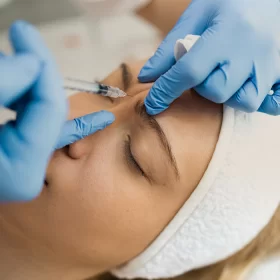
A modern and biologically compatible alternative to traditional volumetric preparations. Treatments complement volume deficiencies, sculpt facial features, and stimulate skin for deep regeneration, promoting collagen production and improving tissue density. They contain natural growth factors and repair properties that contribute to improving skin structure, firmness, and elasticity. The procedure is performed by a doctor and results in a very natural, gradual rejuvenation effect. Autologous fillers are an ideal solution for individuals seeking harmonious improvement in appearance coupled with long-term regenerative effects.
Main effects: natural volume, deep regeneration and improved skin firmness, collagen stimulation, healthy, rejuvenated look.
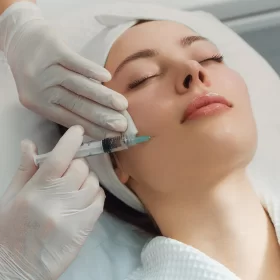
Lipofilling, also known as autologous fat grafting, is a modern method that uses one's own fatty tissue for facial lifting, shaping, and filling in skin defects. The procedure allows for the elimination of under-eye shadows, correction of wrinkles, filling in sunken areas, and improvement of facial contour, providing a natural rejuvenating effect. Fat rich in stem cells can also be used for lip augmentation, breast enhancement, and body contouring, improving its proportions. The effects of the procedure are long-lasting, and the skin becomes more tight, firm, and elastic due to the stimulation of regenerative processes.
Main effects: tighter, firmer, and more elastic skin thanks to the stimulation of regenerative processes.
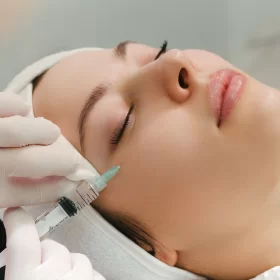
Volumetric lifting is an advanced method of replenishing deficits in subcutaneous tissue that lead to loss of volume and changes in facial contour with age. The procedure involves deep injection of cross-linked hyaluronic acid or calcium hydroxyapatite (Radiesse), which restore natural fullness and proportions to the face. Thanks to precise filler application, it is possible to rebuild volume in areas most prone to fat tissue loss, such as cheeks, temples, jawline, and chin. The result is a tighter, lifted, and harmonious face, maintaining a natural look and the distinctiveness of facial features.
Main effects: three-dimensional rejuvenation and restoration of natural facial proportions, natural appearance and definition of features.
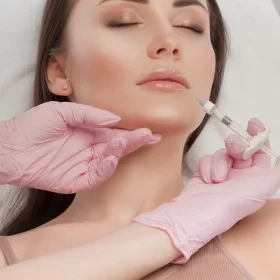
V-lifting is an innovative method of shaping the facial contour, improving skin tension, and reducing facial and neck wrinkles, allowing for the characteristic "V" effect - a slimmer and more defined jawline as well as lifted cheeks. The procedure involves the precise injection of hyaluronic acid or calcium hydroxyapatite following a vector technique, along the natural tension lines of the skin. This method allows for effective tissue lifting, restoration of volume, and improvement of facial contours, while also stimulating skin regeneration and collagen production. With V-lifting, the skin becomes firmer, tighter, and more hydrated, giving the face a youthful, harmonious appearance with a natural "V" effect.
Main effects: precise facial contouring, skin tightening, and reduction of wrinkles on the face and neck.
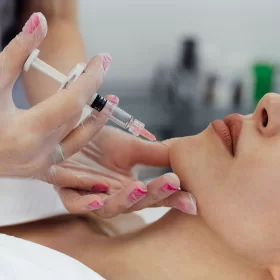
Modeling the jawline aims to improve the proportions and symmetry of the face, as well as to emphasize the lower part of the face. This procedure can be performed using specially adapted fillers (Texan Lift) and by using botulinum toxin (Nefertiti Lift) to reduce muscle volume and achieve a more symmetrical facial appearance.
Main effects: more prominent jawline, changes in facial proportions, smaller chin, and a sleeker, slightly elongated neck.

Filling the tear trough is an effective method of reducing shadows, hollows, and signs of fatigue around the eyes that result from loss of volume and skin sagging. The procedure involves precise injection of hyaluronic acid, which fills in tissue depressions, improves skin tension, and intensely moisturizes the delicate area under the eyes. In some cases, filling the tear trough can be combined with the use of tissue stimulators, which additionally stimulate collagen production and improve skin quality. This combination allows for achieving a natural effect of a rested, radiant look and reducing signs of aging and fatigue.
Main effects: rested face effect, improvement of skin tension and intense skin hydration, reduction of dark circles, hollows, and signs of fatigue around the eyes.
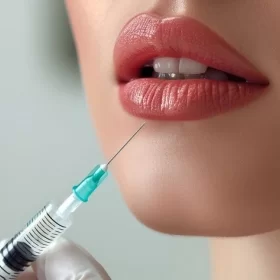
Lip augmentation, shaping, and moisturizing treatments are recommended for individuals who notice issues with lips that are too small, asymmetrical, or lacking volume. As we age, there is a loss of natural hyaluronic acid, leading to the appearance of wrinkles, dryness, loss of firmness, and a decrease in the distinct contour of the lips. By using fillers based on hyaluronic acid, it is possible not only to increase lip volume but also to revitalize them, improve their shape, and emphasize the contour. The result of the treatment is fuller, moisturized, and firm lips that maintain a natural appearance and harmony with facial features.
Main effects: fuller and more defined lips, improvement of symmetry and shape of the lips, moisturizing of the lips and the skin around them.

Buttocks contouring procedures with hyaluronic acid and polylactic acid are minimally invasive methods that allow for increasing volume, firming, and improving the shape of the buttocks without the need for implants or surgical intervention. Hyaluronic acid acts as a filler, immediately giving the buttocks a fuller and more proportional appearance while improving skin hydration and elasticity. Polylactic acid acts as a bio stimulator, stimulating collagen production, which gradually densifies and firms the skin, providing a natural and long-lasting lifting effect. Thanks to these procedures, the buttocks become firmer, lifted, and fuller, while maintaining the natural proportions of the silhouette.
Main effects: skin filling effect, rebuilding effect, restoration of skin density and firmness, reduction of cellulite.