Actinic keratosis
back to main page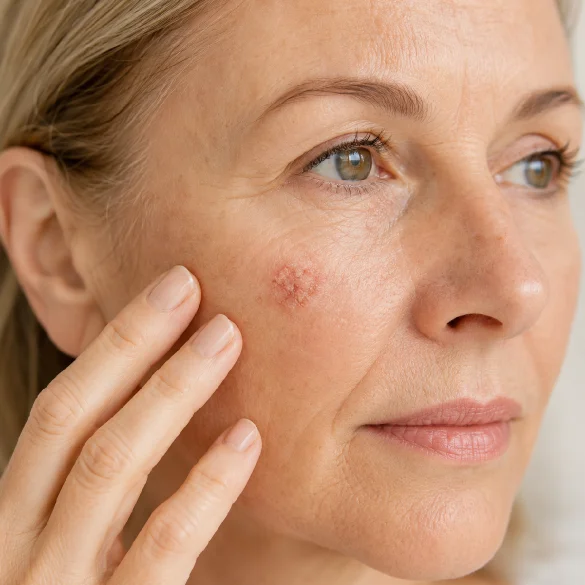
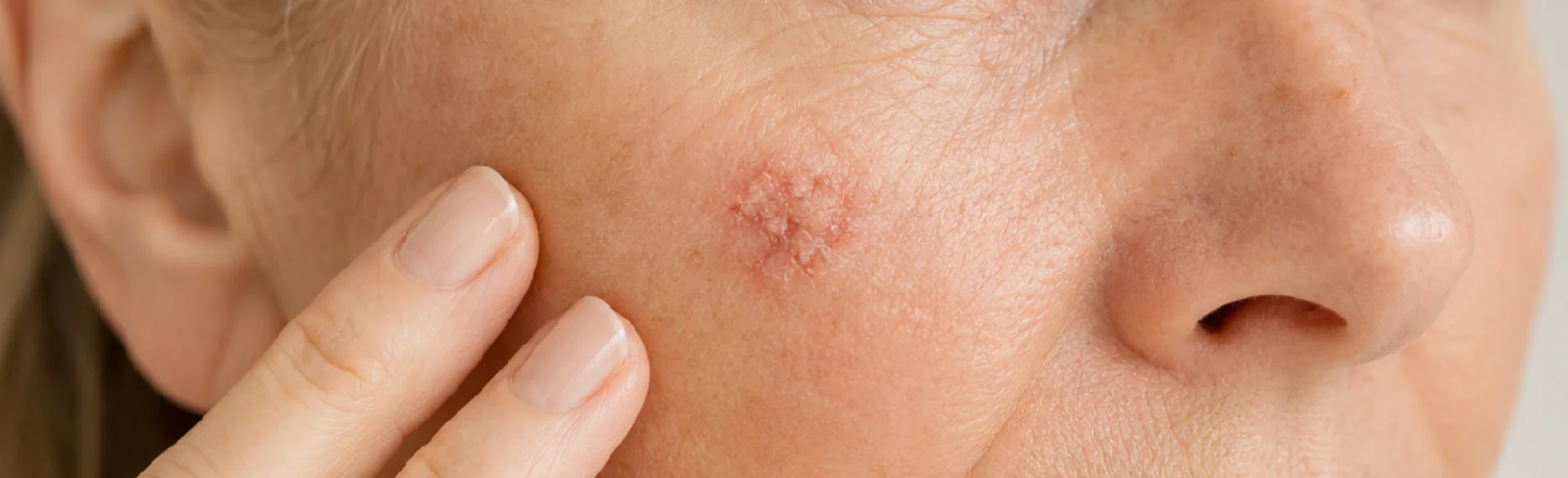
Actinic keratosis (keratosis actinica, actinic keratosis, AK) is chronic damage to the epidermis caused by long-term exposure to ultraviolet (UV) radiation. It is one of the most frequently diagnosed precancerous skin lesions and indicates an accumulation of DNA damage in epidermal cells. It most commonly develops in people over 40–50 years of age, although it can also occur earlier in individuals intensively exposed to the sun or using tanning beds.
The lesions appear primarily on areas constantly exposed to UV radiation: the face, ears, scalp in balding individuals, neck, décolletage, forearms, and the backs of the hands. In many cases, actinic keratosis is a component of the so-called field cancerization, which is a vast area of skin with numerous microdamages and precancerous lesions, some of which may still be invisible to the naked eye.
Although a single lesion develops slowly, each one requires dermatological evaluation. Modern dermatology treats actinic keratosis as a lesion with the potential for malignant transformation, therefore sufficiently early treatment makes it possible to effectively limit the risk of developing squamous cell carcinoma of the skin.
Actinic keratosis - what it looks like
Diagnosing actinic keratosis can be more difficult than it might seem. In the initial period, the lesions are often more palpable under the finger than visible. Patients describe them as rough spots resembling fine sandpaper or a slight roughness of the skin.
Typical features of actinic keratosis include:
- small, well- or poorly-defined lesions ranging in diameter from a few millimeters to a few centimeters,
- a rough, keratinized surface,
- flaking skin,
- red, pink, brown, or skin-colored coloration,
- hard, adherent scales,
- a feeling of roughness when touched,
- periodic burning, tenderness, or itching,
- a tendency to persist for many months.
Most common locations of the lesions:
- forehead,
- cheeks,
- nose,
- temples,
- auricles,
- scalp in people with alopecia,
- lower lip (actinic cheilitis),
- neck,
- décolletage,
- backs of the hands,
- forearms.
In more advanced cases, the lesions can take the form of thick, heavily keratinized lesions, or even form a so-called cutaneous horn. This type of presentation requires particularly thorough diagnostics, as the risk of cancer is higher.
Actinic keratosis - how it differs from dry skin
One of the most common reasons for delayed diagnosis is confusing actinic keratosis with dry skin. Both conditions can cause scaling and roughness, however, their cause and clinical significance are completely different.
Dry skin
Dry skin results primarily from disruptions of the hydrolipid barrier and a deficiency of lipids and water in the epidermis.
The following are most commonly observed:
- diffuse dryness,
- fine scaling,
- a feeling of tightness,
- improvement after the use of moisturizers and emollients,
- absence of a clearly defined lesion.
Actinic keratosis
In the case of actinic keratosis, abnormal proliferation of keratinocytes damaged by UV radiation occurs.
Typical features include:
- a single or multiple distinct lesions,
- persistent roughness despite skincare,
- presence of hard scales,
- location on chronically sun-exposed skin,
- slow enlargement of the lesion.
If a rough spot persists for many weeks despite proper skincare or gradually enlarges, a dermatological consultation along with a dermoscopic examination is indicated.
Actinic keratosis - can it turn into cancer
Yes. Actinic keratosis is considered a precancerous lesion with a documented potential to transform into cutaneous squamous cell carcinoma (cSCC).
Not every lesion will become malignant, however, the presence of actinic keratosis indicates chronic skin damage by UV radiation and increases the overall risk of developing skin cancers.
A higher risk of transformation is indicated by, among others:
- rapid enlargement of the lesion,
- increasing thickening,
- ulceration,
- bleeding,
- pain,
- tissue infiltration,
- persistence despite treatment.
The risk of developing cancer also increases in individuals:
- with multiple lesions,
- after multiple sunburns,
- with a fair skin phototype,
- after organ transplants,
- undergoing immunosuppressive therapy,
- with chronic occupational exposure to UV radiation.
For this reason, current guidelines recommend treating most diagnosed lesions and regular dermatological monitoring of the entire area of damaged skin.
Actinic keratosis - laser treatment and cryosurgery
The treatment method is selected individually, depending on the number of lesions, their thickness, location, and the presence of a cancer field. The goal of therapy is the complete removal of abnormal cells and limiting the risk of developing skin cancer.
The most commonly used methods include:
Cryosurgery
Cryosurgery uses liquid nitrogen at a temperature of about -196°C.
During the procedure, the following occur:
- rapid freezing of cells,
- damage to cell membranes,
- destruction of pathological keratinocytes,
- gradual exfoliation of the lesion,
- regeneration of healthy epidermis.
The method works best for single, well-demarcated lesions.
Laser treatment
Selected ablative lasers, primarily the CO₂ laser and the Er:YAG laser, enable highly precise removal of the affected epidermis with minimal damage to surrounding tissues.
The benefits of laser treatment include:
- high precision of the procedure,
- the ability to control the depth of ablation,
- removal of irregularly shaped lesions,
- good healing quality,
- improvement of the structure of skin damaged by UV radiation,
- the possibility of treating multiple lesions during a single procedure.
In the case of an extensive area of skin damage, the doctor may also recommend topical treatment (e.g. with 5-fluorouracil, imiquimod, diclofenac, or tirbanibulin), medical peels, photodynamic therapy (PDT), or a combination of several methods, which increases the effectiveness of the treatment.
Regardless of the chosen therapy, daily photoprotection remains an essential element of management. The use of creams with a high SPF 50+ filter, avoiding intense sunlight, and regular dermatological check-ups significantly reduce the risk of new lesions appearing and the development of skin cancers. Thanks to early diagnosis and modern treatment methods, most cases of actinic keratosis can be effectively treated, maintaining the health and good condition of the skin.

