Oniomadeza
back to main page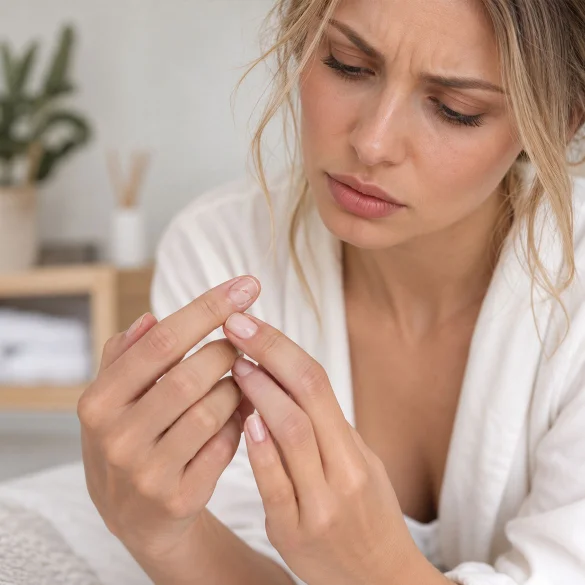
Onychomadesis, also referred to as nail shedding or peeling, is a disorder resulting from the temporary inhibition of nail matrix activity, which is the tissue responsible for producing the plate. The separation usually begins at the proximal part, located near the nail fold, and gradually leads to the lifting and loss of the old plate. Beneath it, a new nail is usually already developing. The condition may affect a single nail or multiple fingernails and toenails. Onychomadesis can be the result of trauma, infection, severe systemic disease, or the effects of medications. The detachment of the nail itself is a symptom; therefore, management involves assessing the cause, protecting the exposed nail bed, and monitoring the proper regrowth of the plate.
Onychomadesis - why does the nail fall off
The nail plate is formed mainly in the matrix located under the proximal nail fold. Rapidly dividing matrix cells differentiate into a hard, compact keratin structure. A severe disease or traumatic trigger can inhibit this process for several weeks. A shorter and partial limitation of matrix activity leads to the formation of a transverse Beau's line. Complete arrest of nail plate production causes a loss of its continuity and the development of onychomadesis.
The most important causes include:
- mechanical trauma, including impact, crushing, intensive manicure or pedicure, tight footwear, and repetitive stress during running;
- infectious diseases, particularly hand, foot, and mouth disease caused by enteroviruses; nail changes may appear several weeks after the fever and rash have resolved;
- local inflammation, paronychia, and inflammation of the nail folds;
- severe systemic diseases, associated with high fever, significant metabolic stress, or impaired blood circulation;
- dermatological and autoimmune diseases, including nail psoriasis, lichen planus, alopecia areata, and pemphigus;
- medications, especially chemotherapeutic agents, selected antiepileptic drugs, retinoids, and other substances affecting rapidly dividing cells;
- nutritional disorders and deficiencies, which require confirmation by laboratory tests;
- idiopathic, familial, or recurrent forms, in which the direct causative factor remains difficult to determine.
Changes involving several nails simultaneously more often indicate a prior systemic factor. Involvement of a single nail is more likely indicative of local trauma, pressure from footwear, or inflammation of the surrounding tissue.
Onychomadesis - what does it look like
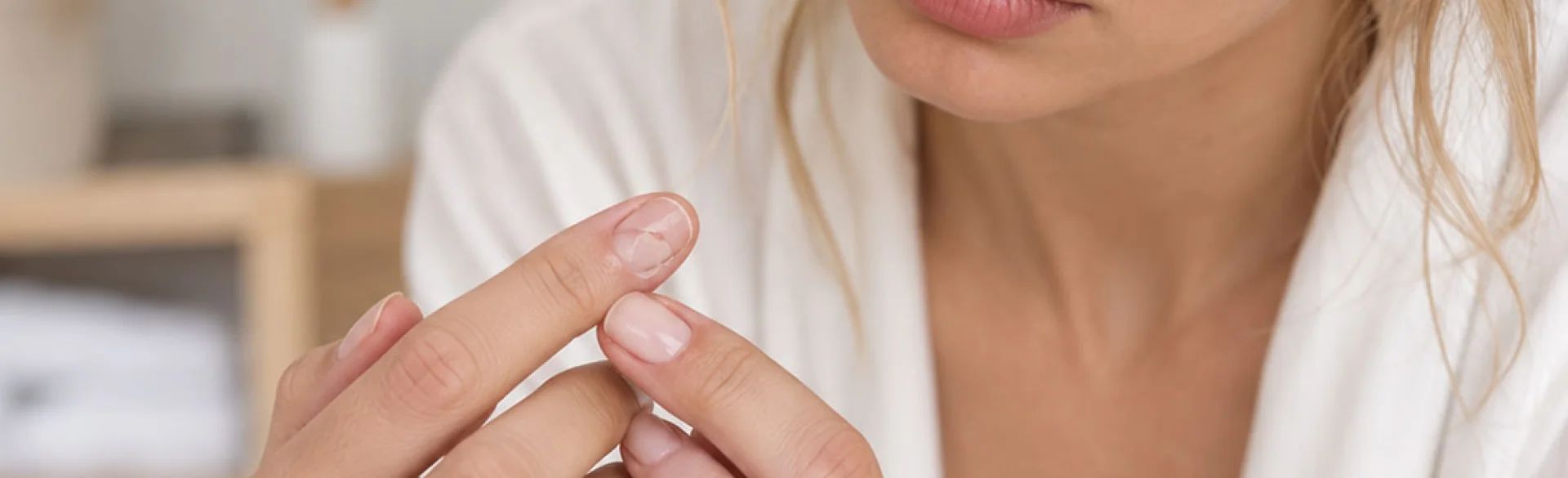
A typical symptom is transverse separation of the nail plate from the matrix in the portion closest to the skin. A new, thin plate appears beneath the proximal edge of the old nail, which pushes the previous one toward the end of the digit as it grows. A distinct step, gap, or arrangement of two overlapping plates may be visible. The old part gradually loses stability, lifts up, and is shed.
Uncomplicated onychomadesis is usually painless. Symptoms more often occur after trauma, under pressure from a loose nail plate, with inflammation of the nail folds, or with the development of granulation tissue. The exposed nail bed is delicate, pink, and more susceptible to damage.
Diagnosis is primarily based on examination of the nail and analysis of events from previous weeks and months. A doctor or podiatrist evaluates, among other things:
- the number of affected nails;
- the direction and level of plate separation;
- the presence of pain, redness, swelling, or discharge;
- past infections and febrile episodes;
- medications used;
- trauma, athletic activity, and type of footwear;
- features of fungal infection, psoriasis, retronychia, or onycholysis.
Onychomycosis can resemble part of the clinical picture, but it requires confirmation by mycological testing. Material is collected for direct examination, culture, histopathological evaluation, or molecular testing. This avoids initiating antifungal treatment for a lesion resulting solely from the arrest of matrix activity.
Urgent consultation is required for worsening pain, swelling, pus, bleeding, fever, dark irregular discoloration, and impaired healing in individuals with diabetes, limb ischemia, or immunocompromise.
Onychomadesis - will the nail grow back
In most cases, the nail plate regrows because onychomadesis results from a temporary inhibition of matrix activity. The condition for proper regeneration is the preservation of the matrix cells and the removal or resolution of the triggering factor. Initially, the new nail may be thinner, softer, uneven, or covered with transverse grooves. Its structure usually improves with subsequent growth cycles.
Fingernails grow on average about three millimeters per month, which is why a complete replacement of the plate usually takes four to six months. Toenails grow more slowly, on average about one to one and a half millimeters per month. Full regrowth of the great toenail can take from twelve to eighteen months, and even longer in cases of circulatory disorders, diabetes, advanced age, or repeated trauma.
Permanent deformity occurs primarily after deep damage and scarring of the matrix. Possible consequences include splitting, thickening, waviness, or a change in the direction of nail growth. Recurrent growth arrest may promote retronychia, which is the backward displacement of the new plate and the accumulation of successive layers beneath the nail fold. Tenderness of the proximal fold, swelling, and the lack of visible advancement of the plate are indications for dermatological or surgical evaluation.
Onychomadesis - what to avoid during recovery
A regenerating nail unit requires protection against trauma, moisture, and irritating substances. A loose nail temporarily acts as a natural shield for the nail bed, which is why the method of trimming it should be agreed upon with a specialist.
During the regrowth period, it is recommended to limit:
- tearing off or prying up the mobile part of the nail plate on one's own;
- aggressive electric filing, cutting cuticles, and cleaning the space under the nail;
- gel polish (hybrid), gel, and acrylic styling, as well as applying glued artificial nail tips to an unstable plate;
- using acetone, formaldehyde, and highly irritating cosmetic products;
- prolonged soaking of hands or feet;
- walking in tight footwear that puts pressure on the toes;
- intense activities causing repetitive impact of the nail against the front of the shoe;
- covering the finger or toe with an occlusive dressing for a prolonged time;
- using antibiotics, antifungal preparations, and supplements without an identified indication.
Patients should not discontinue medications suspected of causing onychomadesis on their own. The decision is made by a physician after assessing the significance of the therapy, the temporal relationship with the nail change, and available substitutes. Chemotherapy, antiepileptic drugs, and systemic retinoids require particular caution.
Onychomadesis - care after nail plate loss
The exposed nail bed should be gently washed with water and a mild cleanser, thoroughly dried, and protected with a sterile, non-adherent dressing during activities that expose the digit to injury. The dressing should remain dry and be changed regularly. The stable fragment of the nail can be trimmed gradually as it advances toward the tip of the digit. It is beneficial to moisturize the skin surrounding the nail with an emollient, keeping the bed clean and dry.
At Ambasada Urody, procedures are available that can support nail care after prior qualification:
- podiatric consultation serves to evaluate the nail plate, nail folds, nail bed, and mechanical factors;
- clearing of a diseased nail enables the controlled removal of loose, dead, or deformed fragments;
- medical pedicure includes atraumatic treatment of the nails and nail folds, as well as the selection of home care;
- nail reconstruction can protect the defect and improve pressure distribution once the tissues have healed, on a stable base and after ruling out an active infection;
- IBX system can be used on the preserved, weakened part of the plate as part of ongoing care, although it does not directly stimulate the matrix to grow;
- laser treatment of nail fungus is applicable exclusively after the diagnosis of a coexisting fungal infection, as onychomadesis itself is a distinct disease mechanism;
- conditioning manicure can be considered in a later stage of fingernail regeneration, once the plate regains stability and the nail bed is completely healed.
The foundation of management remains identifying the cause, protecting the matrix, and monitoring the growth of the new plate. Cosmetic and podiatric treatments serve a caring, protective, or supportive function and require adjustment to the stage of regeneration.
