Nail psoriasis
back to main page
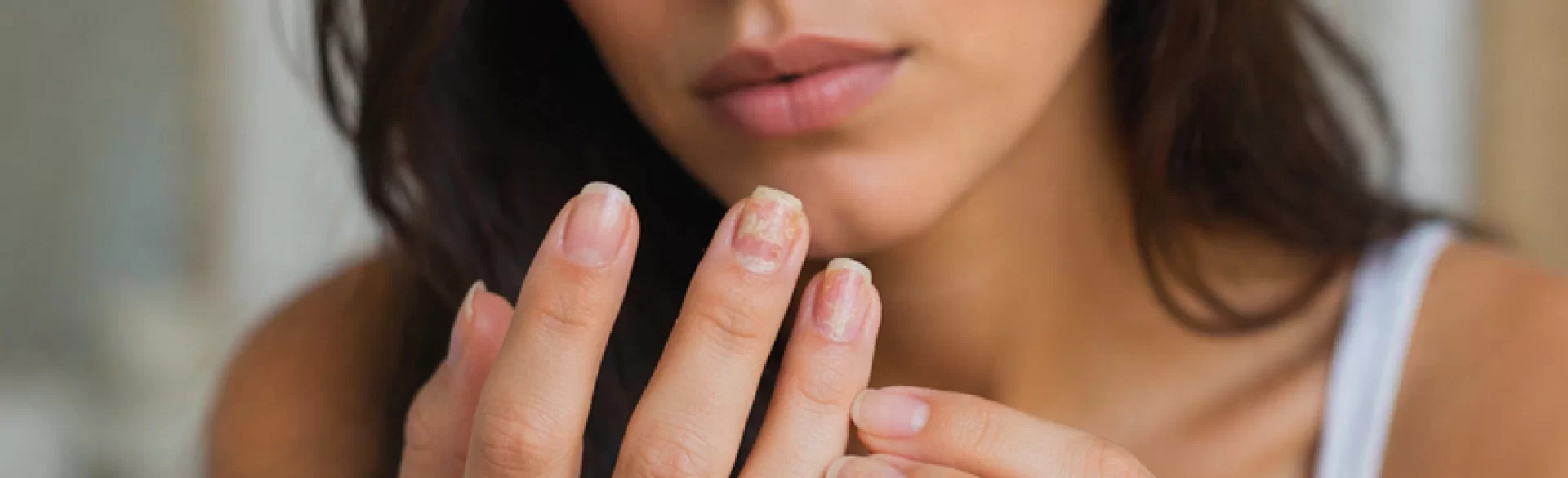
Nail psoriasis is a chronic inflammatory disease of autoimmune origin involving the nail apparatus, which includes the plate, matrix, and nail bed. It is one of the manifestations of skin psoriasis and affects up to 50–80% of patients in the course of systemic disease. Nail changes can occur both concurrently with skin lesions and as the sole form of the disease. The condition is recurrent, and its course is associated with impaired keratinocyte proliferation and chronic inflammation. Nail changes significantly affect the quality of life of patients, causing aesthetic and functional discomfort.
Nail psoriasis – what it looks like
The clinical presentation of nail psoriasis is varied and depends on the location of the lesions within the nail apparatus. Characteristic symptoms include:
Changes within the nail plate:
- pitting (numerous small pits resembling the surface of a thimble),
- transverse and longitudinal grooves,
- dulling and loss of transparency of the plate,
- thickening of the nail (subungual hyperkeratosis).
Changes within the nail bed:
- so-called “oil spots” (yellowish, translucent discolorations),
- onycholysis (separation of the plate from the bed),
- subungual hemorrhages (linear, dark lesions resulting from vascular damage).
Inflammatory changes of the nail folds:
- redness,
- swelling,
- tenderness.
In advanced cases, significant deformation of the nail or even its destruction occurs. The clinical presentation may resemble onychomycosis, which requires differential diagnosis.
Nail psoriasis – beginnings
The initial stage of the disease often remains unnoticed or is trivialized. The first symptoms are subtle and may include:
- single pits in the nail plate,
- subtle discolorations (yellowish or brownish),
- slight separation of the nail plate from the bed,
- brittleness and fragility of the nails.
At the pathophysiological level, activation of the immune system occurs, including T lymphocytes and the secretion of pro-inflammatory cytokines (including TNF-α, IL-17, IL-23), which disrupt the normal cycle of keratinocyte differentiation.
It is worth emphasizing that nail changes may precede the development of cutaneous psoriasis or coexist with psoriatic arthritis (PsA). In such cases, nail involvement is a significant marker of the risk of developing joint changes.
Factors predisposing to the development of changes:
- mechanical injuries (Koebner phenomenon),
- chronic stress,
- infections,
- genetic predispositions,
- tobacco smoking.
Nail psoriasis – location
Psoriatic changes can affect both fingernails and toenails, however, their distribution is not accidental.
The most common locations:
- fingernails – pitting and changes within the matrix are observed more often,
- toenails – subungual hyperkeratosis and onycholysis dominate,
- thumbs and big toes – particularly exposed due to micro-injuries.
Fingernail involvement more often affects the aesthetic and psychosocial aspect, whereas changes within the toenails can cause pain, difficulties in walking, and secondary infections.
It is also significant that:
- changes in the nail matrix → lead to plate deformation,
- changes in the nail bed → result in nail separation and discoloration.
The location of changes often correlates with the severity of the systemic disease and can provide a diagnostic clue.
Nail psoriasis – treatment
Treatment of nail psoriasis constitutes a therapeutic challenge due to the limited penetration of active substances through the nail plate and the chronic nature of the disease. Therapy should be individually selected and take into account the severity of the lesions and coexisting systemic symptoms.
Topical treatment
Used in mild forms:
- glucocorticosteroids,
- vitamin D3 analogues (e.g., calcipotriol),
- calcineurin inhibitors,
- keratolytic preparations (urea, salicylic acid).
Systemic treatment
In moderate and severe cases:
- methotrexate,
- cyclosporine,
- retinoids (acitretin),
- biological drugs (e.g., TNF-α, IL-17, IL-23 inhibitors).
Modern supportive methods
In dermatological and aesthetic medicine practice, therapies supporting the regeneration of the nail apparatus are also used:
- laser therapy – anti-inflammatory effect and stimulation of tissue remodeling,
- LED light therapy – reduction of inflammation,
- hand skin mesotherapy – improvement of microcirculation and tissue nutrition,
- radiofrequency (RF) – stimulation of regenerative processes.
In the context of comprehensive skin and appendages therapy at Ambasada Urody Clinic & SPA, technologies improving inflammation, microcirculation, and skin regeneration are applied, which indirectly supports the therapy of psoriatic lesions.
Prognosis
Nail psoriasis is chronic and recurrent. Complete resolution of the lesions is possible, but it requires long-term therapy and consistency. Often, the goal of treatment becomes:
- reduction of symptoms,
- improvement of nail appearance,
- inhibition of disease progression.
Factors worsening the course:
- mechanical injuries,
- lack of treatment,
- exposure to irritants,
- coexisting inflammatory diseases.
Properly selected therapy and specialist care allow for significant improvement in nail condition and the patient's quality of life.

