Unpleasant foot odor
back to main page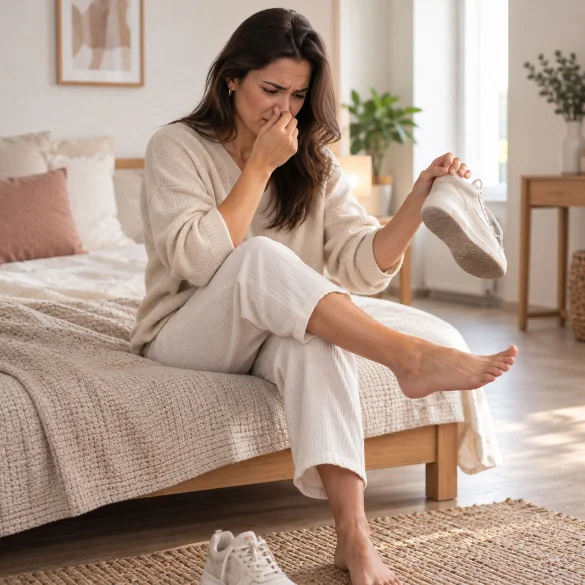
Unpleasant foot odor, referred to as foot bromodosis or plantar bromhidrosis, arises from the transformation of sweat components and exfoliated epidermis carried out by microorganisms residing on the skin. Freshly secreted sweat from eccrine glands is virtually odorless itself. The characteristic odor appears only when bacteria decompose amino acids, lipids, and keratin, producing volatile odor compounds. This is promoted by moisture, elevated temperature, poor footwear breathability, and the skin remaining in an occlusive environment for prolonged periods. Bromodosis can be an isolated issue, but it may also accompany plantar hyperhidrosis, tinea pedis, pitted keratolysis, or other skin diseases. Effective management requires simultaneously reducing moisture, controlling the microbiome, and treating the underlying dermatological cause.
Unpleasant foot odor - where does it come from
There is an exceptionally high concentration of eccrine sweat glands on the soles of the feet. They secrete water, electrolytes, lactates, urea, and small amounts of other organic substances. Moisture leads to maceration, which is the softening of the stratum corneum of the epidermis. Softened keratin becomes more easily accessible to bacterial enzymes.
Bacteria belonging to the genera Staphylococcus, Corynebacterium, and Brevibacterium are primarily involved in the formation of odor. The breakdown of leucine into isovaleric acid, which is responsible for the sour, cheesy smell, is of particular importance. Other metabolic products of microorganisms, including short-chain fatty acids and volatile sulfur compounds, modify its intensity and character.
Factors contributing to bromodosis include:
- closed, poorly ventilated footwear;
- moisture-retaining socks;
- wearing one pair of shoes for many hours;
- intense physical exertion or working in high temperatures;
- plantar hyperhidrosis;
- accumulation of calloused epidermis;
- foot and nail fungal infections;
- obesity, diabetes, and immune disorders;
- certain medications, hormonal disorders, and systemic diseases.
An exceptionally intense odor combined with small pits on the soles may indicate pitted keratolysis. This is a superficial bacterial infection of the stratum corneum, common in people who wear occlusive footwear for many hours. Itching, peeling, cracking of the skin, and lesions between the toes, on the other hand, suggest a fungal infection. Diagnosis of the cause is based on a dermatological or podiatric examination, and in justified cases also on mycological or microbiological testing, or an evaluation of systemic diseases.
Unpleasant foot odor and hyperhidrosis
Plantar hyperhidrosis refers to the secretion of sweat in amounts exceeding the body's thermoregulatory needs. In its primary form, it is associated with excessive activity of sympathetic cholinergic fibers stimulating the eccrine glands. It usually begins in childhood or adolescence, is bilateral, and intensifies under the influence of stress, exertion, and high temperatures.
Eccrine sweat remains essentially odorless; however, its excess creates an environment conducive to epidermal maceration and the proliferation of microorganisms. Therefore, hyperhidrosis increases the risk of bromhidrosis, fungal infections, abrasions, blisters, and pitted keratolysis. Reducing sweat secretion often leads to a reduction in odor, although in the case of an active infection, antimicrobial treatment is also necessary.
The sudden onset of generalized or night sweating requires investigating for a secondary cause. The diagnostic evaluation takes into account, among others:
- hyperthyroidism and other endocrine disorders;
- diabetes and episodes of hypoglycemia;
- chronic infections;
- menopause and other hormonal changes;
- neurological diseases;
- the effects of antidepressant, antipyretic, hormonal, and analgesic medications;
- selected hematologic and neoplastic diseases.
Severity assessment may include medical history, a scale assessing the impact of sweating on daily functioning, Minor's iodine-starch test, and measurement of the amount of sweat secreted. This approach allows physiological sweating to be distinguished from hyperhidrosis requiring treatment.
Foot odor - home remedies
Home care should reduce moisture and excessive multiplication of microorganisms, while protecting the epidermal barrier. Daily washing of the feet with a mild cleanser and very thorough drying of the spaces between the toes form the foundation. Prolonged soaking promotes maceration, which is why a short wash combined with careful drying of the skin is preferable.
The following are of practical importance:
- changing socks when damp, sometimes several times a day;
- choosing moisture-wicking socks suited to the activity;
- wearing breathable footwear of the proper width;
- rotating shoes and allowing them to dry completely;
- drying and cleaning the inside of footwear according to the manufacturer's recommendations;
- using absorbent powders or insoles;
- carefully removing excessive calluses;
- keeping nails short and clean.
An antiperspirant reduces sweat secretion, whereas a deodorant mainly neutralizes odor or inhibits the growth of some microorganisms. Preparations containing aluminum salts are applied to completely dry, intact skin, usually in the evening, according to the product instructions. Burning, erythema, or peeling indicate irritation and the need to modify care.
Acidic foot baths, essential oils, and home antiseptics have variable effectiveness, and their concentration can be difficult to control. They can cause irritation, allergies, or worsen skin damage. Particular caution is required for people with diabetes, sensory disturbances, limb ischemia, wounds, and epidermal fissures.
Unpleasant foot odor - how to get rid of it
Treatment is tailored to the dominant mechanism. In mild bromodosis, a combination of hygiene, drying, footwear rotation, and antiperspirant is usually sufficient. The persistence of symptoms despite proper care is an indication for a dermatological or podiatric consultation.
Possible treatment approaches include:
- hyperhidrosis: stronger aluminum chloride preparations, water iontophoresis, botulinum toxin, or selected anticholinergic medications;
- tinea pedis (athlete's foot): topical, and in extensive cases, systemic antifungal medications tailored to the clinical presentation;
- pitted keratolysis: antibacterial treatment combined with intensive moisture reduction;
- hyperkeratosis: controlled debridement of calluses and the use of keratolytic preparations;
- bacterial superinfection: topical antiseptic treatment or antibiotic therapy prescribed by a doctor.
A strong odor associated with a single pair of shoes may recur due to the recolonization of the skin by microorganisms present inside the footwear. Therefore, therapy should simultaneously cover feet, socks, insoles, and shoes.
Ulceration, purulent discharge, rapidly spreading erythema, swelling, severe pain, fever, or tissue blackening require urgent evaluation. Early consultation is of particular importance for individuals with diabetes, neuropathy, limb ischemia, or compromised immunity.
Treatments for foot odor
At Ambasada Urody, the problem of odor associated with foot hyperhidrosis can be addressed with botulinum toxin type A treatment. The preparation is administered intradermally within the excessively sweating plantar surface. The toxin inhibits the release of acetylcholine from sympathetic nerve endings, temporarily limiting the stimulation of sweat glands. Lower moisture reduces epidermal maceration and conditions favorable to the formation of volatile odor compounds.
The effect develops within a few to several days and lasts for several months. The soles are a sensitive area, which is why the procedure requires appropriate anesthesia and performance by a doctor. Qualification includes assessing the cause of sweating, skin condition, medications taken, comorbidities, and contraindications to the use of botulinum toxin. The procedure targets sweat secretion, whereas diagnosed fungal or bacterial infection requires separate causal treatment.
Ambasada Urody's offer also includes podiatric consultations and treatments. A podologist can assess the condition of the skin, interdigital spaces, and nails, treat excessive hyperkeratosis, and identify features suggesting fungal infection, pitted keratolysis, trauma, or diabetic foot complications. Combining podiatric care with dermatological treatment or hyperhidrosis therapy allows addressing all significant mechanisms of bromohidrosis.

