Heel imprint
back to main page
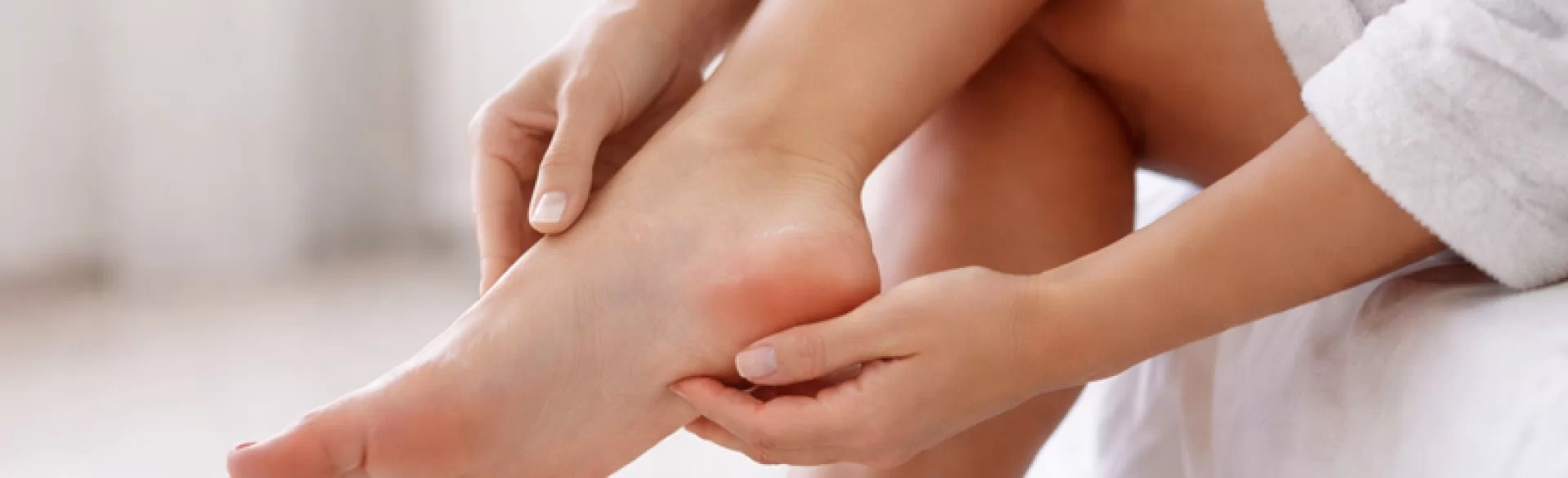
A corn on the heel (Latin: clavus) is a focal, conical thickening of the stratum corneum of the epidermis, forming in response to chronic pressure and friction. It represents a form of adaptive hyperkeratosis – a defensive mechanism of the skin against repeated microtrauma. Unlike calluses, which are more diffuse, a corn has a central keratin core that penetrates deeper into the dermis, causing pain. It is most commonly located in areas of greatest biomechanical stress, and the heel, being the main support point during the contact phase of the foot with the ground, is a typical location for its occurrence.
Heel imprint – what it looks like
Clinically, a callus presents as:
- a well-defined, round focus of hyperkeratosis,
- yellowish or gray-brown coloration,
- a hard, central core (known as the horn core),
- painfulness upon vertical pressure.
In palpation, the lesion is firm and deeply embedded. The pain results from the pressure of the horn core on the nerve endings of the dermis.
Types of calluses in the heel area:
- clavus durum (hard callus) – the most common, related to mechanical pressure,
- vascular callus – containing small vessels within the core,
- neurofibrous callus – highly painful, associated with pressure on nerve structures.
Clinical differentiation
| Feature | Callus | Callosity | Viral wart |
|---|---|---|---|
| Margins | Clear | Diffuse | Indistinct |
| Core | Present | Absent | No typical core |
| Fingerprint lines | Preserved | Preserved | Interrupted |
| Ecchymosis | Absent | Absent | Common |
| Pain | With vertical pressure | Usually absent | With lateral pressure |
In dermoscopic examination, a wart shows characteristic thrombosed vessels (known as "black dots"), which are not observed in a callus.
Heel blister – how to remove
Removing a callus should be part of causative treatment, not just a cosmetic procedure. The most effective methods include:
1. Podiatric treatment
- mechanical removal of the stratum corneum and core with a scalpel,
- bloodless procedure,
- immediate reduction of pain symptoms.
This method is preferred for patients with diabetes, peripheral artery disease, and neuropathy.
2. Keratolytic agents
- salicylic acid (10–40%),
- urea (30–50%),
- lactic acid.
The mechanism of action involves loosening the intercorneocyte connections and accelerating exfoliation. The therapy requires caution, especially in individuals with impaired sensation.
3. Pressure relief
- custom orthopedic insoles,
- silicone pressure-relieving rings,
- change of footwear (heel cushioning, appropriate heel width).
Without eliminating the overload, recurrence is highly probable.
Heel blister – how to treat
and prevent relapses
The mere elimination of calluses does not solve the problem if the biomechanical factor is not removed. In pathogenesis, a key role is played by:
- excessive pronation or supination of the foot,
- valgus or varus hindfoot,
- shortening of the calf muscles and tension of the plantar fascia,
- obesity increasing pressure forces.
Comprehensive management includes:
- Orthopedic diagnostics and gait analysis – assessment of pressure distribution (pedobarography).
- Physiotherapy – stretching of the posterior chain, gait pattern re-education.
- Weight reduction – in case of overweight.
- Preventive skin care – creams with 10–20% urea.
When to see a doctor?
Absolute consultation is required for:
- patients with diabetes (risk of ulceration),
- the appearance of redness, discharge, cracking,
- severe, increasing pain,
- diagnostic doubts (exclusion of cancerous changes).
In individuals with diabetic foot syndrome, even a small callus can be a starting point for a serious infectious complication.
Why does the heel imprint return?
The recurrence of a callus is the result of a persistent pathological distribution of pressure forces. The skin responds to repeated micro-injuries by proliferating keratinocytes and thickening the stratum corneum. If:
- the footwear has not been changed,
- insoles have not been used,
- the axis of the lower limb has not been corrected,
the hyperkeratosis process is reactivated.
In clinical practice, effective treatment requires the cooperation of a dermatologist, podiatrist, orthopedic surgeon, and physiotherapist.
A callus on the heel is a benign lesion; however, if left untreated, it can lead to chronic pain, gait disturbances, and secondary overload of the knee and hip joints. The approach should be causal and interdisciplinary.
