What laser treatment to choose for busy people?
A quick cheat sheet before choosing a laser:
-
Ablation or non-ablation – lasers that vaporize the epidermis provide strong skin remodeling, but require recovery time. Non-ablative technologies allow you to return to your daily activities right after the visit.
-
Discoloration and capillaries in one treatment – Dye-VL PRO photorejuvenation emits light absorbed by melanin and hemoglobin, so it reduces discoloration and vascular lesions without recovery time.
-
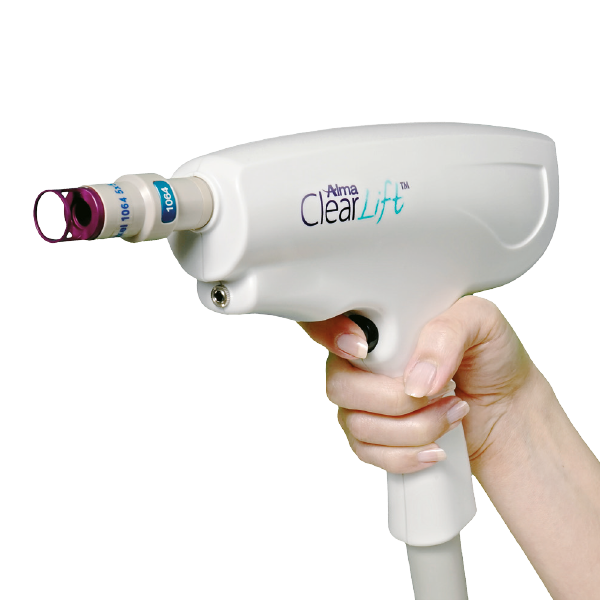
Wrinkles, tightness, and firmness – ClearLift 4D, Soft Lift, and Zaffiro work without disrupting the surface of the skin. Therapy that does not damage the epidermis is sometimes called a “lunchtime lift”.
-
At Ambasada Urody, we exclusively use the Alma Dye-VL PRO version – the latest generation handpiece available only in selected, certified clinics.
-
More intense remodeling takes time – ablative lasers, such as fractional CO2, iPixel, or Alma Hybrid, require healing and consistent SPF 50+ protection for 4-6 weeks.
Table of Contents
- Can a laser be effective without damaging the epidermis?
- Rejuvenation without downtime - ClearLift 4D and Soft Lift
- Erythema and broken capillaries - photorejuvenation with an immediate effect
- Facelift without a scalpel - what does Zaffiro really do?
- Multiple levels - multiple benefits
- What is the recovery time?
- When does a more powerful laser make sense despite downtime?
- What are the effects and when can you see them?
- How to prepare for a quick laser procedure?
- We recommend treatments
- Frequently asked questions about laser treatments for busy people
Can a laser be effective without damaging the epidermis?
Laser effectiveness does not depend on how much epidermis is vaporized. Ablation, or the vaporization of the epidermis, is a very effective method for improving skin condition because it strongly stimulates regenerative processes. However, advances in technology have meant that non-ablative treatment – without damaging the surface of the skin – also produces strong results.
The non-ablative fractional laser reaches deep into the dermis and creates micro-damage that stimulates fibroblasts to produce new collagen. Thanks to biostimulation, the rejuvenation process occurs from within, without causing visible wounds on the surface of the epidermis. Therapy that does not compromise the epidermis requires no recovery period and allows a return to daily activities right after the treatment – hence the colloquial name „lunchtime lift”.
Rejuvenation without downtime - ClearLift 4D and Soft Lift
ClearLift 4D is a non-ablative fractional laser designed for painless and non-invasive skin rejuvenation treatments. It works to reduce wrinkles, discoloration, and enlarged skin pores, as well as to improve skin firmness and elasticity. The treatment is comfortable and requires no recovery period, with main effects including skin regeneration, firming, and immediate rejuvenation.
Soft Lift (Alma 1570) works on a similar principle. This non-ablative fractional laser stimulates neocollagenesis and regeneration of the dermis, leaving the epidermis intact, and minimizes the appearance of acne scars and signs of aging. Thanks to its non-ablative action, the procedure does not require a long recovery period.
What non-ablative treatment offers a busy person:
-
Return to daily activities right away – any slight redness is temporary.
-
Comfort during the session – treatments of this type are described as painless and non-invasive, so they usually do not require anesthesia.
-
No peeling effect – the skin does not undergo visible peeling, and its firmness and smoothness improve gradually.
-
Flexible plan – the therapy can be divided into sessions tailored to your schedule, without the need to take time off work.
Erythema and broken capillaries - photorejuvenation with an immediate effect
Vascular treatments provide an immediate visual effect – spider veins close right during the session. Alma Dye-VL PRO emits light in the 500-600 nm range, which is selectively absorbed by melanin responsible for discoloration and hemoglobin present in dilated capillaries. The treatment reduces discoloration, vascular lesions, signs of photoaging, and loss of skin firmness, providing a clear rejuvenation effect without the need for downtime. At the same time, it is safe and painless.
The Nd:YAG laser is also used in vascular therapy, acting precisely on vessels to reduce erythema and spider veins in a controlled manner. Closing the blood vessels provides immediate visual relief – the complexion becomes calmer and more even. Photorejuvenation itself is planned in a cycle: usually, a series of 2-4 treatments is performed at intervals of about 4 weeks to achieve optimal results. Each visit is a separate, short entry in the calendar, rather than a multi-day undertaking.
Facelift without a scalpel - what does Zaffiro really do?
Zaffiro is a device for non-surgical face and body skin lifting. The treatment uses thermolifting technology – the action of infrared (IR). The head emits infrared radiation, which reaches the deep layers of the skin and causes them to heat up.
The treatment is completely painless and requires no recovery period, making it an ideal choice for people leading a busy lifestyle. Tissue tension improves without the intervention of a scalpel or needles. Max Deep IR – a lifting and rejuvenation technology – operates in a similar area.
Multiple levels - multiple benefits
Why is laser depth control so important? Various skin problems – scars, wrinkles, discolorations – are located at different depths. Discolorations can be shallow, in which case superficial action is sufficient, but they can also be deep, requiring the therapy to be adjusted to reach the source of the problem.
Fractional lasers with depth control allow for the precise treatment of every level of the skin. Non-ablative technologies handle wrinkles well – also in delicate areas around the eyes, where aggressive methods are out of the question.
What is the recovery time?
Non-ablative treatments truly allow you to return to daily activities immediately after the visit. The lack of damage to the epidermis or only micro-damage in the deeper layers reduces recovery time to a minimum. After the session, the skin may be slightly reddened, but these changes quickly subside. Most non-ablative treatments are described as almost painless, which further shortens the entire visit.
It looks completely different after ablative treatments. The skin undergoes real healing, and the recommendations are stricter – after laser resurfacing, for at least 4-6 weeks , creams with an SPF 50+ filter should be used. Photoprotection here is a condition for safety and the durability of the effect.
When does a more powerful laser make sense despite downtime?
Sometimes, the skin needs deeper remodeling than non-ablative technology provides. Scars or advanced photoaging changes are situations where ablative lasers are used: fractional CO2, iPixel or hybrid Alma Hybrid. These treatments are not scheduled during a lunch break.
Therapy with a stronger laser is spread out over time. In the case of Alma Hybrid, 1 treatment is often enough, and for intensive remodeling, 1-3 treatments in a series, usually spaced 6-10 weeks apart; maintenance treatments are scheduled every 6-12 months. If you want results without downtime, save stronger technologies for a calmer period.
What are the effects and when can you see them?
Effects depend on the type of treatment. Vascular treatments and photorejuvenation provide a quick visual effect – blood vessels close during the session, and the skin tone evens out after the first visits. This is a solution for people who need an improvement in appearance before a specific event.
Treatments based on collagen remodeling require patience. The skin rebuilds its own scaffolding gradually, so effects build up after each session, and the full extent of changes is visible only after the entire series. In return, the improvement is deeper: the skin becomes denser, firms up, and signs of photoaging are reduced.
How to prepare for a quick laser procedure?
Even a short laser treatment requires preparation to ensure safety and accelerate regeneration. For a minimum of 1-2 weeks before the session, retinoids and AHA, BHA, and PHA acids should not be used. Photosensitizing herbs, for example St. John's wort, must be discontinued for a minimum of 2-4 weeks before the procedure. The skin must be free of active inflammation, as irritation increases the risk of complications and prolongs healing.
The comfort of the session is owed, among other things, to cooling systems used in new-generation lasers. Cooling works before, during, and after the pulse, protecting the epidermis and limiting discomfort. It is thanks to this that non-ablative treatments can be performed without anesthesia, and the visit easily fits between one responsibility and another.
We recommend treatments
If you are a professionally active person and need effective rejuvenation without long downtime, in our clinic you will find laser technologies selected with realistic recovery time in mind.
ClearLift 4D and Soft Lift – wrinkles, hyperpigmentation, enlarged pores, and acne scars, with no downtime.
Alma Dye-VL PRO and Nd:YAG – hyperpigmentation, erythema, and broken capillaries, quickly visible effect, with no recovery time.
Zaffiro and Max Deep IR – skin tightening and lifting without a scalpel, painless and with no downtime.
Alma Hybrid, CO2, and iPixel – deeper remodeling for scars and advanced photoaging changes, perfect for a quieter period in your calendar.
Technologies can also be combined as part of a single plan – for example, photorejuvenation for hyperpigmentation and erythema, followed by thermolifting to improve skin firmness. The sequence and intervals between sessions depend on the skin condition, which is why a medical consultation remains the foundation. During the consultation, we will assess the condition of your skin, your needs, and your schedule, and then select the technology that will bring the best results with minimal downtime.
Start by naming the problem – hyperpigmentation, broken capillaries, skin laxity, or scars – and then match it with the technology and a realistic amount of time in your calendar. Book a consultation, leave the office with a session plan, and see for yourself that effective rejuvenation can fit between two meetings!
Frequently asked questions about laser treatments for busy people
How long before an important event should you schedule a procedure?
Even with procedures without downtime, it is safer to give yourself a buffer. The skin after a non-ablative session can be red for a moment, so an appointment a few days earlier provides comfort instead of stress. Plan ablative procedures well in advance – healing and photoprotection take weeks there.
Does tanned skin rule out a laser treatment?
A fresh tan is a signal to wait. Melanin absorbs the energy of the beam, so on skin with an active tan, the risk of irritation and post-inflammatory hyperpigmentation increases. The date is set after a skin assessment, and the cooler months remain the most convenient season for laser therapy.
What to expect during and right after the procedure?
During the pulse, the skin mainly receives heat, which is alleviated by cooling systems operating before, during, and after the pulse. Immediately after the session, temporary redness may appear, which subsides spontaneously, and makeup comes back into play once the skin regains its normal appearance. Ablative treatments are felt more intensely and require a longer time to heal.
Can a laser treatment be performed during healing after another procedure?
Skin needs rest during the healing process, so the next laser session waits until regeneration is complete. This applies especially to the stage after ablative treatments, when SPF 50+ protection and avoiding additional stimuli are required. The specialist assesses the condition of the skin during the consultation and only then determines when it is safe to schedule the next session.
Do the effects last permanently?
Skin continues to age, so the effect of any laser is not treated as a final state. Non-ablative therapies are maintained through a series of sessions, and with Alma Hybrid, maintenance treatments are planned every 6-12 months. The longevity of the effect also depends on photoprotection and daily skincare.
