Melanin
back to main page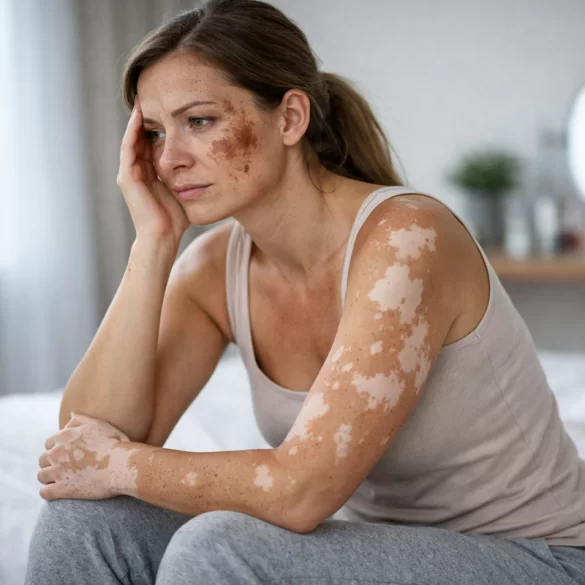
Melanin is a key pigmentary biopolymer found in the human body, synthesized in specialized skin cells – melanocytes. It is responsible for the pigmentation of the skin, hair, and iris of the eye, and also plays a fundamental protective role against the harmful effects of ultraviolet radiation. The process of its formation, known as melanogenesis, occurs within melanosomes and is strictly regulated enzymatically and hormonally. The amount, type, and distribution of melanin determine an individual's skin phototype and its reaction to environmental factors. Disorders in melanin synthesis or melanocyte function underlie numerous dermatological conditions, including hyperpigmentation and depigmentation diseases such as vitiligo.
Melanin - what is it
Melanin is an endogenous pigment formed through the biochemical transformations of the amino acid tyrosine, primarily catalyzed by the enzyme tyrosinase. The synthesis of melanin occurs in melanocytes located in the basal layer of the epidermis, and the produced pigment is stored in melanosomes. Subsequently, melanosomes are transported to keratinocytes, where melanin arranges itself above the cell nucleus, forming the so-called melanin cap. This structure protects the genetic material from damage induced by UV radiation.
Melanin is also found in other tissues, including hair follicles, the iris of the eye, and the inner ear. Its presence and activity are significant not only for aesthetic reasons but primarily for biological and protective functions.
Melanin – Types
In the human body, there are several types of melanin, differing in chemical structure and biological properties:
- Eumelanin
- a pigment ranging in color from brown to black,
- dominates in individuals with darker skin phototypes,
- effectively absorbs UV radiation and neutralizes free radicals,
- provides the highest level of photoprotection.
- Pheomelanin
- color ranging from yellowish to reddish-brown,
- characteristic for individuals with fair skin, red hair, and light eyes,
- provides weaker protection against UV, and under certain conditions, can enhance oxidative stress.
- Neuromelanin
- present in the central nervous system (e.g., in the substantia nigra),
- serves neuroprotective functions by binding heavy metals and toxins,
- does not influence skin pigmentation.
The proportions of different types of melanin are genetically determined but can be modulated by environmental and hormonal factors.
Melanin - what it is responsible for
Melanin plays a number of key protective and regulatory roles in the human body:
- Protection against UV radiation
- absorption and dispersion of UVA and UVB radiation,
- reduction of DNA mutation risk in keratinocytes,
- limitation of photoaging and skin carcinogenesis.
- Determination of skin, hair, and eye color
- amount of melanin affects intensity of pigmentation,
- distribution of melanocytes determines uniformity of color.
- Regulation of skin inflammatory response
- melanin indirectly participates in immune reactions,
- influences the course of repair processes after skin damage.
- Protection of eye and inner ear structures
- reduction of phototoxicity within the retina,
- stabilization of sensory functions.
Disorders of melanin synthesis can lead to both excessive pigmentation (hyperpigmentation) and its deficiency.
Melanin and vitiligo
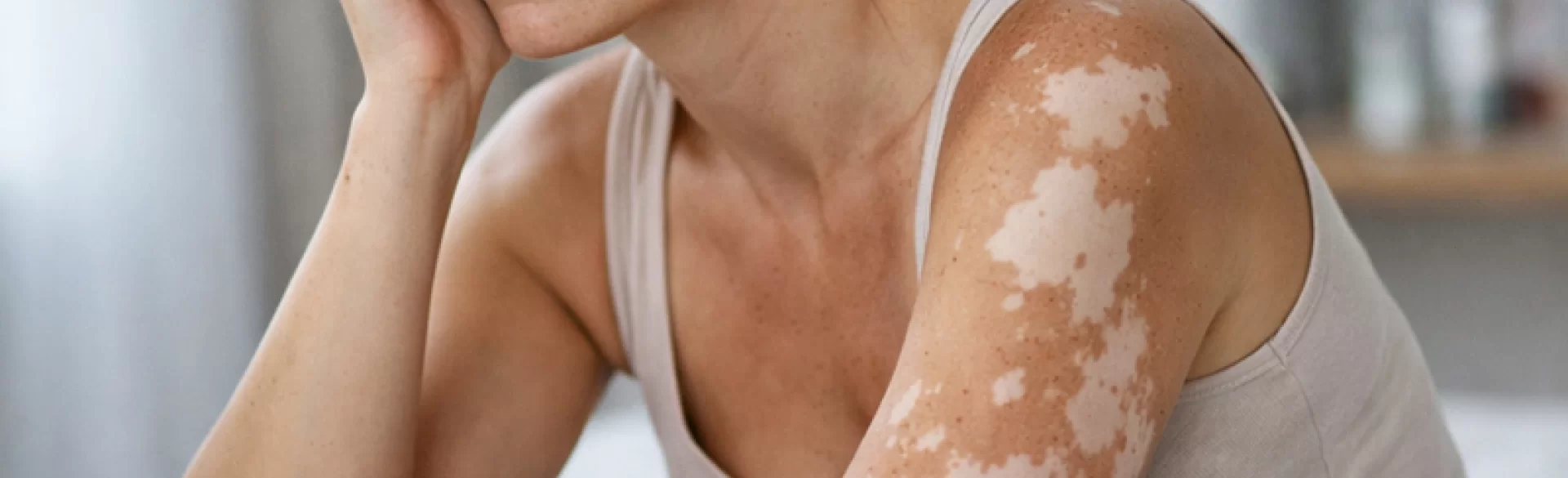
Vitiligo is a chronic condition of acquired skin depigmentation associated with the loss of function or complete destruction of melanocytes. The result is a lack of melanin in specific areas of the skin, leading to the formation of discolored patches with distinct borders.
Key pathophysiological mechanisms include:
- autoimmune processes directed against melanocytes,
- oxidative stress and excessive accumulation of free radicals,
- neuroendocrine disorders,
- genetic predispositions.
Skin devoid of melanin is particularly sensitive to UV radiation, increasing the risk of sunburn and DNA damage. Vitiligo is neither an infectious nor a cancerous disease, yet it is a significant dermatological and psychosocial issue. Therapeutic management focuses on skin protection, modulation of immune responses, and stimulation of residual melanocyte activity.
Melanin – How to Supplement Safely
In a biological sense, melanin cannot be "supplemented" directly, as it is endogenously synthesized by melanocytes. It is possible, however, to support melanogenesis in a controlled and safe manner:
- Optimization of substrate and cofactor supply
- tyrosine and phenylalanine as precursors of melanin,
- copper as an essential cofactor of melanogenesis enzymes,
- antioxidant vitamins (C, E) to reduce oxidative stress.
- Controlled exposure to UV radiation
- only within the physiological tolerance limits of the skin,
- considering individual phototype,
- always with appropriate photoprotection.
- Avoidance of factors that inhibit melanogenesis
- chronic stress,
- hormonal disorders (e.g., thyroid),
- aggressive dermatological procedures without medical indications.
- Specialist intervention
- in cases of pigmentation disorders, dermatological diagnosis is necessary,
- therapeutic actions should be based on the mechanism of the disorder, not solely on the aesthetic effect.
The use of "melanin" products or uncontrolled methods of pigmentation stimulation is not supported by reliable scientific data and can lead to undesirable skin consequences. A rational approach is based on supporting physiological melanogenesis processes and protecting functioning melanocytes.

