Adipocytes
back to main page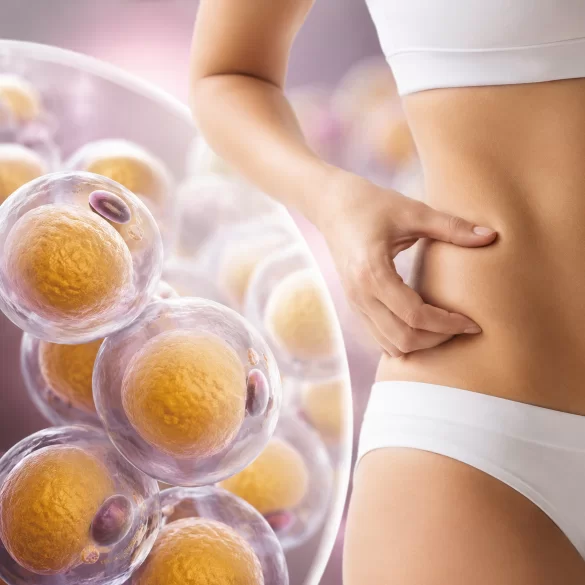
Adipocytes, or fat cells, constitute the basic element of the human body's adipose tissue. For many years, they were perceived solely as an energy store, however, modern medicine and molecular biology prove that adipocytes perform a much more complex function. They are metabolically active cells participating in the regulation of hormonal balance, inflammatory processes, glucose metabolism, and maintaining the body's energy homeostasis. An excessive number or volume of adipocytes is associated with the development of obesity, insulin resistance, cardiovascular diseases, and chronic inflammation. Understanding the mechanisms of fat cell functioning is of key importance both in preventive healthcare, as well as modern aesthetic medicine and the treatment of obesity.
Adipocytes - what are fat cells
Adipocytes are specialized connective tissue cells responsible for storing lipids, mainly in the form of triglycerides. In the human body, there are primarily two main types of adipose tissue:
- white adipose tissue (WAT – white adipose tissue),
- brown adipose tissue (BAT – brown adipose tissue).
White adipose tissue has the greatest metabolic significance in adults. Its adipocytes are characterized by the presence of a single large lipid droplet occupying almost the entire interior of the cell. In addition to their energy storage function, adipocytes produce numerous biologically active substances, referred to as adipokines. These include, among others:
- leptin,
- adiponectin,
- resistin,
- pro-inflammatory interleukins,
- tumor necrosis factor TNF-α.
These substances affect appetite, glucose metabolism, insulin sensitivity, and inflammatory processes in the body.
Adipocytes develop from precursor cells called preadipocytes. The process of their maturation is referred to as adipogenesis. The number of fat cells increases particularly intensively during childhood and adolescence, although in the case of a significant energy surplus, the body can also create new adipocytes in adulthood.
Adipose tissue is not distributed evenly. The following are distinguished:
| Type of adipose tissue | Characteristics |
|---|---|
| Subcutaneous tissue | Located under the skin, it serves a protective and thermal insulation function |
| Visceral tissue | Surrounds internal organs, exhibits high metabolic activity and a greater impact on the development of metabolic diseases |
An excess of visceral adipose tissue is particularly detrimental to health, associated with an increased risk of type 2 diabetes, arterial hypertension, and atherosclerosis.
Adipocytes – how they behave during weight loss
Contrary to popular belief, the weight loss process is not about the “disappearance” of fat cells. During body weight reduction, adipocytes primarily decrease in volume. This leads to the mobilization of stored triglycerides and their utilization as an energy source in metabolic processes.
This mechanism involves several stages:
- Breakdown of triglycerides into free fatty acids and glycerol.
- Release of fatty acids into the bloodstream.
- Transport to energy-consuming tissues, such as muscles or the liver.
- Oxidation of lipids in mitochondria.
A shrinking adipocyte still remains a living, active cell. The body treats adipose tissue as a strategic energy store, which is why it triggers defense mechanisms that make maintaining body weight reduction difficult. During weight loss, the following are observed, among others:
- a decrease in leptin levels,
- an increase in the feeling of hunger,
- a reduction in basal metabolic rate,
- increased efficiency of energy storage.
This phenomenon is one of the main causes of the yo-yo effect.
The size of adipocytes is also of significant importance. Large, hypertrophied fat cells show greater pro-inflammatory activity and poorer insulin sensitivity. As their volume is reduced, the body's metabolic parameters often improve, even if the total number of adipocytes remains unchanged.
Modern aesthetic medicine and obesity treatment utilize various technologies supporting the reduction of adipose tissue. These include, among others:
- cryolipolysis,
- injection lipolysis,
- RF radio waves,
- HIFU ultrasound,
- laser body contouring,
- treatments stimulating adipose tissue metabolism.
Some procedures lead to a reduction in adipocyte volume, while others may induce their controlled destruction through the process of apoptosis, i.e., programmed cell death.
Adipocytes – why fat cells do not disappear
The number of adipocytes in adults remains relatively stable. Studies have shown that even after significant weight loss, the body retains most of the previously formed fat cells. This means that once emptied of lipids, adipocytes can increase in volume again in the event of a positive energy balance.
From a biological point of view, this mechanism is adaptive in nature. The human body has evolutionarily adapted to periodic food shortages, which is why it strives to maintain energy reserves. In practice, this means that:
- people with a history of obesity have a greater tendency to regain weight,
- adipocytes easily store fat again,
- weight reduction requires long-term lifestyle changes.
It is worth emphasizing that the course of obesity involves not only hypertrophy of adipocytes (increase in their volume), but also hyperplasia, i.e., an increase in the number of fat cells. Newly formed adipocytes remain in the body for many years.
Some aesthetic medicine and surgical procedures can lead to a permanent reduction in the number of adipocytes in a specific area of the body. This applies to, among others:
- liposuction,
- cryolipolysis causing adipocyte apoptosis,
- selected laser technologies,
- lipolytic treatments.
However, even after removing some of the fat cells, the body retains the ability to increase the volume of the remaining adipocytes. For this reason, body contouring procedures do not replace a proper diet, physical activity, and metabolic treatment.
In the modern approach to treating excess body fat, increasing attention is paid to the quality of adipocytes and their metabolic activity, rather than solely to body weight itself. Of particular importance are:
- reduction of chronic inflammation,
- improvement of insulin sensitivity,
- reduction of visceral fat,
- hormonal stabilization,
- maintenance of a healthy metabolism.
Treatments used in fat reduction
In the therapy of excess adipose tissue, both medical procedures and treatments supporting body contouring are used. In clinical practice, the following are used, among others:
- cryolipolysis,
- injection lipolysis,
- endermologie and Icoone
- RF radio waves,
- Coolwaves microwaves
- HIFU,
- vacuum massages,
- drainage treatments,
- laser technologies supporting adipose tissue reduction.
The offer includes advanced body contouring and localized fat reduction procedures, aimed at improving body proportions and supporting tissue metabolism.

