Radio waves
back to main page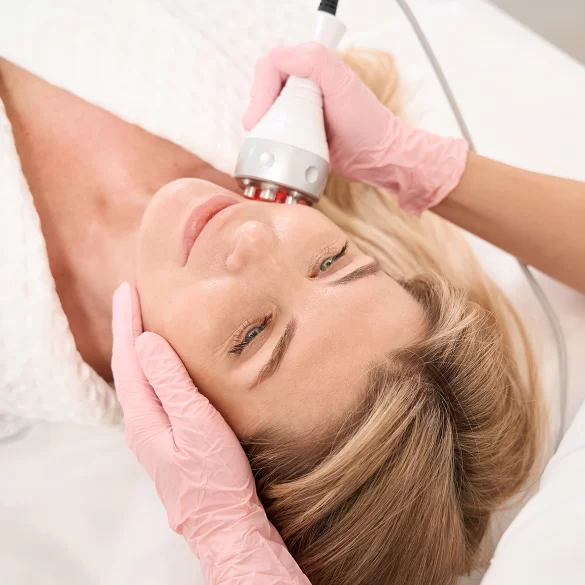
Radio waves (RF, radiofrequency) are a form of electromagnetic radiation with frequencies lower than visible light and infrared radiation. In medicine and aesthetic medicine, they are primarily used due to their controlled thermal effects in tissues, leading to the remodeling of collagen structures and stimulation of regenerative processes. The interaction of radio waves does not involve damaging the skin’s continuity but rather transferring energy to its deeper layers, mainly the dermis and subcutaneous tissue. This allows for achieving effects such as firming, improving skin tension, and modulating tissue metabolism. RF technologies are widely used in dermatology, physiotherapy, and aesthetic body contouring.
Radio Waves - How They Work
The mechanism of action of radio waves is based on the flow of high-frequency alternating current through tissues, leading to their selective heating. Key elements of this process include:
- Electrical resistance of tissues, which causes the conversion of electromagnetic energy into heat,
- Raising the temperature of the dermis (usually to 40–45°C),
- Contraction of existing collagen fibers and activation of fibroblasts,
- Stimulation of neocollagenesis and elastogenesis in the post-procedure regeneration process.
Depending on the configuration of the electrodes, radio waves can be classified as:
- Monopolar – with deep penetration,
- Bipolar – operating more superficially,
- Multipolar – combining different levels of interaction.
These variants differ in safety profiles, the intensity of thermal effects, and clinical indications.
Radio waves - application
Radio waves have found applications in many areas of medicine, including:
- dermatology and aesthetic medicine – improving skin quality, treating laxity, supporting scar therapy,
- physiotherapy – pain relief, muscle relaxation, and improving tissue blood circulation,
- surgery – cutting and coagulating tissues (electrosurgery),
- rehabilitative medicine – supporting repair processes after injuries.
In aesthetics, the non-ablative RF action is particularly important, as it allows for the improvement of skin parameters without the need to disrupt its continuity, which shortens the recovery period.
Radio waves – treatments
Treatments using radio waves are non-invasive or minimally invasive procedures, performed in series. Depending on the technology, they may include:
- classic contact radiofrequency,
- microneedle radiofrequency, combining RF energy with microneedling,
- capacitive-resistive diathermy, also used in physiotherapy,
- combined systems, e.g., RF with vacuum or mechanical massage.
Treatment parameters (power, time, depth of penetration) are selected individually, taking into account skin thickness, treatment area, and therapeutic goal.
Radio Waves – Effects
The effects of treatments using radio waves are gradual and cumulative over time, due to the biology of collagen remodeling. The most commonly observed effects include:
- improvement in skin tightness and elasticity,
- densification of the dermis,
- reduction of tissue laxity,
- smoothing of fine wrinkles,
- improvement of microcirculation and tissue metabolism,
- support in reducing localized fat deposits.
The effects last for many months, and their durability depends on the patient's age, lifestyle, and the number of treatments performed.
Treatments using radio waves
In clinical practice, various technologies based on radio waves are used, including:
- monopolar-bipolar radiofrequency for skin firming,
- microneedle radiofrequency in the treatment of scars and advanced laxity,
- capacitive-resistive diathermy for tissue regeneration,
- RF systems integrated with vacuum or mechanical massage,
- RF technologies used in body contouring and improving skin quality.
The selection of a specific method depends on the clinical indications, skin condition, and the desired therapeutic effects.
