Bichat's fat pad
back to main page
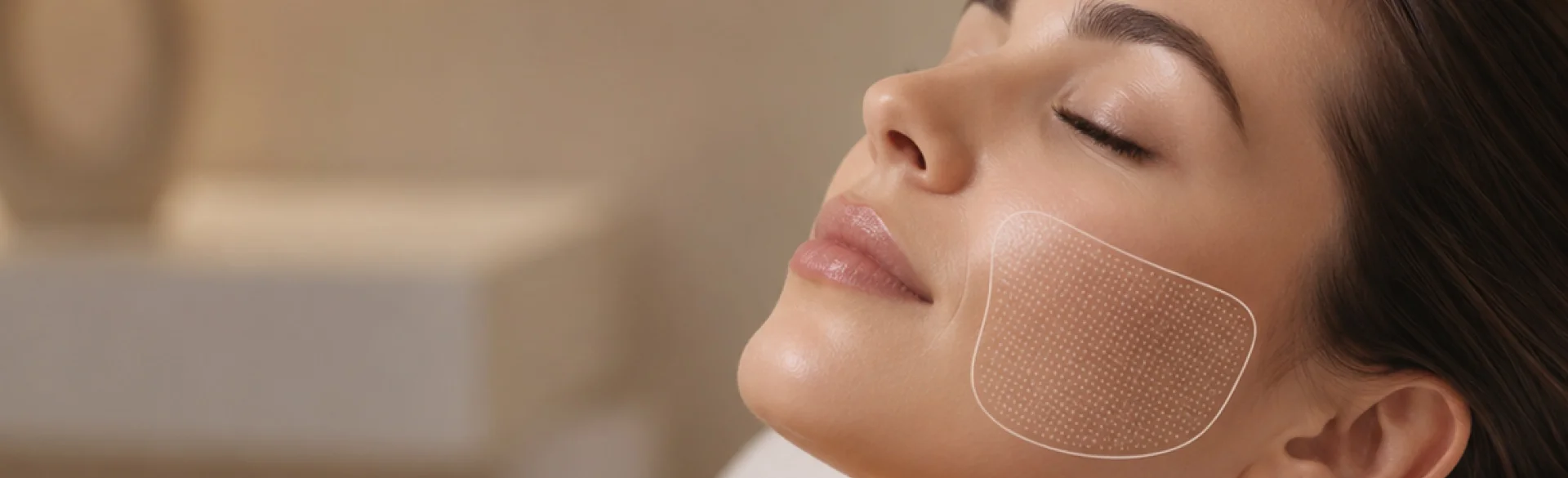
Bichat's pad, also referred to as the cheek fat pad (buccal fat pad), is a specialized adipose tissue structure located in the middle part of the face. It constitutes an anatomically distinct fat compartment with a characteristic structure and function, different from the superficial adipose tissue of the cheeks. Bichat's pad plays an important role in shaping the facial oval, the proportions of the midface, and cheek volume. Its size and position influence the perception of youthfulness, softness of features, and the contour of the lower face. Changes in the volume of this structure can be associated both with the aging process, weight fluctuations, and individual genetic predispositions. In aesthetic medicine and facial surgery, Bichat's pad constitutes an important element of the analysis of facial proportions and gravitational aging processes.
Bichat's fat pad - what is it
Bichat's fat pad is a deeply located adipose structure situated between the muscles of facial expression and mastication. It was described by the French anatomist Marie François Xavier Bichat, after whom it is named. Anatomically, it is not ordinary adipose tissue, but a specialized compartment with its own capsule and characteristic processes reaching various regions of the face.
Bichat's fat pad consists of:
- the central part,
- the buccal process,
- the pterygoid process,
- the superficial and deep temporal processes.
In infants, this structure plays an important role in sucking and stabilizing the cheeks during feeding. In adults, its mechanical function remains less significant, while its aesthetic importance is very high.
A characteristic feature of Bichat's fat pad is its relative metabolic independence. This means that it does not always decrease proportionally to weight loss. In some individuals, even a very slim physique coexists with clearly defined full cheeks, while in others there is a rapid loss of volume in the middle part of the face.
In clinical practice, the size of Bichat's fat pad affects:
- facial width,
- the roundness of the cheeks,
- the visibility of the cheekbones,
- the jawline,
- the severity of the so-called jowls,
- the degree of gravitational aging of the face.
Bichat's fat pad - where it is located
Bichat's fat pad is located deep within the cheek, between the masseter muscle and the muscles of facial expression. Its central part is located in the area below the zygomatic bone, lateral to the buccinator muscle and adjacent to the parotid duct.
In contrast to superficial adipose tissue:
- it does not lie directly under the skin,
- it is separated from the skin by layers of muscles and fascia,
- it has greater anatomical stability,
- it participates in supporting the middle third of the face.
The anatomical position of Bichat's fat pad means that it affects both the volume of the cheeks and the transition between the middle and lower face. In individuals with a large volume of this structure, the face may appear rounder and softer, whereas a small amount of adipose tissue in this area promotes more angular features and prominence of the zygomatic bones.
The relationship of Bichat's fat pad to the retaining ligaments of the face is also significant. With age, the supporting structures weaken, which facilitates the downward displacement of tissues under the influence of gravity.
In aesthetic surgery, partial removal of Bichat's fat pad is possible through an intraoral approach. This procedure is referred to as bichectomy or buccal fat removal. The procedure requires very careful qualification, as excessive removal of adipose tissue can accelerate facial aging and lead to a sunken appearance of the cheeks in later years of life.
Bichat's fat pad - role in facial aesthetics
Bichat's fat pad plays a key role in shaping the proportions of the midface. It is responsible for the characteristic softness and fullness of the cheeks observed in young people.
Its presence influences:
- a youthful facial appearance,
- softness of features,
- smoothness of anatomical transitions,
- proportions between the cheeks and the jaw,
- perception of the face as more rested or slim.
In facial aesthetics, an excessively developed Bichat's fat pad can visually:
- widen the lower part of the cheeks,
- reduce the visibility of the cheekbones,
- weaken the definition of the jawline,
- give the effect of a “baby” or heavier face.
On the other hand, too little volume of this structure can lead to:
- sunken cheeks,
- deepening of the nasolabial folds,
- a more tired appearance,
- making the volumetric aging of the face more visible.
Modern aesthetic medicine is moving away from aggressive removal of deep facial fat compartments. Currently, more emphasis is placed on preserving natural volume and improving tissue quality. In the treatment of facial contour disorders, the following are used, among others:
- collagen-stimulating treatments,
- volumetric lifts,
- microneedle radiofrequency,
- HIFU,
- tissue biostimulators,
- technologies that lift the skin and subcutaneous tissue.
In the practice of aesthetic medicine clinics, procedures are also used to improve the tension of the lower face and reduce tissue laxity without excessive removal of natural volume.
Bichat's fat pad - how it changes with age and body weight
The aging process affects both the volume and position of Bichat's fat pad. In young individuals, this structure is located higher and provides good support for the cheeks. Over time, there is a weakening of the ligaments and changes in the quality of the skin and supporting tissues.
As a result, the following are observed:
- downward displacement of tissues,
- loss of tone of the facial oval,
- deepening of creases,
- formation of cheek overhang,
- development of so-called jowls.
The effect of body weight on Bichat's fat pad is more complex than in the case of superficial fat. In some individuals, rapid weight loss leads to:
- loss of cheek volume,
- increased visibility of facial bones,
- deepening of the tear trough,
- the “sunken face” effect.
This phenomenon is often observed after intensive weight loss, bariatric surgeries, and during GLP-1 agonist therapy, colloquially referred to as “ozempic face”.
At the same time, in other patients, despite the loss of body fat, Bichat's fat pad remains relatively large, which can cause disharmony between a slim figure and a heavier appearance of the face.
The rate of these changes is influenced by:
- genetics,
- facial bone structure,
- skin quality,
- the rate of weight loss,
- hormonal balance,
- exposure to UV radiation,
- tobacco smoking,
- chronic metabolic stress.
Bichat's fat pad and facial jowls - the relationship between the concepts
“Jowls” is a colloquial term for sagging tissues along the jawline that disrupt its clear contour. This phenomenon is one of the most characteristic signs of gravitational aging of the face.
Bichat's fat pad is not the direct cause of the formation of jowls, however, its position and volume have a significant impact on this process. With age, the tissues of the midface shift downwards under the influence of:
- gravity,
- weakening of ligaments,
- loss of collagen and elastin,
- facial volume changes.
The shifting Bichat's fat pad can increase the weight of the lower cheek and exacerbate:
- disruption of the facial oval,
- loss of a sharp jawline,
- the formation of tissue overhang over the jawline.
It is worth emphasizing that “jowls” are a multifactorial phenomenon. Involved in it are:
- skin,
- superficial and deep adipose tissue,
- mimetic muscles,
- facial ligaments,
- bone structures.
Therefore, modern treatment focuses on the comprehensive improvement of tissue quality and tension, rather than solely on fat reduction. Depending on the patient's anatomy, the following are used:
- tissue lifts,
- biostimulating treatments,
- ultrasound and RF technologies,
- strategic volumetry,
- surgical procedures improving the facial oval.
Proper assessment of Bichat's fat pad requires a comprehensive analysis of facial proportions, the patient's age, and the dynamics of the aging process. Excessive reduction of this structure may initially slim the face, but over the years, it can increase the visibility of volume aging.
