Psoriasis vulgaris
back to main page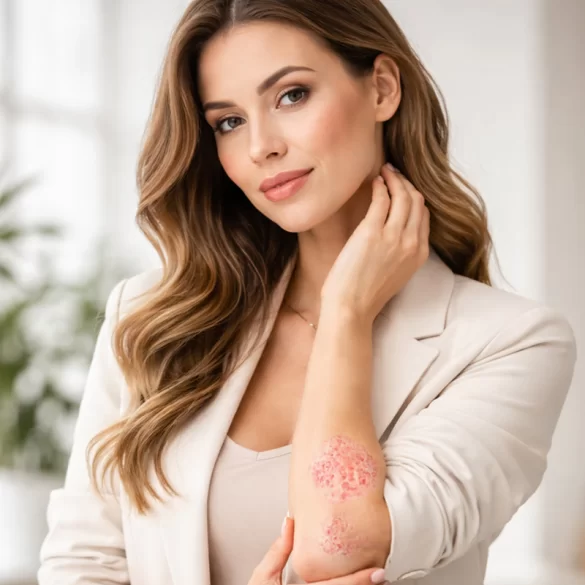

Psoriasis vulgaris is a chronic, relapsing inflammatory skin disease of immunological origin, and is among the most common dermatological disorders. This condition is characterized by excessive and accelerated keratinization of the epidermis, leading to the formation of well‑demarcated, reddened plaques covered with a silvery‑white scale. The disease can occur at any age, although it most commonly appears between the ages of 15 and 35. Psoriasis has a systemic character – in addition to skin lesions it may be associated with metabolic disorders, cardiovascular diseases, and psoriatic arthritis. The course of the disease is individual and often includes periods of remission and exacerbations triggered by various environmental factors.
Łuszczyca pospolita - leczenie
Leczenie łuszczycy pospolitej jest złożone i zależy od nasilenia choroby, lokalizacji zmian oraz ogólnego stanu zdrowia pacjenta. Celem terapii jest zmniejszenie stanu zapalnego, spowolnienie nadmiernego podziału komórek naskórka oraz wydłużenie okresów remisji.
Leczenie miejscowe
W łagodnych postaciach choroby stosuje się przede wszystkim preparaty aplikowane bezpośrednio na skórę:
- kortykosteroidy miejscowe, zmniejszające stan zapalny,
- analogi witaminy D3 (np. kalcypotriol),
- retinoidy miejscowe,
- preparaty keratolityczne zawierające kwas salicylowy lub mocznik,
- emolienty poprawiające barierę ochronną skóry.
Fototerapia
W umiarkowanych postaciach choroby stosuje się terapię światłem ultrafioletowym, która hamuje nadmierną proliferację keratynocytów. Najczęściej wykorzystywane metody to:
- UVB 311 nm (fototerapia wąskopasmowa),
- PUVA – połączenie promieniowania UVA z lekami fotouczulającymi.
Leczenie ogólne
W ciężkich postaciach łuszczycy stosuje się leczenie systemowe, obejmujące:
- metotreksat,
- cyklosporynę,
- retinoidy doustne,
- leki biologiczne skierowane przeciw cytokinom zapalnym (np. inhibitory TNF-α, IL-17 lub IL-23).
Leki biologiczne należą obecnie do najbardziej zaawansowanych metod terapii, ponieważ działają na konkretne mechanizmy immunologiczne odpowiedzialne za rozwój choroby.
Wspomagające zabiegi dermatologiczne
W terapii łuszczycy stosuje się również procedury poprawiające kondycję skóry i wspomagające leczenie dermatologiczne, takie jak:
- terapie laserowe i światłem,
- zabiegi złuszczające o kontrolowanym działaniu,
- specjalistyczne zabiegi dermatologiczne i kosmetologiczne poprawiające funkcję bariery naskórkowej.
Choć łuszczyca jest chorobą przewlekłą i obecnie nie istnieje metoda pozwalająca na jej całkowite wyleczenie, odpowiednio dobrana terapia umożliwia znaczną kontrolę objawów oraz poprawę jakości życia pacjentów.
Psoriasis vulgaris – symptoms
The most characteristic symptom of common psoriasis is well-demarcated, erythematous inflammatory plaques covered with a silvery-white scale. These lesions can vary in size – from small papules to large plaques occupying significant areas of the skin.
The most common locations of the lesions are:
- elbows and knees,
- scalp,
- sacro-lumbar area,
- nails,
- trunk and limbs.
Typical clinical symptoms include:
- skin erythema, resulting from the dilation of blood vessels,
- epidermal scaling, forming the characteristic silvery scale,
- skin itching, which can vary in intensity,
- skin cracking and tenderness of the lesions, especially in areas exposed to pressure.
In dermatology three classic diagnostic signs are also described:
- candle-grease sign – after scraping off the scale the surface of the lesion resembles drops of stearin,
- Auspitz sign – the appearance of pinpoint bleeding after removal of the scale,
- Koebner phenomenon – the development of psoriatic lesions at the site of skin injury.
In some patients the disease may also involve the nails, causing thickening, pitting (small depressions) and separation of the nail plate from the bed. In approximately 20–30% of cases psoriatic arthritis also develops, leading to joint pain, stiffness and swelling.
Psoriasis vulgaris – causes
Plaque psoriasis is a multifactorial disease in which genetic predisposition and disturbances of the body's immune response play a key role. In affected individuals there is excessive activation of T lymphocytes and increased production of proinflammatory cytokines, such as TNF-α, interleukins IL-17 and IL-23. This leads to uncontrolled proliferation of keratinocytes – the cells that make up the epidermis.
Under normal conditions the skin cell renewal cycle lasts about 28 days, whereas in psoriasis it shortens to as little as 3–5 days, which causes accumulation of immature cells and the formation of the characteristic scale.
The most important factors that favor disease development include:
- genetic factors – the presence of certain variants of HLA system genes (e.g. HLA-Cw6),
- immune disorders, leading to a chronic inflammatory state of the skin,
- bacterial infections, especially streptococcal throat infections,
- psychological stress, which can initiate or exacerbate symptoms,
- skin injuries (Koebner phenomenon), where psoriatic lesions arise at the site of damage,
- certain medications, e.g. beta-blockers, lithium, antimalarial drugs,
- metabolic factors, such as obesity or insulin resistance.
Current research indicates that psoriasis is a disease of systemic inflammation, and the immunological processes occurring in the skin may also affect the functioning of other organs.
Psoriasis vulgaris – diet
Produkty, których nadmiar może nasilać stan zapalny
- wysoko przetworzona żywność,
- nadmiar cukrów prostych,
- tłuszcze trans i duże ilości tłuszczów nasyconych,
- alkohol.
Istotne znaczenie ma również utrzymanie prawidłowej masy ciała, ponieważ otyłość sprzyja nasileniu procesów zapalnych i może pogarszać przebieg łuszczycy. U niektórych pacjentów obserwuje się także poprawę po ograniczeniu glutenu, szczególnie jeśli współistnieje nadwrażliwość na gluten lub celiakia.
Warto podkreślić, że dieta stanowi element wspomagający terapię, ale nie zastępuje leczenia dermatologicznego.

