Shingles
back to main page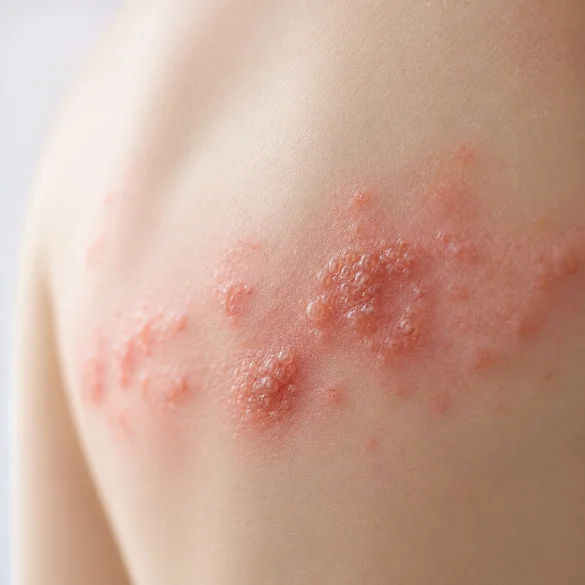
Shingles (herpes zoster) is an infectious disease caused by the reactivation of the varicella-zoster virus (VZV), which, after chickenpox, remains in the body in a latent state throughout life. The disease most commonly develops in people with reduced immunity, the elderly, or during the course of chronic conditions that weaken the immune system. A characteristic symptom is a unilateral, painful vesicular rash appearing within one or several dermatomes, i.e., areas of skin innervated by a specific nerve. In addition to skin lesions, shingles can lead to neurological complications, chronic pain, and permanent skin changes. Early diagnosis and prompt implementation of antiviral treatment are crucial for limiting the severity of symptoms and reducing the risk of complications.
Shingles - what is it
Shingles is the result of reactivation of the latent VZV virus, not a new infection. After recovering from chickenpox, the virus is not completely eliminated from the body, but remains in the sensory nerve ganglia of the spinal cord or cranial nerves. Under certain conditions, it can reactivate and travel along nerve fibers to the skin.
The name of the disease comes from the characteristic distribution of lesions, which often form a band-like pattern covering one side of the trunk. In reality, shingles can occur in virtually any dermatome.
The most commonly affected areas are:
- chest area,
- back,
- abdomen,
- face,
- neck,
- lumbar region.
The course of the disease can be divided into several stages:
- Prodromal phase - pain, burning, itching, or skin sensitivity appearing 2-5 days before the rash.
- Vesicular phase - the occurrence of characteristic vesicles filled with serous fluid.
- Healing phase - drying of the lesions, formation of scabs, and gradual skin regeneration.
The most common complication is postherpetic neuralgia, which is chronic pain persisting for many months, and sometimes even years, after the skin lesions have healed.
Shingles - where it comes from
The direct cause of shingles is the weakening of immune surveillance over the VZV virus. With age, the number of T lymphocytes responsible for controlling the infection gradually decreases, which increases the risk of virus reactivation.
The most important risk factors include:
- age over 50,
- neoplastic diseases,
- HIV infection,
- immunosuppressive treatment,
- chemotherapy,
- organ transplants,
- chronic kidney diseases,
- diabetes,
- severe psychophysical stress,
- chronic fatigue.
It is worth emphasizing that contact itself with a person sick with shingles does not cause the development of shingles in a healthy person. A person who has not previously had chickenpox nor been vaccinated against it can, however, contract the VZV virus and develop chickenpox.
A particularly severe course can occur in:
- ophthalmic shingles,
- herpes zoster oticus (Ramsay Hunt syndrome),
- disseminated shingles occurring in people with profound immunodeficiency.
In these cases, there is a risk of permanent damage to the organ of sight or hearing, or the development of serious neurological complications.
Shingles - what the rash looks like
A typical shingles rash develops in stages and has a very characteristic clinical presentation.
Initially, there appears:
- skin redness,
- swelling,
- severe tenderness,
- burning or a burning sensation.
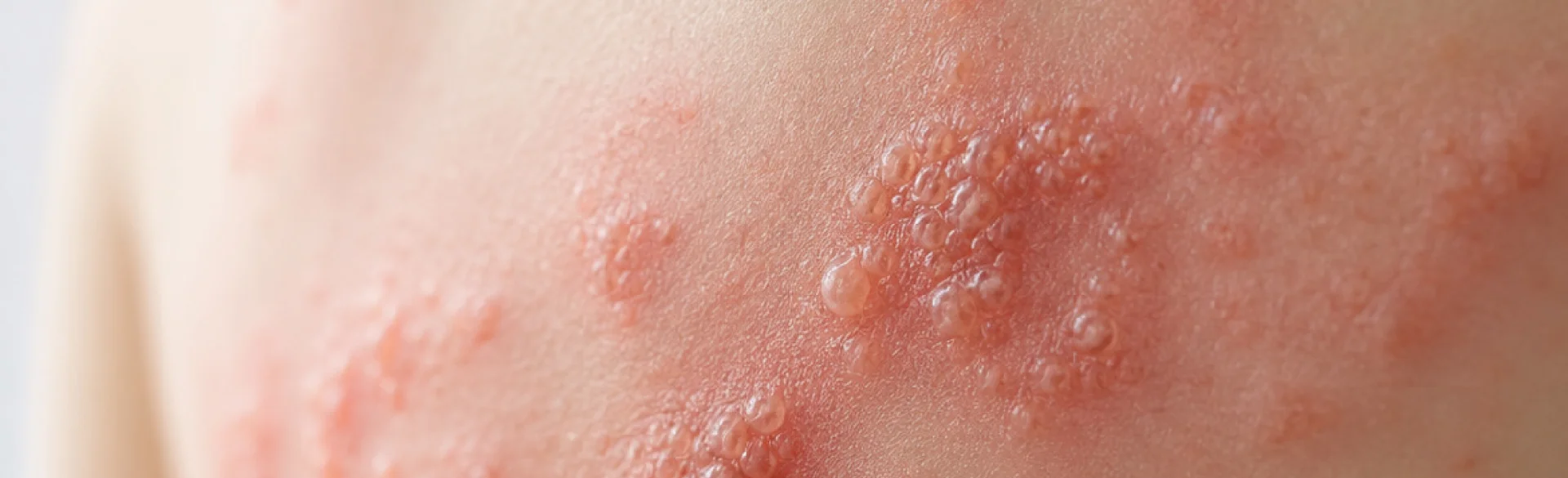
Then, clusters of small vesicles filled with clear fluid develop. After a few days, the fluid may become cloudy, and the vesicles gradually rupture and crust over.
The most characteristic features of the rash are:
Feature | Characteristics |
|---|---|
Location | unilateral |
Distribution | consistent with the course of a dermatome |
Number of lesions | clusters of vesicles |
Pain | very severe, often disproportionate to the appearance of the skin |
Healing time | usually 2-4 weeks |
The most commonly affected dermatomes are:
- thoracic,
- lumbar,
- cervical,
- ophthalmic branch of the trigeminal nerve.
The pain can be:
- burning,
- stabbing,
- shooting,
- throbbing,
- worsening with the touch of clothing.
In some patients, pain precedes the appearance of skin lesions, which can make it difficult to make a correct diagnosis.
Shingles - scars and discoloration after shingles
In most patients, skin lesions heal without leaving permanent marks. However, if the course of the disease was severe or deep skin damage occurred, permanent aesthetic consequences may develop.
The most commonly observed are:
- post-inflammatory hyperpigmentation,
- skin depigmentation,
- atrophic scars,
- hypertrophic scars (much less common),
- persistent redness.
The risk of scar formation is increased by:
- scratching of vesicles,
- secondary bacterial infection,
- delayed initiation of antiviral treatment,
- extensive skin lesions,
- diseases impairing healing, especially diabetes.
After the complete resolution of the inflammatory process, treatments to improve skin quality and reduce the consequences of shingles can be considered. Depending on the type of lesions, the following are used, among others:
- fractional laser therapy stimulating collagen remodeling,
- medical microneedling,
- medical peels reducing post-inflammatory hyperpigmentation,
- mesotherapy supporting skin regeneration,
- therapies using platelet-rich plasma to improve tissue healing.
Aesthetic procedures can be performed only after the lesions have completely healed and the active inflammatory process has resolved.
Shingles - vaccination as prevention
The most effective method of preventing shingles remains protective vaccination. The vaccine does not eliminate the virus from the body, but significantly strengthens the immune response against VZV and reduces the risk of its reactivation.
The benefits of vaccination include:
- reducing the risk of contracting the disease,
- significant reduction in the risk of postherpetic neuralgia,
- a milder course of the disease in people who get sick despite vaccination,
- lower risk of hospitalization.
Vaccination is particularly recommended for:
- people over 50 years of age,
- people over 60 years of age, regardless of their health status,
- patients with chronic diseases,
- people being prepared for immunosuppressive treatment,
- patients with cancer and other conditions increasing the risk of shingles.
Modern recombinant vaccines demonstrate very high efficacy also in the elderly and maintain protection for many years. They currently constitute a fundamental element in the prevention of severe forms of shingles and its neurological complications.

