Atrophic scars
back to main page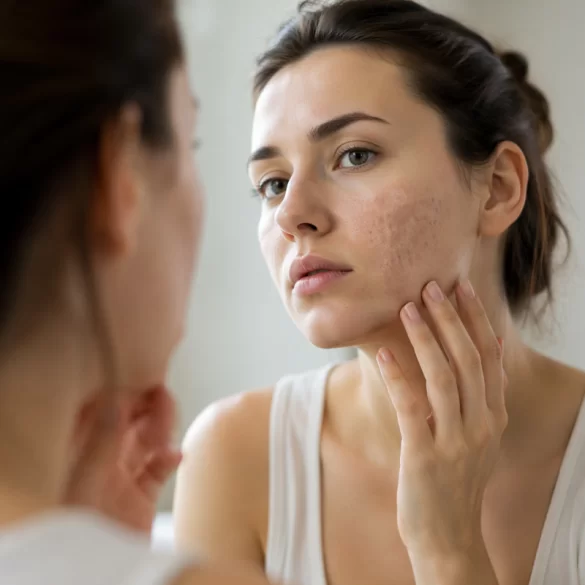
Concave scars (atrophic) are a specific type of scars characterized by tissue loss within the dermis, which results in the formation of depressions of various depths and shapes. They develop as a result of an abnormal healing process in which there is insufficient production of collagen and other components of the extracellular matrix. They are most commonly observed after inflammatory lesions, such as acne, chickenpox, or mechanical injuries. Concave scars can significantly affect skin aesthetics and the patient's well-being, especially when they occur in visible areas such as the face.
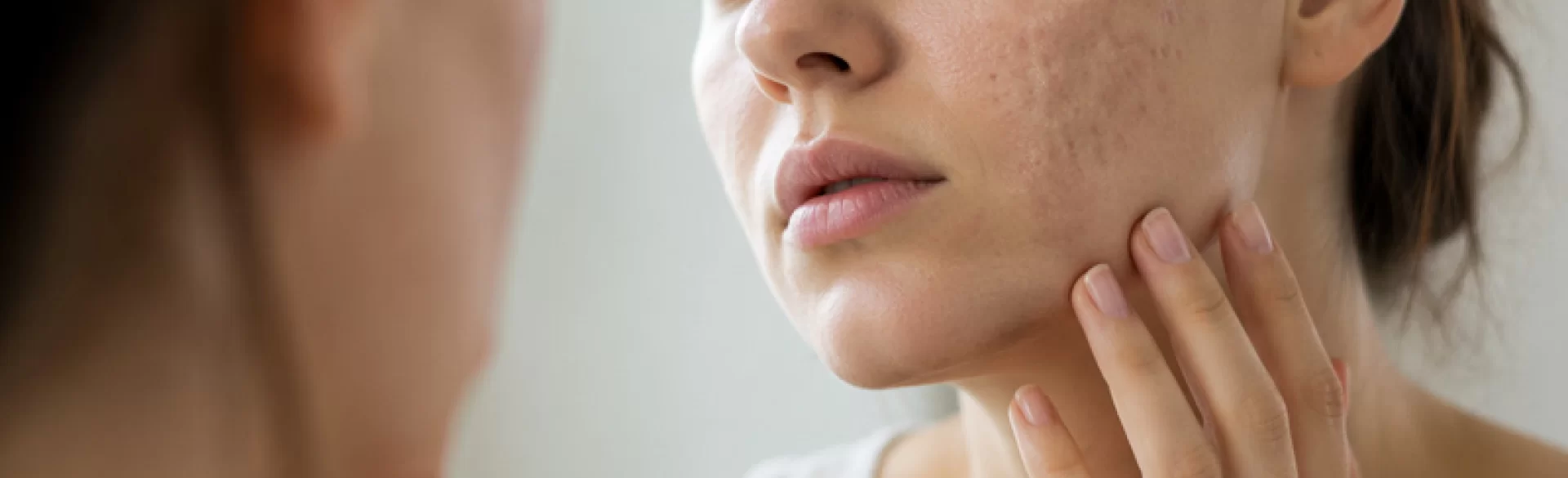
Atrophic scars on the face
Depressed scars on the face are the most common clinical problem among atrophic scars. Their presence is particularly significant due to the exposure of this area and its aesthetic and psychosocial importance.
Three basic types of depressed scars are distinguished on the face:
- ice-pick scars – narrow, deep, reaching the dermis or subcutaneous tissue
- boxcar scars – with clearly defined edges, shallow or deep
- rolling scars – wavy, with an irregular course, associated with fibrous bands pulling the skin down
They are most often a consequence of acne vulgaris, in which chronic inflammation leads to the destruction of collagen and elastin fibers. The healing process does not keep pace with tissue loss, resulting in permanent skin depression.
Characteristic features of depressed scars on the face:
- uneven skin structure and disrupted continuity
- visibility in side lighting (the so-called shadowing effect)
- lack of tendency for spontaneous improvement
- often coexisting post-inflammatory hyperpigmentation
Due to the complexity of the problem, treatment of scars in this location requires an individual approach and often combined therapies.
Atrophic scars – causes
The formation of atrophic scars is the result of an imbalance between the processes of tissue degradation and reconstruction during wound healing. A key role is played by insufficient synthesis of type I and III collagen and impaired function of fibroblasts – the cells responsible for the production of the skin matrix.
The main causes of atrophic scar formation include:
- inflammatory acne – the most common cause; intense inflammation destroys skin structures
- viral infections – e.g., chickenpox, leaving characteristic depressions
- mechanical and surgical injuries – especially with improper healing
- genetic factors – predisposition to inefficient skin regeneration
- delayed or incorrect treatment of inflammatory lesions
At the histological level, the following are observed:
- reduction in the number of collagen fibers
- disorganization of the extracellular matrix
- reduced thickness of the dermis
An important factor worsening the healing process is also chronic inflammation and excessive activity of metalloproteinases (enzymes that degrade collagen).
Atrophic scars – how to treat
Treatment of concave scars is one of the major challenges of modern dermatology and aesthetic medicine, because it involves the reconstruction of lost tissue, rather than just its remodeling. The key is to stimulate neocollagenesis (the formation of new collagen) and the restructuring of the skin structure.
The most effective therapeutic methods include:
1. Fractional laser therapy (ablative and non-ablative)
It causes controlled micro-damage to the skin, which stimulates regenerative processes and collagen synthesis. It is one of the most commonly used methods in the treatment of atrophic scars.
2. Microneedling (microneedle mesotherapy)
It induces mechanical stimulation of fibroblasts and the production of new collagen and elastin fibers. Often combined with the administration of active substances.
3. Subcision (scar subcision)
A surgical technique involving the mechanical cutting of fibrous bands pulling the scar downwards, allowing it to be lifted.
4. Tissue fillers (e.g., hyaluronic acid)
Used for the immediate lifting of the scar base and improvement of the skin surface. The effect is temporary, but it is often used as part of combination therapy.
5. Medical peels (e.g., TCA)
Especially effective for shallow scars; they stimulate the regeneration of the epidermis and dermis.
6. Regenerative therapies (e.g., platelet-rich plasma)
They support repair processes by providing growth factors.
Key principles of treatment:
- therapy should be multi-stage and combined – a single method rarely yields satisfactory results
- selection of the technique depends on the type of scars
- patience is necessary – skin remodeling takes months
- complete removal of scars is impossible, but a significant improvement in their appearance is possible
In clinical practice, protocols combining, for example, laser therapy, microneedling, and subcision are used, which allows for action at different levels of the skin and achieves more predictable therapeutic results.

