Solar elastosis
back to main page
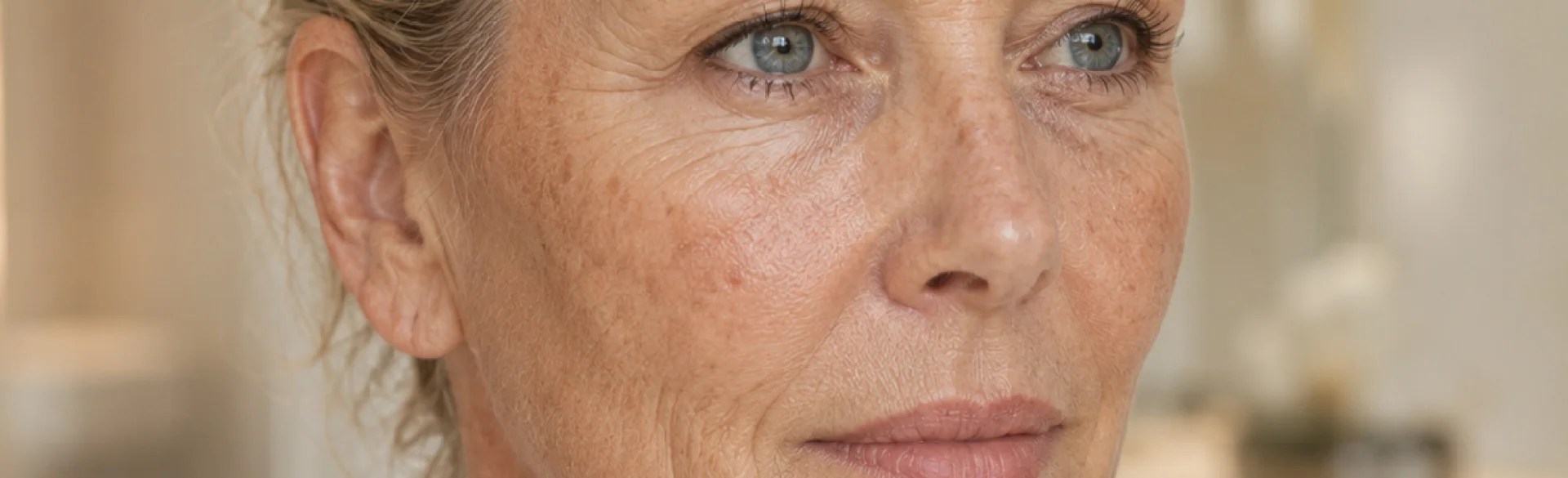
Solar elastosis is a chronic skin damage caused by long-term exposure to ultraviolet (UV) radiation, leading to deep changes in the structure of the dermis. It is one of the most characteristic symptoms of advanced photoaging and indicates permanent damage to collagen and elastin fibers. Unlike natural aging, which progresses gradually with age, solar elastosis develops primarily as a result of the accumulation of UV radiation and can appear much earlier in individuals who intensively expose their skin to the sun.
The changes most often affect the face, neck, décolletage, back of the neck, backs of the hands, and forearms, which are areas constantly exposed to solar radiation. The skin becomes thickened, rough, less elastic, takes on a yellowish tint, and loses its natural structure. Deep wrinkles, discoloration, telangiectasias, and actinic keratosis also often co-exist.
Solar elastosis is not only an aesthetic problem. It is a marker of chronic skin damage by UV radiation, and individuals with advanced elastosis have a higher risk of developing precancerous lesions and skin cancers. For this reason, any severe elastosis requires not only appropriate regenerative therapy, but also regular dermatological check-ups.
Solar elastosis - what it is
Solar elastosis (solar elastosis) refers to the pathological accumulation of abnormal elastic fibers in the dermis, which is a consequence of chronic exposure to UVA and UVB radiation. It is one of the best-known histopathological changes characteristic of photoaging.
This process develops over many years and involves the gradual degradation of the skin's extracellular matrix.
The most important mechanisms leading to the development of elastosis include:
- chronic damage to collagen fibers by UV radiation
- excessive activation of metalloproteinases (MMPs), which break down collagen
- abnormal remodeling of elastin fibers
- accumulation of degenerated elastic material in the dermis
- chronic low-grade inflammation
- oxidative stress induced by free radicals
- reduced activity of fibroblasts responsible for collagen production
- impaired microcirculation and deterioration of skin nourishment.
In the microscopic picture, instead of a normal collagen network, a dense elastotic material with an abnormal structure appears. These changes are permanent and do not regress spontaneously.
The severity of elastosis depends on the cumulative lifetime dose of UV radiation, skin phototype, genetic predisposition, and the use of sun protection.
Solar elastosis - what it looks like on the neck and décolletage
The neck and décolleté are among the areas particularly prone to the development of solar elastosis. The skin in these areas is thin, contains fewer sebaceous glands, and has a relatively small amount of supporting tissue, which is why the effects of chronic UV radiation exposure manifest more quickly.
Typical symptoms include:
- skin thickening
- loss of softness and elasticity
- rough, uneven surface
- yellowish or sallow skin coloration
- deep wrinkles with an irregular course
- numerous sun-induced discolorations
- dilated blood vessels
- skin laxity and loss of firmness.
A particularly characteristic presentation is the so-called rhomboidal skin of the neck (cutis rhomboidalis nuchae). The skin surface then resembles a thick mesh composed of deep furrows forming a rhomboidal pattern. This change is considered a classic symptom of chronic skin damage caused by UV radiation.
The simultaneous occurrence of the following is often observed on the décolleté:
- discoloration,
- depigmentation,
- telangiectasias,
- laxity,
- deep wrinkles.
This combination is referred to as solar poikiloderma and indicates advanced photoaging.
Solar elastosis - why the skin becomes rough and yellowish
The change in skin appearance is the result of deep disorders occurring in its structure. The yellowish discoloration is not due to the presence of pigment, but to the accumulation of pathologically remodeled elastic fibers and biochemical changes within the collagen.
The characteristic appearance of the skin is influenced, among other things, by:
- degradation of normal collagen
- deposition of abnormal elastin
- thickening of the dermis
- disruption of the organization of supporting fibers
- decrease in hyaluronic acid content
- chronic oxidative stress
- the process of skin protein glycation
- deterioration of microcirculation.
As a result, the skin:
- loses its softness,
- becomes hard to the touch,
- appears thickened,
- is less resilient,
- reflects light poorly,
- takes on a dull, yellowish hue.
In contrast to physiologically aging skin, which usually becomes thinner, skin with advanced elastosis often appears thicker, heavier, and less elastic.
Solar elastosis - connection with photoaging
Solar elastosis is one of the most characteristic signs of photoaging and is its histological marker. Photoaging is responsible for up to about 80% of the visible signs of facial skin aging in individuals with a fair phototype, while natural chronological aging plays a much smaller role.
UVA radiation penetrates deeply into the dermis and damages the fibroblasts responsible for the production of collagen and elastin over many years. The process is asymptomatic for a long time, and the first visible signs usually appear after many years of exposure.
The symptoms of photoaging associated with elastosis include:
- loss of firmness,
- deep wrinkles,
- skin laxity,
- uneven texture,
- roughness,
- discoloration,
- telangiectasias,
- enlarged pores,
- sallow complexion,
- deterioration of skin quality.
It is worth emphasizing that people with pronounced solar elastosis are also more likely to develop:
- actinic keratosis,
- basal cell carcinoma,
- squamous cell carcinoma,
- other lesions resulting from chronic DNA damage caused by UV radiation.
Therefore, elastosis is not only an indicator of the skin's biological age, but also a marker of long-term exposure to solar radiation.
Solar elastosis - regenerative and laser treatments
Treatment of solar elastosis primarily involves remodeling the damaged skin and stimulating the production of new collagen. There is no single treatment that completely removes elastosis, but modern therapies can significantly improve skin structure, tension, and appearance.
The best results are achieved with combination therapy, selected individually according to the severity of the changes.
The most effective methods include:
- fractional ablative CO₂ lasers – remove damaged skin layers and strongly stimulate its remodeling, improving the structure, tension, and depth of wrinkles
- fractional non-ablative 1540–1550 nm lasers – stimulate collagen remodeling with a shorter recovery period
- radiofrequency microneedling (RF microneedling) – causes controlled micro-damage and heats the deep layers of the skin, stimulating fibroblasts to intensively produce new collagen and elastin
- HIFU – acts on the deep supportive layers of the skin, improving tissue tension and the facial oval
- tissue biostimulators – stimulate natural skin regeneration and the rebuilding of the extracellular matrix
- needle mesotherapy – delivers ingredients supporting fibroblast metabolism and improves skin quality
- collagen stimulators – increase skin density and elasticity by inducing neocollagenesis
- medical peels – support epidermal renewal and improve skin tone.
Daily photoprotection remains a key element of the therapy. Without consistently applied sun protection, the photoaging process will progress despite the treatments performed.
Modern treatment of solar elastosis is not solely about improving the appearance of the skin. Its primary goal is to rebuild its proper architecture, restore protective functions, and limit the further consequences of chronic damage caused by UV radiation. The earlier a comprehensive regenerative therapy is implemented, the greater the chance of achieving a lasting improvement in skin quality and slowing down photoaging processes.

