Burnt hair
back to main page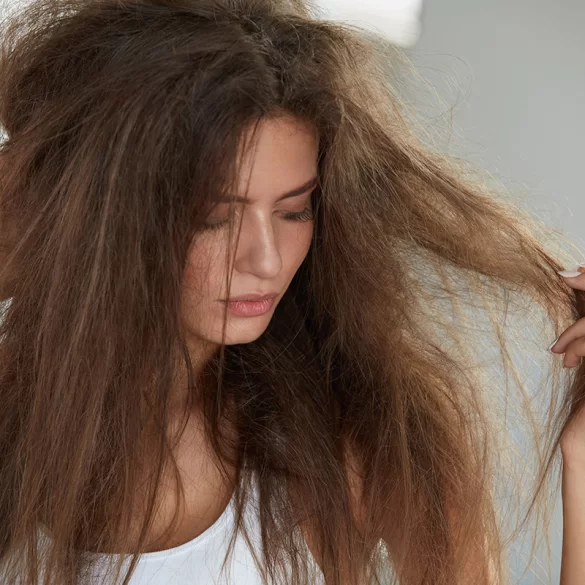
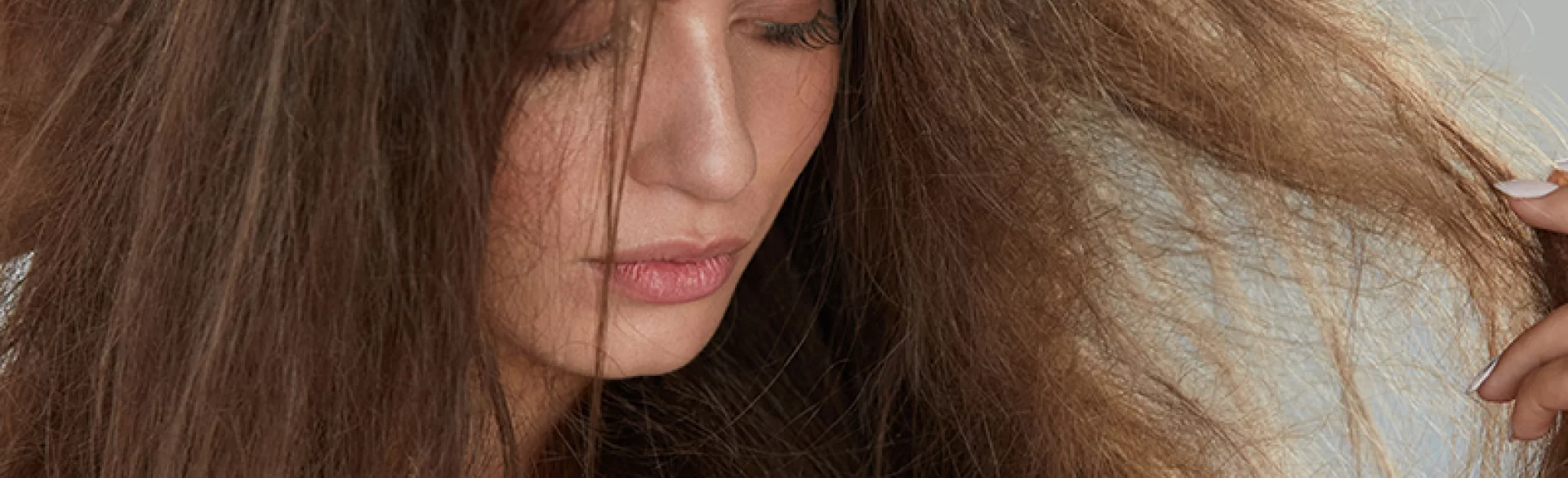
Burnt hair is a colloquial term for advanced damage to the hair structure, where there is permanent degradation of its protective and supportive layers. The hair loses the integrity of the cuticle (scales), and in deeper damage, also the cortex, resulting in a loss of elasticity, shine, and mechanical resistance. This phenomenon is not merely an aesthetic problem—it indicates a disturbance in the chemical and physical balance of the hair fiber, whose regenerative abilities are very limited. Unlike dry hair, burnt hair does not spontaneously return to its original state. It requires precisely tailored rebuilding procedures, often combining salon treatments with long-term home therapy.
Burnt Hair – Causes
The cause of burnt hair is the action of factors leading to the denaturation of keratin proteins and the degradation of intercellular cement lipids. These are most often factors that accumulate over time, although sudden one-time damage is also possible.
Most common causes of burnt hair:
Aggressive chemical treatments, particularly:
- bleaching (especially multiple times or with high concentrations of oxidants),
- permanent waving,
- frequent dyeing without regeneration between treatments.
High temperature:
- straighteners and curling irons above 180–200°C,
- drying with hot air without thermal protection.
Improperly chosen hair care:
- products with high alcohol content,
- excess proteins without humectant-lipid balance,
- lack of occlusive substances.
Environmental factors:
- UV radiation,
- salty sea water,
- chlorinated pool water.
Hairdressing mistakes:
- lack of strand testing,
- incorrect exposure time of the product,
- combining several chemical procedures simultaneously.
It is important to emphasize: dead hair does not biologically regenerate – you can only improve its physical and visual parameters.
Burnt hair – first symptoms
The symptoms of burned hair develop gradually, although they may appear almost immediately after intense bleaching. Their characteristic feature is irreversibility without treatment intervention.
The most common symptoms include:
- Stiffness and "squeaking" of the hair when touched or washed,
- Loss of elasticity – the hair does not return to its original shape after being stretched,
- Brittleness and breakage, often occurring during brushing,
- Dullness and lack of light reflection,
- Split ends and cracks along the hair shaft,
- Extreme porosity – hair absorbs water but loses it quickly,
- Difficulty in styling – hair "doesn't settle," frizzes, and tangles.
In advanced cases, there is a complete break in the continuity of the fiber, resulting in hair breaking at various lengths.
Burnt Hair – How to Restore It
The reconstruction of damaged hair involves structural rebuilding and restoration of the protective layer, rather than "treatment" in a biological sense. A realistic assessment of the hair's condition is crucial—some damage requires gradual shortening of length to prevent further breakage.
An effective reconstruction strategy includes:
Rebuilding internal hair bonds:
- using products that act on the keratin bridges,
- structural regeneration, not just surface-level.
Lipid replenishment:
- ceramides, phospholipids, highly bio-compatible oils,
- reconstruction of the intercellular cement.
Controlled protein supply:
- low-molecular-weight amino acids,
- hydrolyzed keratin in appropriate proportions.
Thermal and mechanical protection:
- complete avoidance of high temperatures in the initial phase,
- gentle detangling methods.
Consistency:
- a single treatment is not enough,
- series and consistent home care are necessary.
If the hair structure is extremely damaged, full recovery is not possible, and the goal of therapy becomes improving aesthetics, reducing breakage, and protecting newly growing hair.
Treatments for burnt hair
In clinical settings, it is possible to apply advanced regenerative procedures that significantly outperform home care in terms of effectiveness.
The most commonly used restorative treatments include:
Hair fiber reconstruction treatments:
- rebuilding keratin bridges,
- improving mechanical strength.
Infusion of active ingredients:
- amino acids, ceramides, lipids,
- introducing substances deep into the hair structure.
Treatments using controlled heat:
- activation of regenerating ingredients,
- closing hair cuticles without overheating.
Moisturizing-lipid therapies:
- deep hydration and reconstruction of the protective layer,
- reduction of porosity.
Trichological programs (if damage coexists with scalp problems):
- improving hair quality from the root,
- supporting healthy regrowth.
In practice, the best results come from combining regenerative treatments with individually tailored home care and modifying styling habits. Attempts to "salvage" damaged hair without changing the cause of damage only lead to temporary improvement in appearance, rather than actual restoration.

