Telangiectasia
back to main page
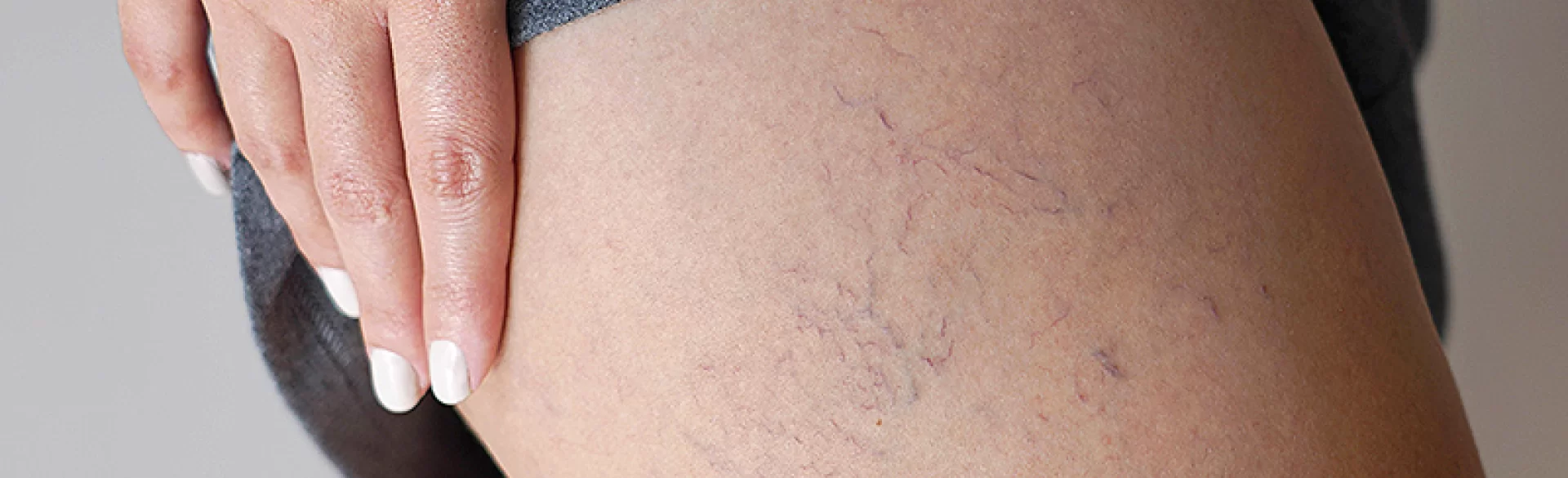
Telangiectasias are permanent, pathological dilations of small blood vessels—primarily within the skin—visible as thin, red or purplish-red lines resembling 'spider veins.' They are most commonly located on the face (cheeks, nasal wings, chin), but can also appear on the lower limbs and trunk. These changes are not merely an aesthetic defect—they represent a clinical symptom of microcirculation disorders, chronic damage to the vessel wall, or systemic diseases. Telangiectasias can be primary or secondary in nature and often increase with age. Modern dermatology and aesthetic medicine have effective methods for their treatment, but proper diagnosis of the causes and selection of therapy appropriate to the type and location of the changes are of key importance.
Telangiectasia – what is it
Telangiectasia (Latin: telangiectasia) are permanent dilations of capillaries, venules, or small arterioles with a diameter usually below 1 mm, located in the skin or mucous membranes. They occur as a result of the weakening of the vessel wall and disturbances in the regulation of vascular tension, leading to the loss of the vessels' ability to constrict.
In pathophysiological terms, telangiectasia are caused by:
- degeneration of collagen and elastic fibers surrounding the vessels,
- chronic skin inflammation,
- the action of mechanical, hormonal, or environmental factors.
Several morphological types of telangiectasia are distinguished:
- linear – common on the wings of the nose,
- branching – typical for the lower limbs,
- spider – radiating vessels,
- reticular – forming an extensive network of small vessels.
Telangiectasia can occur as isolated skin lesions or be part of the clinical picture of other dermatological and internal diseases.
Telangiectasias – Causes
The etiology of telangiectasia is multifactorial and includes both congenital predispositions and acquired factors. In clinical practice, several mechanisms often coexist simultaneously.
Genetic predispositions – congenital fragility of vessels, collagen and elastin synthesis disorders.
Hormonal factors:
- pregnancy,
- oral contraception,
- hormone replacement therapy,
- endocrine disorders.
Chronic exposure to UV radiation – photo-damage of the skin leading to degradation of the extracellular matrix.
Dermatological diseases:
- rosacea,
- chronic inflammatory dermatoses,
- atopic dermatitis.
Systemic diseases:
- venous insufficiency,
- liver diseases,
- connective tissue diseases.
Mechanical and environmental factors:
- frequent temperature changes,
- sauna, hot baths,
- alcohol,
- smoking.
Prolonged use of topical glucocorticosteroids – leading to skin atrophy and vessel weakening.
Ignoring the causes and focusing solely on removing visible changes often results in recurrences of telangiectasia.
Telangiectasias – symptoms
Telangiectasia primarily manifests as changes visible on the skin, but some patients may also experience subjective symptoms.
Clinical symptoms of telangiectasia:
- thin, red, pink, or bluish-red vessels visible under the skin,
- symmetric or asymmetric distribution of changes,
- gradual increase in the number and extent of vessels,
- lack of spontaneous regression of changes.
Accompanying symptoms (not always present):
- sensation of burning or stinging in the skin,
- sensitivity to heat and cold,
- tendency to episodic erythema,
- sensation of "pulsing" in the skin at the site of changes.
In the case of telangiectasia of the lower limbs, symptoms of venous insufficiency may coexist, such as a feeling of heaviness in the legs or swelling, which requires further diagnostic evaluation.
Telangiectasias – treatment
Treatment of telangiectasia should be preceded by an assessment of their type, depth, location, and identification of causative factors. Symptomatic therapy alone, without eliminating the causes, is a shortsighted approach.
Prevention and lifestyle modification:
- year-round photoprotection,
- avoiding sudden temperature changes,
- abstaining from alcohol and smoking,
- appropriate care for vascular skin.
Topical treatment:
- preparations that strengthen vessel walls,
- ingredients with anti-inflammatory and antioxidant effects.
Procedural treatment – the method of choice for persistent changes:
- closing vessels using light energy or radio waves,
- precise coagulation of vessels without damaging surrounding tissues.
The effectiveness of therapy depends on:
- proper patient qualification,
- selection of technology appropriate to the diameter and depth of the vessel,
- performing a series of treatments, rather than a single procedure.
Treatments for telangiectasia
In the treatment of telangiectasia, modern, non-invasive technologies available in specialized centers of aesthetic medicine and procedural dermatology play a key role.
Laser vein closure:
- selective photothermolysis of hemoglobin,
- precise destruction of the vessel wall,
- minimal risk of skin damage.
IPL (Intense Pulsed Light):
- broad-spectrum pulsed light,
- effective in treating diffuse vascular changes and erythema,
- simultaneous improvement of skin tone and quality.
Microneedle radiofrequency with vascular component:
- constriction of small vessels,
- improvement of skin structure,
- supportive action in vascular skin therapy.
- gradual disappearance of visible vessels,
- reduction of erythema,
- improvement in skin tone uniformity,
- reduction of vascular reactivity.
It should be clearly stated: effectively removed telangiectasia do not "reopen," but new changes may occur if the causative factors are not eliminated.

