Yellow pimples on the head
back to main page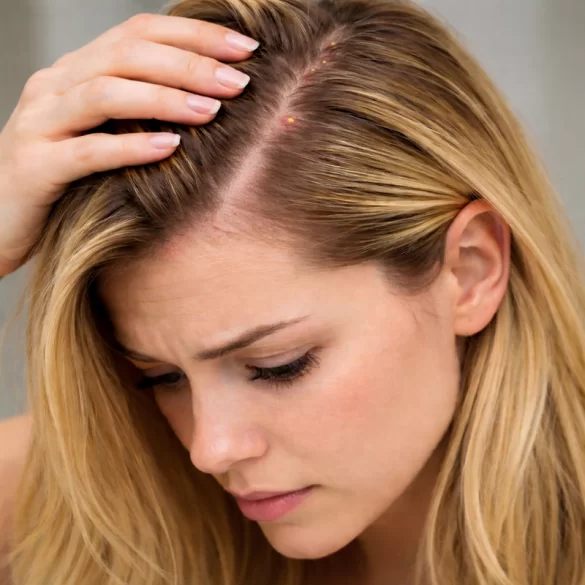
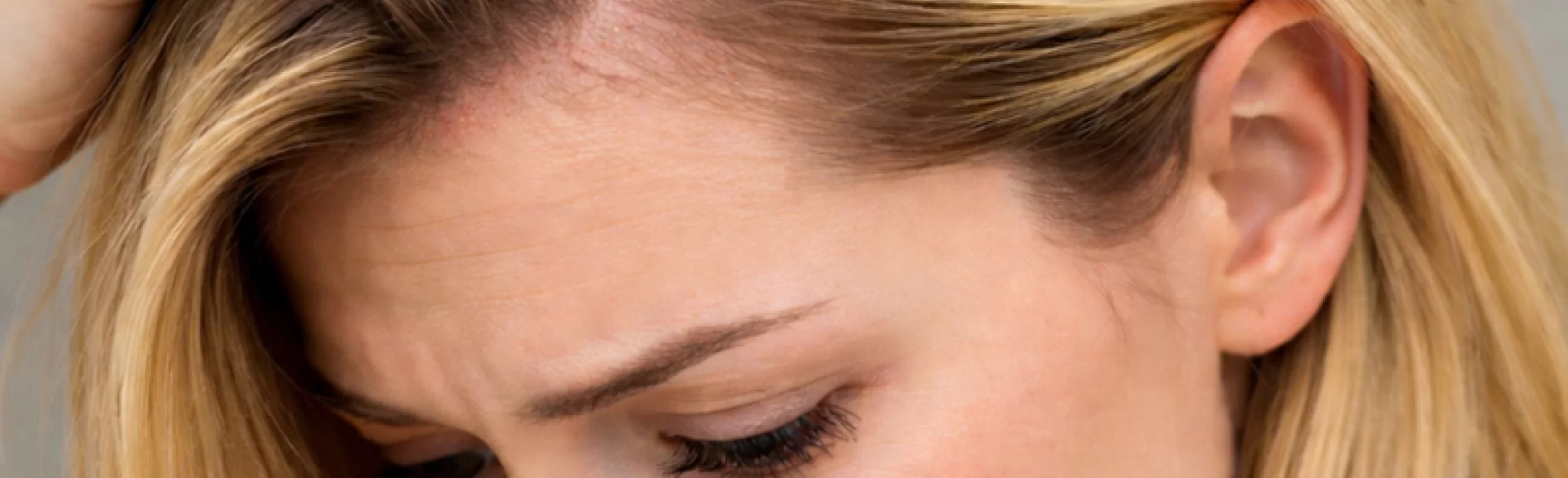
Yellow pimples on the head are skin lesions that appear on the hairy scalp and most often take the form of pustules filled with purulent or sebopurulent material. In dermatology, these lesions are usually associated with an inflammatory process within the hair follicles or sebaceous glands. The characteristic yellowish coloration results from the presence of pus – a mixture of leukocytes, bacteria, cell debris, and lipids. Lesions of this type may occur singly or in multiples and are often accompanied by symptoms such as pain, itching, skin redness, or tenderness to the touch. Yellow pustules on the head can occur in both adults and children and are most commonly associated with folliculitis, scalp acne, or bacterial infections.
Yellow pimples on the head – where do they come from
The most common cause of yellow pimples on the scalp is inflammation of the hair follicles (folliculitis), a condition affecting the opening of the hair follicle and the surrounding skin structures. It leads to accumulation of inflammatory cells and bacteria, resulting in pustules filled with purulent material of a yellowish color. These lesions usually measure a few millimeters in diameter and may be surrounded by erythema and slight swelling.
An important role in the development of folliculitis is played by bacteria Staphylococcus aureus (golden staph). These microorganisms are part of the skin’s natural flora, but under favorable conditions they can cause infection. Their proliferation occurs particularly easily in situations of:
- excess sebum production,
- microtraumas to the skin caused by scratching,
- prolonged moisture and sweating of the scalp,
- weakening of the protective epidermal barrier.
Bacteria enter the opening of the hair follicle, where they trigger an inflammatory response leading to formation of a pustule.
Yellow pimples on the scalp also require differentiation from other dermatological conditions that can produce similar clinical symptoms. The most important include:
Furuncle (furunculus)
This is a deeper infection of the hair follicle that also involves surrounding tissues. The lesion is usually larger, painful, firm, and may lead to abscess formation.
Scalp acne
In this condition, in addition to pustules, comedones, inflammatory papules, and painful nodules may appear. The lesions are often chronic and are associated with increased activity of the sebaceous glands.
Seborrheic dermatitis
This disease is characterized by erythema, itching, and greasy scales on the scalp, but in advanced cases pustular lesions related to secondary bacterial infection may also occur.
Accurate identification of the cause of the lesions is important because different disease entities require different therapeutic approaches. In cases of recurrent or numerous lesions, a dermatologist may recommend dermoscopic examination, microbiological assessment, or initiation of antibacterial or anti-inflammatory treatment.
Yellow pimples on the head – how to get rid of them
Leczenie żółtych pryszczy na głowie zależy przede wszystkim od przyczyny ich powstawania. W dermatologii stosuje się zarówno metody farmakologiczne, odpowiednią pielęgnację skóry głowy, jak i procedury wspomagające regenerację skóry.
Leczenie dermatologiczne
W przypadku zmian o podłożu bakteryjnym lekarz może zalecić:
- miejscowe antybiotyki (np. klindamycyna, erytromycyna),
- preparaty antyseptyczne zmniejszające namnażanie bakterii,
- retinoidy miejscowe, które regulują proces rogowacenia ujść mieszków włosowych,
- w cięższych przypadkach antybiotykoterapię doustną.
Jeśli zmiany są związane z łojotokowym zapaleniem skóry, stosuje się przede wszystkim:
- szampony przeciwgrzybicze (np. z ketokonazolem),
- preparaty przeciwzapalne,
- środki regulujące wydzielanie sebum.
Prawidłowa pielęgnacja skóry głowy
W wielu przypadkach poprawa codziennej pielęgnacji znacząco ogranicza powstawanie zmian zapalnych.
Zaleca się przede wszystkim:
- regularne mycie skóry głowy odpowiednio dobranymi szamponami,
- unikanie ciężkich kosmetyków stylizujących zatykających ujścia mieszków włosowych,
- dokładne spłukiwanie preparatów pielęgnacyjnych,
- ograniczenie drapania i mechanicznego uszkadzania skóry.
Nie zaleca się wyciskania pryszczy, ponieważ może to prowadzić do pogłębiania stanu zapalnego, rozsiewania bakterii oraz powstawania blizn.
Zabiegi wspomagające leczenie skóry głowy
W przypadku przewlekłych lub nawracających zmian zapalnych pomocne mogą być także procedury dermatologiczne i trychologiczne poprawiające kondycję skóry głowy. Do stosowanych metod należą m.in.:
- zabiegi oczyszczające i regulujące pracę gruczołów łojowych,
- peelingi trychologiczne, które usuwają nadmiar zrogowaciałego naskórka,
- terapie laserowe o działaniu przeciwbakteryjnym i przeciwzapalnym,
- zabiegi poprawiające mikrokrążenie skóry głowy, wspierające regenerację tkanek.
Odpowiednio dobrana terapia pozwala zmniejszyć stan zapalny, ograniczyć namnażanie drobnoustrojów oraz przywrócić prawidłową równowagę mikrobiologiczną skóry.
Jeżeli żółte pryszcze na głowie utrzymują się przez dłuższy czas, powiększają się lub towarzyszy im silny ból, konieczna jest konsultacja dermatologiczna. W niektórych przypadkach podobne objawy mogą bowiem występować również w przebiegu czyraków, ropni lub głębokich zakażeń mieszków włosowych, które wymagają specjalistycznego leczenia.

