Pustules on the chin
back to main page
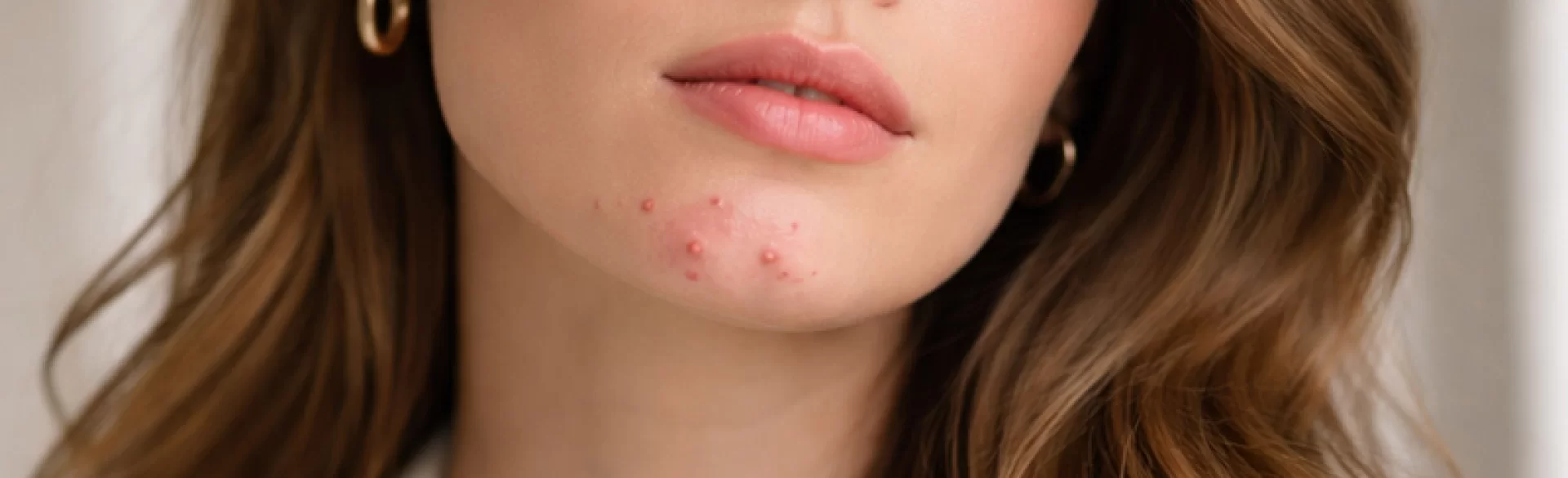
Pustular pimples on the chin are inflammatory skin lesions belonging to the group of purulent eruptions (pustulae) that arise within hair follicles and sebaceous glands. They are characterized by the presence of a white or yellowish purulent content, surrounded by an erythematous, often painful inflammatory rim. Most often they are a manifestation of common acne (acne vulgaris), however they may also occur in the course of folliculitis, hormonal disorders, or chronic skin irritation. The chin area belongs to the so-called lower facial zone, which is particularly prone to inflammatory changes in adults, especially women. These lesions may present as single pustules or as numerous inflammatory foci recurring in the same area of skin.
Pustules on the chin – causes
The formation of pustules on the chin is associated with an inflammatory process developing within the hair follicles and sebaceous glands. The main mechanism is excessive sebum production and disorders of keratinization of the follicular openings, which lead to blockage of skin pores and the development of inflammatory lesions.
The most common causes include:
1. Common acne (acne vulgaris)
This is the most common cause of pustules on the face. In its pathogenesis, the following play key roles:
- excessive sebum production by the sebaceous glands,
- disorders of keratinization of the follicular openings,
- colonization by Cutibacterium acnes,
- development of an inflammatory response in the skin.
2. Hormonal disorders
The chin area is particularly sensitive to the effects of androgens. For this reason, pustular lesions in this area often appear:
- before menstruation,
- in the course of polycystic ovary syndrome (PCOS),
- during periods of hormonal changes,
- in adult women's acne.
3. Folliculitis
Bacteria, most often Staphylococcus aureus, can cause an infection of the hair follicle. It manifests as the formation of painful pustules at the site of hair growth.
4. Mechanical and cosmetic factors
The formation of pustules is also favored by:
- frequent touching of the face with the hands,
- use of comedogenic cosmetics,
- occlusion of the skin by makeup or protective masks,
- skin irritation during shaving or hair removal.
5. Stress and lifestyle
Chronic stress, a high-glycemic-index diet, tobacco smoking, and sleep deprivation can increase sebum production and promote the development of inflammatory lesions.
What to use for pus-filled pimples on the chin
Treatment of pustules on the chin depends on their cause, the severity of the lesions and how long they have been present. In many cases a combination of appropriate skin care, dermatological treatment and aesthetic dermatology procedures is required.
Dermatological treatment
Therapy uses agents with antibacterial, anti-inflammatory and keratinization-regulating effects. The most commonly used are:
- topical retinoids (e.g. adapalene, tretinoin), which normalize keratinization of hair follicle openings and reduce the formation of comedones,
- azelaic acid, which has anti-inflammatory, antibacterial effects and lightens post-inflammatory hyperpigmentation,
- benzoyl peroxide, which reduces the number of Cutibacterium acnes bacteria,
- topical or oral antibiotics, used in cases of severe inflammatory lesions.
In hormonal acne, the physician may consider hormonal treatment, which helps reduce excessive activity of the sebaceous glands.
Appropriate skin care
Proper skin care is important in reducing recurrences of inflammatory lesions. It is recommended to:
- use gentle cleansing products that do not disrupt the skin’s hydrolipid barrier,
- use cosmetics with sebum-regulating and anti-inflammatory effects,
- avoid comedogenic cosmetics,
- regularly exfoliate the epidermis with dermatological preparations,
- limit manipulating inflammatory lesions, which reduces the risk of post-acne scarring.
Dermatological and aesthetic medicine procedures
For recurrent pustules, dermatological procedures that improve skin function and limit the development of acne lesions may be helpful. These include, among others:
- chemical peels using salicylic, mandelic or azelaic acid, which regulate epidermal keratinization and reduce seborrhea,
- skin-cleansing procedures that reduce comedones and prevent the formation of new inflammatory lesions,
- laser and light therapies, which support the treatment of skin inflammatory conditions and improve regeneration.
If inflammatory lesions persist or post-acne scarring appears, a dermatological consultation may be necessary to select the appropriate treatment method.
Differentiation from other skin lesions
Not all lesions resembling pustules on the chin are a sign of acne. Several skin diseases that can produce a similar clinical picture should be considered in dermatological diagnostics.
The most commonly considered are:
- perioral dermatitis – a chronic inflammatory skin condition in which small papules and pustules appear around the mouth and on the chin; lesions are often associated with excessive use of cosmetics or topical glucocorticosteroids,
- folliculitis, most often caused by Staphylococcus aureus bacteria, manifesting as painful pustules in hair follicles,
- boils (furunculus) – deep, purulent infections of the hair follicle leading to the formation of a painful nodule with a purulent core,
- papulopustular rosacea, in which inflammatory lesions resembling pustules appear, usually on the central part of the face.
Correct diagnosis is crucial because each of these conditions requires a different therapeutic approach. For recurrent or painful lesions, a dermatological consultation is advised to determine the cause of the problem and choose appropriate treatment.

