Chin pimples
back to main page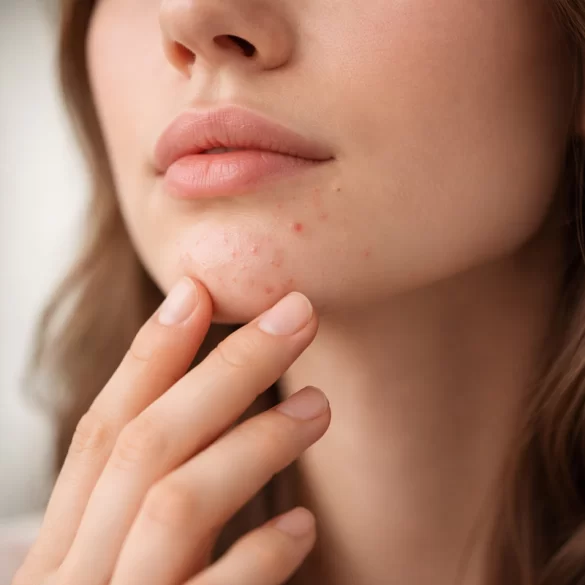
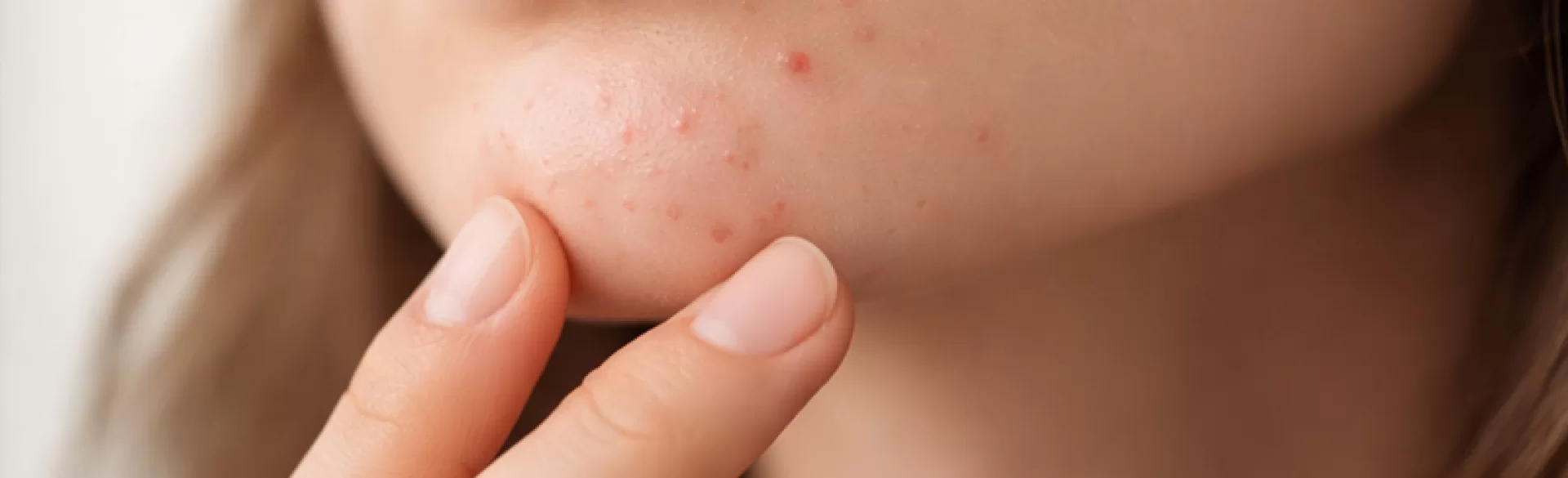
Pimples on the chin are skin lesions of inflammatory or non-inflammatory nature, located in the lower part of the face, covering the area of the chin and jawline. They are most commonly a component of acne vulgaris but can also accompany hormonal imbalances, inflammation of hair follicles, perioral dermatitis, or contact reactions. The chin area is part of the so-called U-zone of the face, which in adults—especially women—shows special sensitivity to hormonal fluctuations. The nature of the lesions can include comedones, papules, pustules, subcutaneous nodules, and in more severe cases, inflammatory cysts.
Spots on the chin – what causes them
The etiology of changes in this location is complex and usually multifactorial. The most common causes include:
1. Hormonal factors
The chin and lower part of the face are highly sensitive to androgens (male hormones present also in women).
- excess androgens increase sebum production,
- hyperkeratinization of the hair follicle openings occurs,
- comedones and inflammatory lesions appear.
The changes are exacerbated:
- in the second phase of the menstrual cycle,
- in polycystic ovary syndrome (PCOS),
- in the perimenopausal period,
- with insulin resistance.
2. Adult acne (acne tarda)
In women over the age of 25, pimples on the chin are a classic manifestation of so-called adult acne. It is characterized by:
- a chronic course,
- dominance of inflammatory lesions,
- tendency to recur.
3. Folliculitis
This can have a bacterial basis (e.g., Cutibacterium acnes, Staphylococcus aureus) or mechanical (e.g., irritation after shaving).
4. Perioral dermatitis
Often mistaken for acne. Small papules and pustules appear around the mouth and chin, usually without comedones. Provoking factors can include:
- long-term use of topical glucocorticoids,
- excessive use of occlusive cosmetics.
5. Lifestyle factors
- a diet with a high glycemic index,
- chronic stress (impact of cortisol),
- lack of sleep,
- frequent contact of the skin with a phone or hand.
Chin pimples - what do they mean
Interpreting the location of changes as a direct "reflection" of the state of specific organs (so-called face mapping) does not have clear scientific confirmation. However, in clinical practice, pimples on the chin often correlate with:
- hormonal imbalances,
- excessive activity of sebaceous glands,
- chronic stress,
- metabolic disorders (e.g., hyperinsulinemia).
It is worth paying attention to the nature of the changes:
| Type of Change | Possible Clinical Significance |
|---|---|
| Open and closed comedones | Overproduction of sebum, hyperkeratosis |
| Painful subcutaneous nodules | Strong hormonal component |
| Small, numerous papules without comedones | Possible perioral dermatitis |
| Recurring changes before menstruation | Progesterone fluctuations |
If the changes are accompanied by:
- irregular menstrual cycles,
- hirsutism (excessive hair growth),
- central type weight gain,
endocrinological diagnostics should be considered (including androgens, SHBG, insulin, TSH).
Chin pimples – how to get rid of them
Effective treatment requires identifying the cause. The approach should be causal-symptomatic.
1. Dermatological Treatment
Topical Preparations:
- retinoids (normalizing keratinization),
- benzoyl peroxide,
- azelaic acid,
- topical antibiotics (short-term).
Systemic Treatment (in justified cases):
- oral antibiotic therapy,
- isotretinoin,
- anti-androgen therapy (e.g., oral contraceptives with anti-androgenic effects).
2. Lifestyle Modification
- low glycemic index diet,
- limitation of skim milk,
- sleep regulation,
- stress reduction.
3. Aesthetic Dermatology Procedures
For treating inflammatory changes and post-inflammatory hyperpigmentation, effective options include:
- medical peels (salicylic acid, azelaic acid, mandelic acid),
- LED light therapy,
- fractional laser therapy (in the case of acne scars),
- microneedle mesotherapy to support skin regeneration.
Offered at Ambasada Urody Clinic & Spa in Warsaw are, among others:
- medical acid therapies,
- microneedle radiofrequency,
- laser treatments reducing scars and post-acne hyperpigmentation,
- individually tailored therapeutic programs for acne-prone skin.
4. What Not to Do
- do not squeeze deep inflammatory lesions,
- do not use excessive amounts of drying products,
do not combine multiple strong active substances without specialist control.

