Pimples with a white tip
back to main page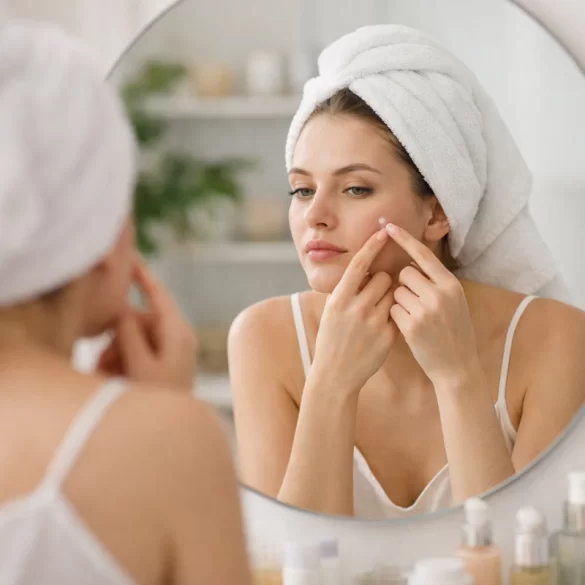
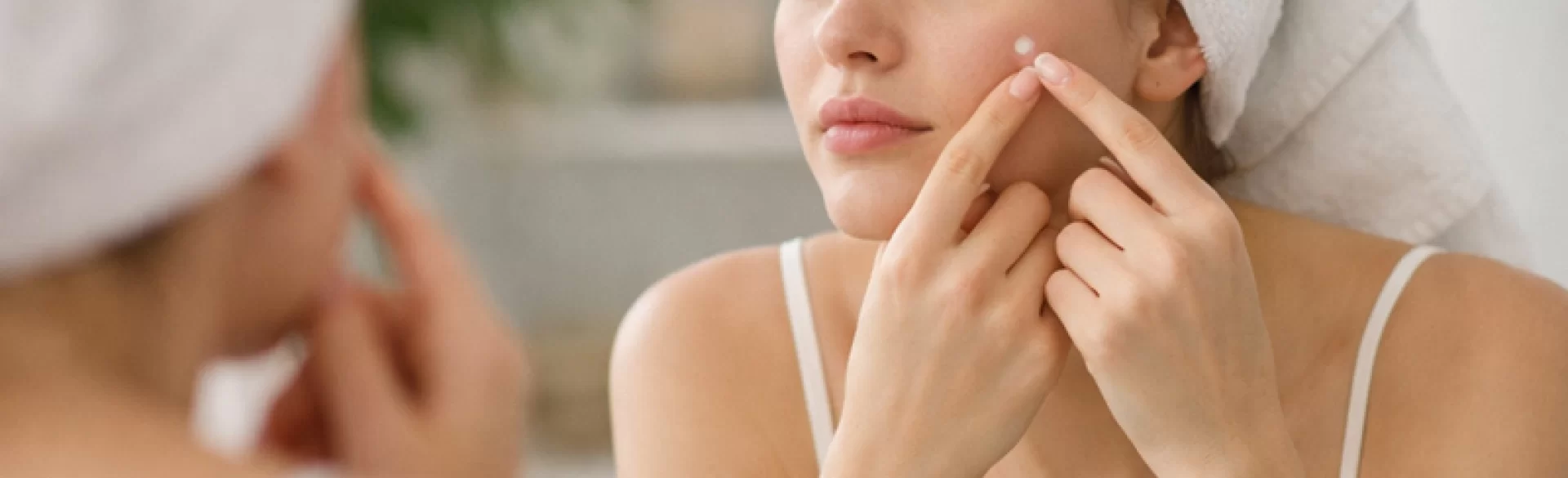
Pimples with a white tip are a common term for inflammatory skin lesions where pus accumulates within the hair follicle and sebaceous gland, visible as a white or yellowish dome on the skin's surface. In dermatology, these are most often pustules occurring in the course of acne vulgaris, less commonly folliculitis or other inflammatory dermatoses. They form as a result of blocked sebaceous gland outlets, overproduction of sebum, and the proliferation of Cutibacterium acnes bacteria. Although these lesions are usually temporary, improper handling can lead to post-inflammatory hyperpigmentation and permanent scarring.
Whitehead pimples – what they look like
Clinically, white-tipped pimples are:
- elevated above the surface of the skin papules,
- with a centrally located white or yellowish point (accumulated pus),
- surrounded by erythema (redness),
- often painful to the touch.
They most commonly occur in the area of:
- the face (T-zone – forehead, nose, chin),
- the back and chest,
- the jawline and neck.
In the histopathological image, the findings include:
- dilated, clogged hair follicle,
- presence of neutrophils and inflammatory cells,
- pus consisting of bacteria, leukocytes, and tissue breakdown.
It is worth distinguishing between:
- closed comedones (whiteheads) – without signs of inflammation,
- inflammatory pustules – with a clear inflammatory process,
- nodules and cysts – deeper lesions, with a higher risk of scarring.
Differentiation also includes folliculitis, herpes, milia, and fungal infections.
White-tipped pimples – should you squeeze them?
From a dermatological perspective, mechanical squeezing of inflammatory lesions is not recommended. The reasons are clear:
- increased risk of spreading bacteria to adjacent follicles,
- aggravation of the inflammatory condition,
- damage to the dermis,
- formation of atrophic and hypertrophic scars,
- post-inflammatory hyperpigmentation (PIH).
Particularly dangerous is manipulating lesions in the so-called "triangle of death" of the face (the region of the nose and upper lip), where there is an anatomical venous connection to the cavernous sinus.
If the lesion is mature (visible purulent content, thin epidermal cover), its evacuation should be performed:
- under aseptic conditions,
- by a trained specialist,
- with adherence to the principles of disinfection and inflammation control.
Incompetent squeezing does not shorten healing time – on the contrary, it often prolongs it.
Whitehead Pimples – Treatment
Treatment depends on the severity of the lesions and their cause. A stepwise approach is used in therapy:
1. Topical Treatment
The most commonly recommended active substances:
- topical retinoids (adapalene, tretinoin) – normalize keratinization and prevent the formation of microcomedones,
- benzoyl peroxide – acts bactericidally against Cutibacterium acnes,
- azelaic acid – anti-inflammatory and antibacterial,
- topical antibiotics (clindamycin, erythromycin) – used short-term.
2. Systemic Treatment
In cases of numerous inflammatory lesions, consider:
- oral antibiotic therapy (tetracyclines),
- hormonal treatment in women (anti-androgenic contraception),
- oral isotretinoin in severe forms of acne.
3. Procedural Therapies
To control inflammatory changes and reduce the risk of scarring, the following are used:
- medical peels (salicylic acid, pyruvic acid, azelaic acid),
- manual cleansing performed in clinical settings,
- LED light therapy with antibacterial effects,
- laser therapy to reduce inflammation,
- microneedle radiofrequency for lesions with a tendency to scar.
In clinical practice, it is important to:
- systematic causal treatment,
- regulation of home skincare (avoiding comedogenic cosmetics),
- sun protection (SPF 30–50),
- a low glycemic index diet.
Supportive Measures
- gentle skin cleansing 1–2 times a day,
- avoiding alcohol in tonics,
- stress reduction (cortisol increases sebum production),
- control of hormonal disorders.
Early implementation of therapy significantly reduces the risk of aesthetic complications, which are among the most challenging to correct in aesthetic medicine.

