Alopecia areata of the eyebrows
back to main page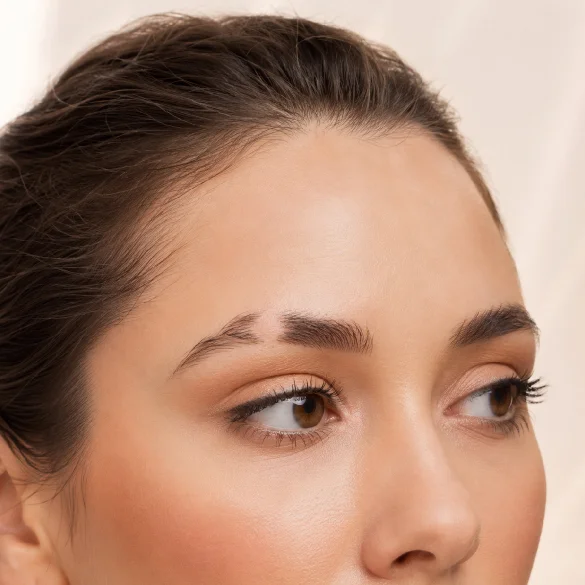
Alopecia areata of the eyebrows is a localized form of alopecia areata (alopecia areata) affecting the hair of the eyebrow arches. The disease has an autoimmune basis and leads to sudden, non-scarring hair loss in well-demarcated patches. In some patients, the lesions are limited exclusively to the eyebrows, while in others they coexist with alopecia of the scalp, eyelashes, or other areas of the body. Loss of eyebrows is not only an aesthetic problem, but also a functional one, because eyebrows protect the eyes from sweat, dust, and small debris, and participate in facial expressions. Early dermatological diagnosis allows distinguishing alopecia areata from other causes of eyebrow loss and implementing appropriate treatment that increases the chance of hair regrowth.
Alopecia areata of the eyebrows - what it looks like
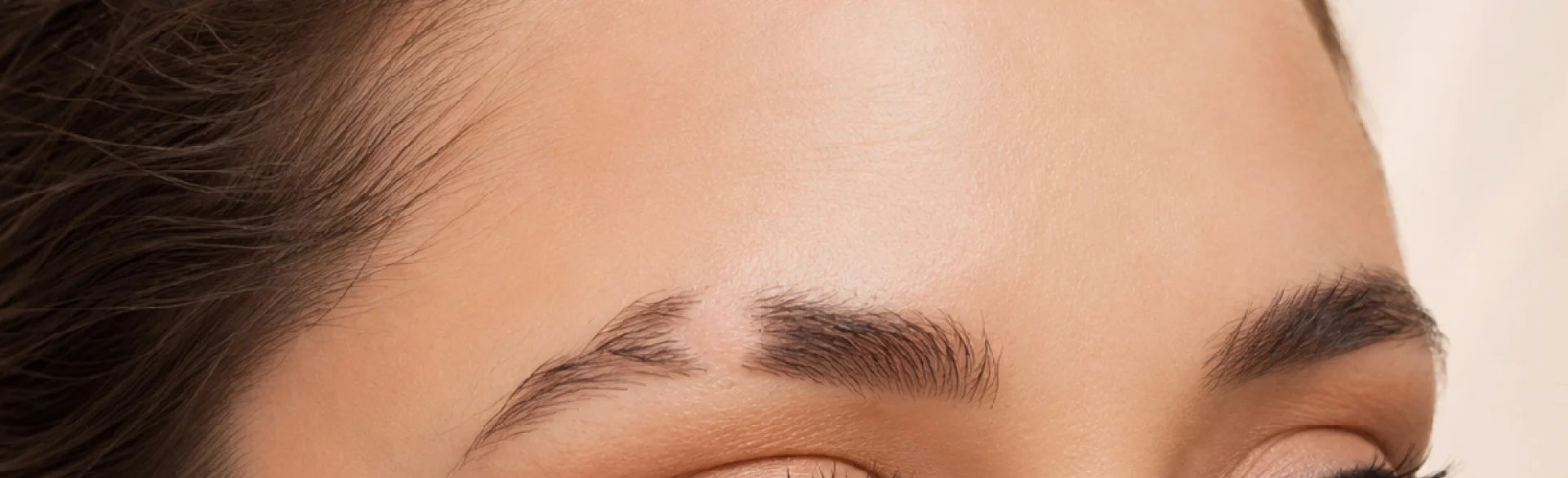
Alopecia areata of the eyebrows most commonly begins with the appearance of a small, well-demarcated hair loss, which develops over a few days or weeks. The skin in the area of hair loss remains smooth, has a normal color, and shows no signs of scarring, scaling, or inflammation.
The clinical picture may include:
- single or multiple hairless patches,
- partial thinning of one or both eyebrows,
- complete loss of eyebrow hair,
- the presence of short, exclamation mark hairs tapering towards the base at the margins of the lesion.
During a dermoscopic (trichoscopic) examination, the doctor may find characteristic features, such as:
- yellow dots corresponding to hair follicle openings,
- black dots being remnants of broken hairs,
- exclamation mark hairs,
- short regrowing hairs.
Unlike many other skin diseases, alopecia areata of the eyebrows is usually not accompanied by itching or pain. However, some patients may experience a transient sensation of burning, tingling, or increased skin sensitivity immediately before the appearance of the hair loss.
Alopecia areata of the eyebrows - where the loss occurs
Hair loss can affect different parts of the eyebrow arch. Most commonly, the changes are located unilaterally; however, as the disease progresses, they may also appear on the opposite side.
The most common locations include:
- the lateral part of the eyebrow,
- the middle section of the arch,
- the medial part of the eyebrow,
- the entire surface of one eyebrow,
- both eyebrows simultaneously.
The extent of hair loss is highly varied. In some patients, only minor losses are visible, while in others, almost complete hair loss occurs.
Alopecia areata of the eyebrows can occur:
- as the sole manifestation of the disease,
- simultaneously with scalp hair loss,
- together with the loss of eyelashes (madarosis),
- as an element of generalized alopecia areata affecting the entire body.
In some patients, alternating periods of regrowth and subsequent hair loss are observed, which is characteristic of the chronic, relapsing course of the disease.
Alopecia areata of the eyebrows - why eyebrows fall out locally
The cause of alopecia areata is an abnormal response of the immune system. T lymphocytes recognize elements of the hair follicle as foreign and trigger a local inflammatory process that inhibits normal hair growth. The follicle itself is not permanently destroyed, which is why the disease is of a non-scarring nature, and hair regrowth remains possible.
The development of the condition is influenced by the interaction of many factors:
- genetic predisposition,
- immune system dysregulation,
- coexistence of other autoimmune diseases, especially thyroid diseases, vitiligo, and atopic dermatitis,
- chronic psychological stress as a factor exacerbating the course of the disease,
- certain infections and environmental factors in predisposed individuals.
Alopecia areata of the eyebrows requires differentiation from other causes of localized hair loss, including:
- trichotillomania (compulsive hair pulling),
- fungal infections,
- scarring alopecia,
- atopic dermatitis,
- seborrheic dermatitis,
- iron, zinc, or vitamin deficiencies,
- hormonal disorders, especially thyroid diseases.
Diagnostics primarily include medical history, dermatological examination, trichoscopy, and, in justified cases, laboratory tests allowing the detection of coexisting conditions.
Alopecia areata of the eyebrows - eyebrow reconstruction - methods
The possibility of rebuilding eyebrows depends on the duration of the disease, the activity of the autoimmune process, and the degree of preservation of the hair follicles. Since follicles usually remain alive in alopecia areata, achieving regrowth is possible even after many months.
Treatment focuses on inhibiting the inflammatory process and stimulating hair follicles to grow again.
The methods used include:
- topical glucocorticosteroids,
- glucocorticosteroid injections into the lesion,
- calcineurin inhibitors in selected cases,
- contact immunotherapy,
- drugs from the group of JAK kinase inhibitors in patients with more severe forms of the disease in accordance with current indications,
- treatment of coexisting diseases that may affect the course of alopecia.
As supportive treatment, procedures stimulating hair follicle activity are also used, such as:
- skin mesotherapy using preparations that support follicle metabolism,
- platelet-rich plasma (PRP) therapy,
- treatments using growth factors,
- selected low-level laser therapies (LLLT), whose effectiveness is still the subject of research.
During the regrowth period, the hair may initially be thin, light, or devoid of pigment. Over time, it often regains its normal thickness and color.
In chronic cases, when despite treatment there is no permanent restoration of hair, methods to improve the appearance of the eyebrows are used, such as medical makeup, permanent makeup performed after the active phase of the disease has ended, or eyebrow reconstruction using the hair transplant method in appropriately qualified patients. Each of these methods should be preceded by an assessment of disease activity by a dermatologist, because performing aesthetic procedures during an active autoimmune process may not ensure a lasting effect.

