Alopecia totalis
back to main page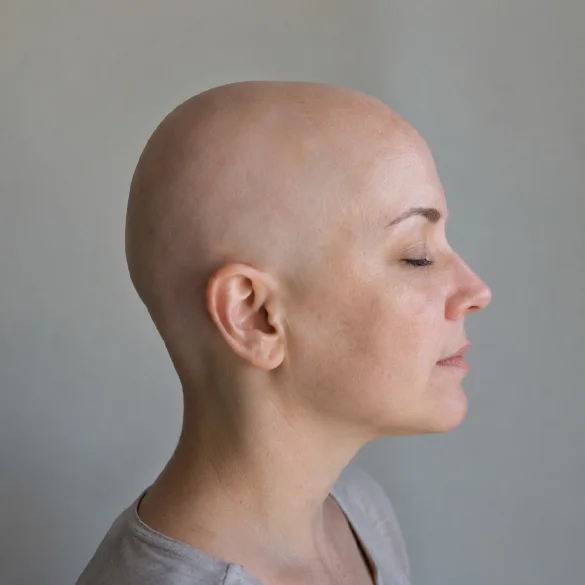
Alopecia totalis (Latin: alopecia totalis) is a severe form of alopecia areata, leading to complete hair loss on the scalp. The disease has an autoimmune basis and develops as a result of an abnormal immune system response directed against hair follicles in the active growth phase (anagen). Unlike androgenetic alopecia, which progresses gradually and is associated with the action of androgens, alopecia totalis can develop rapidly, often within a few weeks or months. Despite complete hair loss, hair follicles are usually not permanently destroyed, therefore in some cases their regrowth is possible. However, the course of the disease is highly individual and depends on many immunological and genetic factors.
Alopecia totalis - how does it differ from other types of alopecia
Alopecia totalis is one of the most severe variants of alopecia areata. It differs from other types of hair loss in both its mechanism of development and clinical presentation.
The most important differences include:
Type of alopecia | Characteristics |
|---|---|
Androgenetic alopecia | Gradual hair thinning resulting from genetic hypersensitivity of hair follicles to dihydrotestosterone (DHT). |
Alopecia areata | Focal hair loss in the form of round or oval bald patches. |
Alopecia totalis | Complete loss of all hair on the scalp. |
Generalized alopecia (alopecia universalis) | Hair loss over the entire body, also including eyebrows, eyelashes, and hair on the trunk and limbs. |
Scarring alopecia | Irreversible damage to hair follicles leading to permanent hair loss. |
In alopecia totalis, the inflammatory process is concentrated around the hair follicles. T lymphocytes attack the follicle cells, disrupting its normal growth cycle. Characteristically, the follicles remain anatomically preserved, which is why the condition can potentially be reversible.
In some patients, before the development of alopecia totalis, classic patches of alopecia areata are observed, which over time merge and cover the entire scalp. In other people, the process can progress very rapidly, without a clear transitional stage.
Alopecia totalis - causes
Alopecia totalis is a multifactorial disease. The most important role is played by the dysfunction of the immune system, however, the development of the disease depends on the interaction of genetic predisposition and environmental factors.
The most important causes and risk factors include:
- genetic predisposition, especially the presence of specific gene variants of the HLA system;
- autoimmune diseases, such as Hashimoto's disease, Graves' disease, vitiligo, type 1 diabetes, or celiac disease;
- disorders of the regulation of the immune response;
- severe chronic stress, which can act as a trigger, although it does not constitute a direct cause of the disease itself;
- past viral or bacterial infections, which can activate the immune response;
- environmental factors, whose significance remains the subject of research.
In some patients, the coexistence of the following is also observed:
- atopic dermatitis,
- allergies,
- nail changes (pitting, brittleness of the nail plates),
- a positive family history of autoimmune diseases.
However, alopecia totalis has not been found to be the result of improper hair care, wearing headwear, using cosmetics, or frequent hair washing.
Alopecia totalis - can hair grow back
The possibility of hair regrowth depends on the duration of the disease, the activity of the autoimmune process, the patient's age, and the response to treatment.
The most important feature of alopecia totalis is the preservation of viable hair follicles. This means that hair loss is not the result of their permanent destruction, but rather a temporary inhibition of function.
Possible scenarios of the disease course include:
- spontaneous hair regrowth after a few months;
- partial hair regeneration;
- multiple disease recurrences;
- persistence of complete baldness for many years.
Hair regrowth often begins with the appearance of thin, soft, and colorless hairs (so-called vellus hairs), which gradually regain normal thickness and pigmentation.
Unfortunately, the prognosis in alopecia totalis is less favorable than in classic alopecia areata. The larger the area of hair loss and the longer the duration of the disease, the lower the probability of complete hair regeneration.
In recent years, however, new therapeutic options have emerged that have significantly improved treatment efficacy in some patients.
Alopecia totalis - treatment and stimulation of hair growth
Treatment of alopecia totalis should be conducted under the care of a dermatologist, preferably specializing in hair and scalp diseases (clinical trichology). The primary goal of therapy is to inhibit the autoimmune process and stimulate hair follicles to re-enter the growth phase.
Depending on the clinical picture, the following are used:
- topical, oral, or injectable glucocorticosteroids,
- contact immunotherapy,
- calcineurin inhibitors,
- classic immunosuppressive drugs in selected cases,
- Janus kinase (JAK) inhibitors, which currently represent one of the greatest therapeutic achievements in the treatment of severe forms of alopecia areata.
Supportive methods that improve the microenvironment of hair follicles are also of increasing importance.
Treatments used as supportive therapy include, among others:
- scalp mesotherapy with active substances,
- platelet-rich plasma (PRP),
- therapies using platelet-rich fibrin,
- low-level laser therapy (LLLT),
- treatments stimulating scalp microcirculation.
It should be emphasized that stimulatory methods do not eliminate the cause of the autoimmune disease, however, in selected patients, they can support the regeneration process of hair follicles and improve the results of pharmacological treatment.
Before starting therapy, it is advisable to conduct a full diagnosis including a dermatological examination, trichoscopy, and assessment of comorbidities, especially autoimmune and hormonal disorders. Individualized selection of treatment helps to increase the chances of achieving hair regrowth and reducing the risk of disease recurrence.

