Excess body fat
back to main page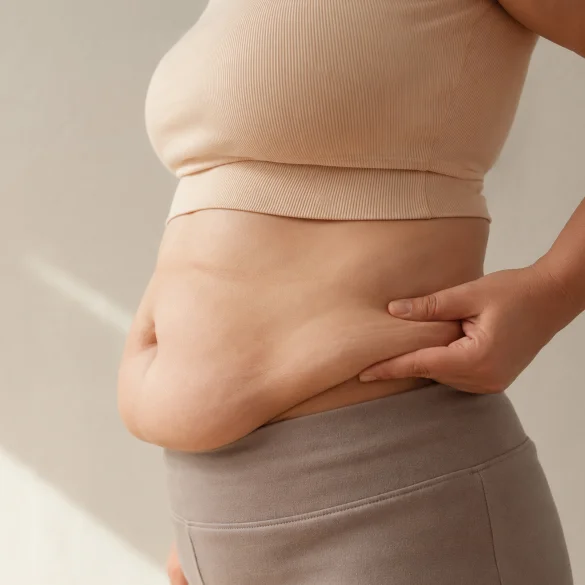

Excess adipose tissue means a condition in which the amount of fat accumulated in the body exceeds the physiological metabolic and energy needs of a human. Adipose tissue plays important biological functions - it participates in energy storage, thermoregulation, hormone production, and the protection of internal organs. However, its excessive amount leads to metabolic, hormonal, and mechanical disorders. This problem affects both people with obesity and patients with normal body weight who have an increased proportion of fat with a simultaneous deficiency of muscle tissue. Excess adipose tissue affects not only general health, but also the appearance of the figure, skin condition, and the aging processes of the body.
Excess body fat - what it is
Adipose tissue is a specialized connective tissue composed mainly of adipocytes, or fat cells. There are two basic types of fat in the human body:
- subcutaneous adipose tissue - located under the skin,
- visceral adipose tissue - surrounding internal organs.
A physiological amount of adipose tissue is essential for the proper functioning of the body. The problem arises when there is an excessive enlargement of adipocytes or an increase in their number. This process is referred to as hypertrophy and hyperplasia of adipose tissue, respectively.
An excess of adipose tissue does not always mean obesity in the classical sense. Increasingly, a phenomenon referred to as metabolic obesity with normal body weight (MONW - metabolically obese normal weight) is observed. It affects slim people who have high levels of visceral fat and metabolic disorders despite a normal BMI.
Adipose tissue is also an active endocrine organ. It produces numerous biologically active substances, including:
- leptin,
- adiponectin,
- resistin,
- pro-inflammatory cytokines.
For this reason, its excess affects the functioning of the entire body, and not only the appearance of the figure.
Excess body fat - how to determine it
The assessment of excess body fat requires analysis of body composition, and not solely body weight. The most commonly used indicator remains BMI (Body Mass Index), however, this parameter has limited diagnostic value because it does not distinguish fat tissue from muscle tissue.
In clinical practice, several methods are used to assess the amount of fat tissue.
Most commonly used diagnostic methods
Method | Characteristics |
|---|---|
BMI | Assessment of the relationship of body weight to height |
BIA body composition analysis | Measurement of the percentage content of fat and muscle |
DEXA | Very accurate assessment of body composition |
Waist circumference measurement | Assessment of abdominal obesity |
WHR index | Assessment of fat tissue distribution |
An excess of visceral fat is considered particularly dangerous, which is associated with a greater risk of:
- type 2 diabetes,
- arterial hypertension,
- atherosclerosis,
- cardiovascular diseases,
- fatty liver.
Approximate values of the percentage content of fat tissue in adults are:
Values exceeding these ranges may indicate excessive body fat, especially when metabolic disorders or increased waist circumference coexist.
Excess body fat - causes
The development of excess adipose tissue is multifactorial. A positive energy balance is of key importance, meaning a situation in which the amount of energy supplied exceeds its expenditure. However, this mechanism is much more complex than simple “overeating”.
Hormonal and metabolic factors play an important role. The regulation of appetite and fat storage involves, among others:
- leptin,
- ghrelin,
- insulin,
- cortisol,
- thyroid hormones.
Chronic stress and elevated cortisol levels promote the deposition of visceral fat, especially in the abdominal area. Additionally, sleep disorders affect the dysregulation of satiety and hunger mechanisms.
Also of importance are:
- genetic predisposition,
- age,
- decline in physical activity,
- highly processed diet,
- protein deficiency,
- sedentary lifestyle,
- hormonal disorders,
- menopause and andropause,
- certain medications, especially glucocorticoids.
The modern problem of excess adipose tissue also results from a decrease in spontaneous physical activity and the high availability of food rich in simple sugars and trans fats.
It is worth emphasizing that the distribution of adipose tissue is individual. In some people, fat accumulates mainly in the abdominal area, in others in the thighs, hips, face, or arms. This results, among other things, from hormonal and genetic differences.
Excess body fat - health and aesthetic consequences
Excess adipose tissue affects the functioning of almost all body systems. Excess adipose tissue leads to chronic low-grade inflammation, which plays a significant role in the development of civilization diseases.
Most important health effects
- insulin resistance,
- type 2 diabetes,
- arterial hypertension,
- atherosclerosis,
- lipid disorders,
- obstructive sleep apnea,
- joint degeneration,
- hormonal disorders,
- infertility,
- increased risk of certain cancers.
Excess adipose tissue also affects the appearance of the silhouette and skin condition. The most common aesthetic changes include:
- loss of distinct body proportions,
- localized fat accumulation,
- cellulite,
- deterioration of skin tension,
- deformation of the facial oval,
- double chin,
- deepening of gravitational aging.
A significant amount of adipose tissue can lead to overloading of the skin's collagen and elastin fibers. As a result, the skin gradually loses its firmness and ability to contract.
In aesthetic medicine, the phenomenon of rapid loss of adipose tissue is also observed after intensive weight loss or pharmacotherapy with GLP-1 agonists. This can lead to a loss of facial volume, skin laxity, and intensification of the signs of aging.
Excess body fat and skin laxity - the connection
There is a close biomechanical and metabolic relationship between excess adipose tissue and skin laxity. Prolonged stretching of the skin due to the increasing volume of adipose tissue leads to overloading of the skin's supportive fibers.
Collagen is responsible for skin strength, while elastin is responsible for its elasticity. Chronic stretching leads to:
- degradation of collagen fibers,
- loss of elasticity,
- weakening of the skin scaffold,
- reduced regenerative capacity.
The problem often intensifies after rapid weight loss. Skin that has been stretched for a long time does not always have the ability to contract fully. The risk of laxity increases especially in individuals:
- after significant weight loss,
- after bariatric surgery,
- after intensive pharmacological weight loss,
- of older age,
- with low amounts of collagen and elastin.
The severity of laxity is also influenced by:
- tobacco smoking,
- UV radiation,
- protein deficiencies,
- chronic inflammation,
- glycation of collagen fibers.
Modern aesthetic medicine utilizes various methods to improve skin tightness after fat reduction. These include, among others:
- microneedle radiofrequency,
- HIFU,
- tissue biostimulators,
- laser therapy,
- collagen-stimulating treatments,
- endermologie,
- localized fat reduction technologies combined with skin firming.
The selection of therapy requires an individual assessment of skin quality, patient's age, degree of laxity, and the amount of lost adipose tissue.

