Back fat
back to main page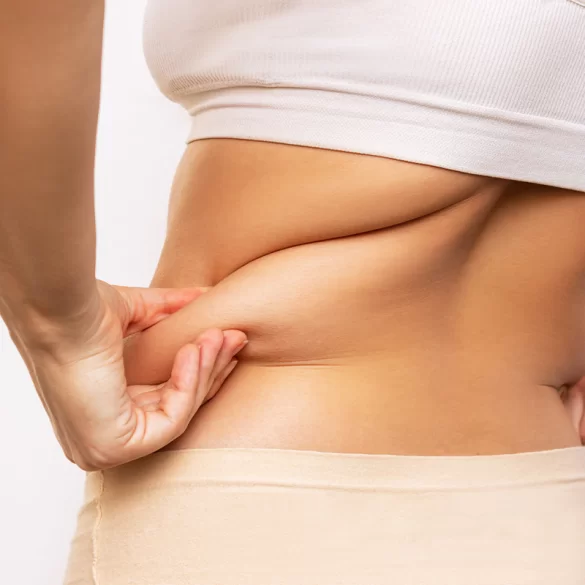
Back fat is a colloquial term for the excessive accumulation of adipose tissue in the back area, most often in the upper back, around the shoulder blades, under the bra, and in the lower back. This phenomenon may be associated both with an overall excess of body fat and with a local predisposition to fat deposition in specific areas of the body. The distribution of body fat is influenced by numerous factors, including genetic predisposition, hormonal balance, lifestyle, the level of physical activity, and diet. In some cases, excess back fat may also accompany metabolic disorders, obesity, or hormonal changes that occur at different stages of life, e.g., during menopause.
Back fat – hormones
Hormonal balance plays a significant role in regulating the storage and distribution of body fat. Hormones affect the activity of fat cells (adipocytes), the rate of metabolism and the way the body uses energy. Hormonal disorders can promote the accumulation of fat in specific areas of the body, including on the back.
The most important hormones affecting fat distribution include:
- cortisol – the stress hormone produced by the adrenal glands. Its chronically elevated level promotes the accumulation of fat in the upper body, especially in the abdominal, neck and back areas.
- estrogens – female sex hormones that regulate the distribution of body fat. A decrease in their levels, especially during menopause, can lead to increased fat deposition in the trunk area.
- insulin – the hormone responsible for regulating blood glucose levels. Insulin resistance promotes storing energy as body fat.
- thyroid hormones (T3 and T4) – regulate the metabolic rate. Hypothyroidism can lead to a slowdown of metabolism and weight gain.
In some cases, an excess of fat in the upper part of the back may also be observed in the course of endocrine disorders, such as Cushing’s syndrome, in which characteristic fat deposition occurs in the neck and back area.
It is also worth emphasizing the role of insulin resistance, a metabolic disorder characterized by reduced tissue sensitivity to insulin. In such a situation the body produces larger amounts of this hormone, which promotes storing energy as body fat. Excess fat may be deposited particularly in the trunk, including the back.
Thyroid hormones are also important, as they regulate the metabolic rate. In the case of hypothyroidism, metabolism slows down, there is increased water retention in tissues and easier weight gain. In some patients this manifests, among other things, as an increased amount of fat tissue in the back area.
In women, an additional factor can be hormonal changes associated with menopause. A decrease in estrogen levels affects the distribution of body fat – fat begins to accumulate more often in the central parts of the body, including the abdomen, back and waist area.
Back fat – exercises
Regular physical activity plays a key role in reducing body fat and improving body composition. It is worth emphasizing, however, that localized fat burning (so-called spot reduction) is a limited phenomenon, so back exercises mainly help to strengthen muscles and improve the physique, while fat reduction requires an overall energy deficit.
Exercises that support fat reduction in the back area include primarily:
Back-strengthening exercises:
- barbell or dumbbell rows
- pull-ups
- lat pulldowns
- deadlifts
- exercises for the erector spinae (back extensor) muscles
Full-body exercises:
- interval training (HIIT)
- circuit training
- functional exercises
- swimming
- bodyweight training
Regularly strengthening the back muscles improves tissue tone and may reduce the appearance of skin folds. Additionally, muscle development increases basal metabolic rate, which promotes calorie burning.
Back fat – how to lose it
Reducing back fat primarily requires a comprehensive approach including diet, physical activity, and lifestyle modification. A key element is achieving an energy deficit, that is, a situation in which the body uses more energy than it takes in from food.
The most important elements of effective fat reduction include:
1. A calorie-controlled diet
- increasing intake of protein and fiber
- limiting highly processed foods
- reducing excess simple sugars
- maintaining stable blood glucose levels
2. Regular physical activity
The best results come from a combination of:
- strength training,
- aerobic training (e.g., brisk walking, cycling, swimming),
- interval training.
3. Healthy lifestyle habits
Important factors also include:
- adequate sleep,
- reducing chronic stress,
- limiting alcohol,
- maintaining regular meal patterns.
In situations where excess fat persists despite weight loss, one can consider aesthetic medicine and cosmetology procedures that support body contouring. Methods used include, among others:
- injectable lipolysis,
- cryolipolysis, i.e., controlled cooling of fat tissue,
- procedures using radiofrequency waves, which improve skin firmness,
- ultrasound technologies that break down fat cells,
- procedures that stimulate the skin and improve its firmness after fat reduction.
These methods do not replace weight loss, but can support contouring of problematic body areas.

