Forehead hairline
back to main page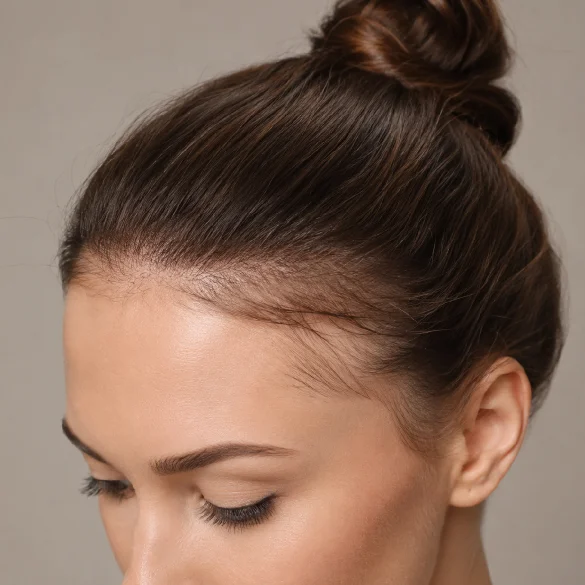
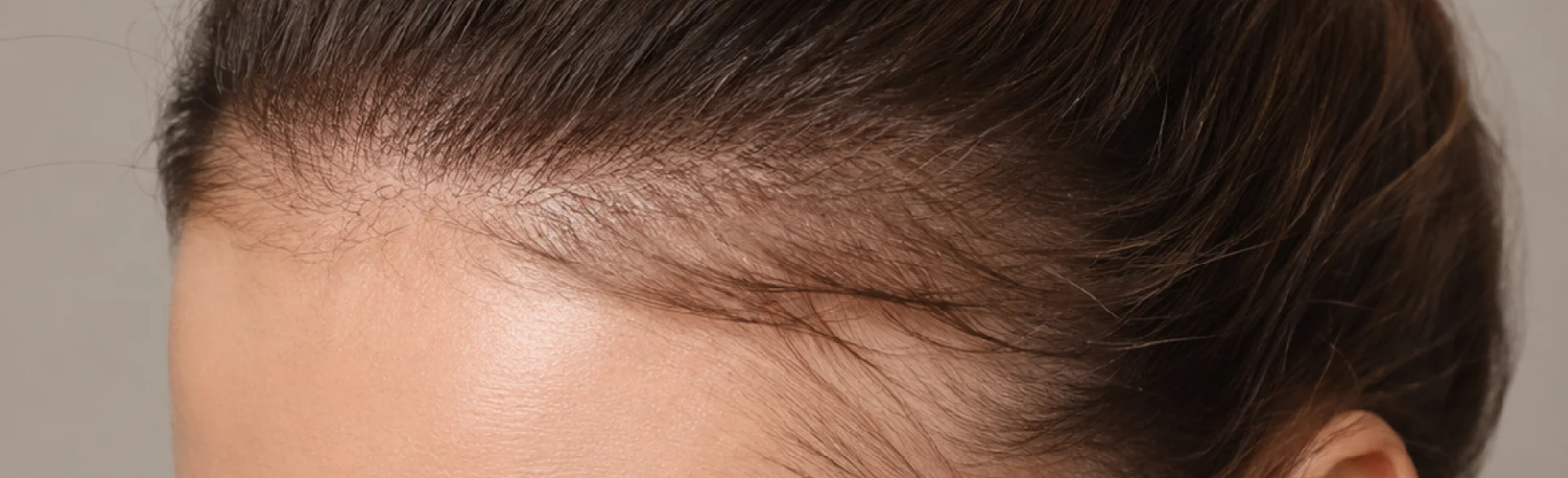
The hairline on the forehead is a natural boundary between the hairy scalp and the forehead, whose shape, height, and density constitute an individual anatomical feature. It is primarily genetically determined; however, throughout life, it may undergo changes under the influence of aging processes, the action of hormones, skin diseases, chronic stress, nutritional deficiencies, or certain hair styling methods. A change in the course of the hairline does not always mean a disease. In many cases, it constitutes a physiological element of the body's maturation or aging. If, however, it is accompanied by progressive hair thinning, increased hair loss, or the appearance of hairless patches, it requires dermatological or trichological diagnostics to determine the cause and implement appropriate treatment.
Hairline on the forehead - what it is
The hairline defines the transition point between the hairy scalp and the forehead skin. It is one of the elements influencing facial proportions, aesthetic perception, and the perception of age. Its course is highly diverse and depends on many factors, such as:
- genetic predisposition,
- sex,
- age,
- hormonal balance,
- hair follicle density,
- skull bone structure.
Many natural hairline shapes can be distinguished, including:
- straight,
- rounded,
- oval,
- heart-shaped (with the so-called widow's peak),
- irregular.
The hairline is not a permanent structure. During puberty, especially in men, its physiological recession of about 1-2 cm in the temple area often occurs. This process is referred to as hairline maturation (mature hairline) and does not constitute a symptom of hair loss.
From a medical perspective, not only the height of the hairline is important, but also:
- hair density within it,
- hair thickness,
- the presence of hair follicle miniaturization,
- the rate of the changes taking place.
The assessment of these parameters is performed during a dermoscopic examination (trichoscopy), which allows distinguishing physiological changes from the first symptoms of hair loss.
Hairline on the forehead - high and low - differences
The height of the hairline is primarily a congenital trait. A high hairline itself does not indicate a disease or an increased risk of hair loss.
A high hairline is considered to be a situation where the distance between the eyebrows and the beginning of the hair is greater than average for a given gender and facial structure. The forehead then appears larger, and the face optically elongated.
On the other hand, a low hairline makes:
- the forehead appear shorter,
- the face look more proportional or optically shorter,
- the hair descend very low over the temples.
There are no universal standards defining the correct hairline height. In medical practice, the proportions of the entire face are primarily analyzed, and the current appearance is compared with the patient's earlier photographs.
A high hairline can be the result of:
- family genetics,
- physiological maturation,
- androgenetic alopecia,
- scarring alopecia,
- chronic traction alopecia,
- past injuries or surgical procedures.
On the other hand, a low hairline can occur naturally or accompany certain genetic syndromes, although these situations are much rarer.
Assessing whether a given hairline is normal always requires considering the age, gender, and history of changes occurring in the patient.
Hairline on the forehead - receding - when to worry
A receding hairline is one of the most common reasons for dermatological and trichological consultations. It is most frequently associated with androgenetic alopecia, but it is not its only cause.
Concern should be raised by situations where you observe:
- rapid recession of the hairline within a few months,
- noticeable deepening of the temples,
- reduced hair density along the frontal hairline,
- increasingly thinner and shorter hair,
- increased hair shedding during washing and brushing,
- itching, burning, or redness of the scalp.
The most common causes of a receding hairline include:
Cause | Characteristics |
|---|---|
Androgenetic alopecia | The most common cause in men and many women. Gradual miniaturization of hair follicles occurs under the influence of dihydrotestosterone (DHT). |
It is caused by chronic hair tension, e.g., tight buns, braids, or hair extensions. | |
Scarring alopecia | Inflammatory diseases leading to irreversible destruction of hair follicles. They require urgent treatment. |
Telogen effluvium | Temporary increased hair shedding following stress, childbirth, infection, surgical procedures, or deficiencies. |
Diagnosis primarily involves:
- trichoscopy,
- hair density assessment,
- laboratory tests (including ferritin, TSH, vitamin D, complete blood count, zinc),
- hormone assessment in justified cases,
- scalp biopsy when scarring alopecia is suspected.
Early diagnosis is crucial, as many forms of alopecia can be effectively slowed down or partially reversed if treatment is initiated early enough.
Forehead hairline - correction and thickening
Possibilities for improving the appearance of the hairline depend on the cause of the problem, the degree of hair loss, and the presence of an active disease process. Treatment should always be preceded by thorough diagnostics.
In the case of preserved hair follicles, therapies stimulating their activity and extending the hair growth phase are used. In aesthetic medicine and dermatology, the following are used, among others:
- scalp mesotherapy with nourishing preparations,
- mesotherapy using platelet-rich plasma (PRP),
- treatments with platelet-rich fibrin,
- low-level laser therapy (LLLT),
- therapies supporting hair follicle regeneration.
In the case of androgenetic alopecia, treatment often also includes pharmacotherapy conducted under medical supervision, aimed at inhibiting the miniaturization of hair follicles and maintaining existing hair.
If permanent loss of hair follicles has occurred, the most effective method of restoring the hairline remains a hair transplant using the patient's own hair follicles. The procedure enables the recreation of the natural hairline and improvement of density in the forehead and temple area. Designing the new hairline appropriately is of key importance, taking into account the patient's age, facial proportions, and the predicted progression of the hair loss process.
In patients undergoing aesthetic medicine treatments, procedures improving scalp quality and microcirculation are also used supportively, which can increase the effectiveness of regenerative therapies and support the maintenance of the achieved effects.

