Receding hairline on the head
back to main page
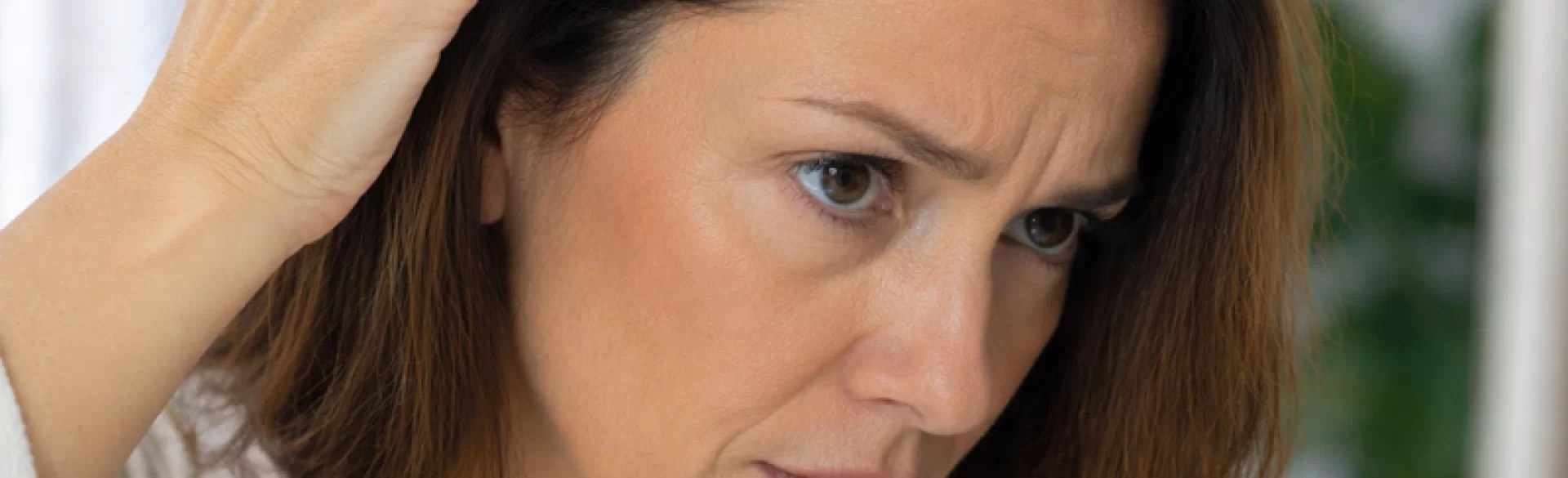
A receding hairline is a characteristic form of hair loss within the frontotemporal line, leading to its recession and the formation of symmetrical gaps on both sides of the forehead. This phenomenon is the most common early symptom of androgenetic alopecia, which has a hormonal-genetic basis and affects both men and – less frequently – women. This process occurs gradually and can lead to permanent miniaturization of hair follicles. A receding hairline affects not only the aesthetic appearance but also the perception of the patient's age and health condition.
Receding hairline – causes
The etiopathogenesis of receding hairline formation is complex and involves the interaction of genetic, hormonal, and environmental factors. A key role is played by the hypersensitivity of hair follicles to dihydrotestosterone (DHT) – the active form of testosterone.
The most important causes include:
- Genetic predisposition – polygenic inheritance, often a family history of androgenetic alopecia
- Action of androgens (DHT) – shortening of the hair growth phase (anagen) and miniaturization of follicles
- Hormonal disorders – especially in women (e.g., polycystic ovary syndrome)
- Chronic stress – impact on the hair growth cycle and increased telogen effluvium
- Environmental factors – a diet poor in micronutrients (iron, zinc, biotin), toxins
- Scalp inflammations – e.g., seborrheic dermatitis
At the histological level, a gradual decrease in hair diameter and a shortening of its life cycle are observed, leading to visible thinning in the temporal region.
Receding hairline – what it looks like
Receding hairlines have a characteristic clinical presentation that allows for their relatively easy recognition. Initially, there is a subtle recession of the hairline in the temple area, which over time takes on a more distinct, symmetrical shape.
Typical features of receding hairlines:
- "M"-shaped hairline recession
- Hair thinning in the temporal area
- Presence of thin, short vellus hairs
- Maintenance of hair density in the occipital area (typical of androgenetic alopecia)
In advanced stages, receding hairlines may merge with thinning at the top of the head (vertex), leading to more extensive baldness.
Diagnostics include, among others:
- trichoscopy – assessment of hair structure and follicles
- clinical scales (e.g., Norwood-Hamilton) – classification of the stage of advancement
Receding hairline – can it grow back
The possibility of hair regrowth within the temples depends primarily on the degree of advancement of the hair follicle miniaturization process.
Key factors affecting the prognosis:
- Early stage – reversibility of the process is possible
- Advanced stage – hair follicles undergo permanent atrophy
- Duration of the problem – the shorter it is, the greater the chance of regeneration
In clinical practice:
- In the initial phases, it is possible to stimulate follicles for hair regrowth
- In later stages, the goal of therapy becomes halting progression and thickening existing hair
It should be emphasized that complete restoration of the original hairline can be difficult; however, thanks to modern therapeutic methods, it is possible to achieve significant aesthetic improvement.
Receding hairline – how to prevent
Prevention of receding hairlines is based on limiting factors that accelerate hair follicle miniaturization and supporting the physiological hair growth cycle.
Most important preventive measures:
- Early trichological and dermatological diagnostics
- Hormone balance control
- Balanced diet rich in:
- protein
- iron
- zinc
- B vitamins
- Reduction of chronic stress
- Proper scalp care – avoiding harsh detergents
- Avoiding chronic mechanical hair tension (e.g., tight hairstyles)
It is worth noting that prevention is most important in the early stages – in cases of established baldness, preventive measures have limited effectiveness.
Receding hairline treatments
Modern aesthetic medicine and trichology offer a range of therapeutic methods aimed at inhibiting hair loss and stimulating its regrowth.
Most commonly used procedures:
1. Hair growth stimulation therapies
- Scalp needle mesotherapy – delivering active substances (peptides, vitamins, amino acids) directly to the follicles
- Platelet-rich plasma (PRP) – using growth factors to regenerate hair follicles
- Scalp carboxytherapy – improving microcirculation and tissue oxygenation
2. Energy technologies
- Low-level laser therapy (LLLT) – stimulation of cellular metabolism
- Microneedle radiofrequency – stimulation of skin regeneration and blood supply
3. Supporting therapies
- Scalp oxygen infusion – improving follicle nourishment
- Cleansing and sebum-regulating trichological treatments
4. Pharmacological treatment (under medical supervision)
- 5-alpha-reductase inhibitors
- hair growth stimulating preparations
5. Surgical methods
- Hair transplant (FUE, FUT) – a solution in advanced cases
Therapy time and effects:
| Method | Number of treatments | First effects | Nature of the effect |
|---|---|---|---|
| Mesotherapy | 4–8 | 2–3 months | thickening |
| PRP | 3–5 | 2–4 months | improvement of hair quality |
| Laser therapy | continuous series | 3–6 months | inhibition of hair loss |
| Transplant | 1 treatment | 6–12 months | permanent restoration |
In clinical practice, the best results are achieved by combining several therapeutic methods, which allows for multi-level action – both at the cellular and structural levels.
The offer of modern aesthetic medicine clinics, such as Ambasada Urody Clinic & SPA, includes comprehensive therapeutic protocols including, among others, mesotherapy, platelet-rich plasma therapies, and advanced hair growth stimulating technologies, which enables individual adjustment of the treatment to the severity of the problem.

