Contour of the face
back to main page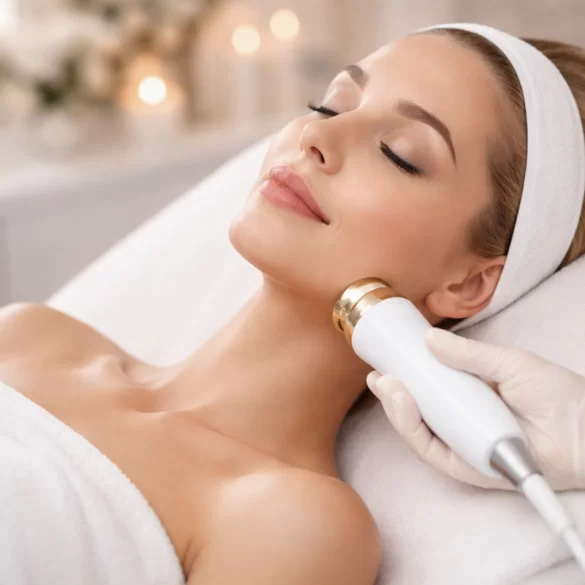
The contour of the face is the external outline and proportions of the lower and middle parts of the face, shaped by the skeletal structure (cheekbones, jaw, chin), the distribution and volume of soft tissues (fat tissue, facial muscles), and the tension and quality of the skin. A distinct and harmonious contour is one of the key elements of perceived attractiveness and youthfulness because it reflects correct anatomical proportions and the integrity of supporting structures. With age, due to the processes of aging, gravity, and volume loss, the oval of the face becomes disturbed — grooves appear, tissues sag, and so-called "jowls" form. Contemporary aesthetic medicine offers methods to restore or emphasize the facial contour in a way that aligns with the anatomy and biomechanics of aging.
Face contouring – how to improve
Improving facial contour requires analysis at three levels: bony, fatty, and skin. It's crucial to understand that loss of oval shape is not solely a skin problem but results from deep structural changes.
Main causes of contour loss:
- Bone resorption (atrophy of the mandible and zygomatic bones),
- Reduction and displacement of fat compartments,
- Skin laxity and degradation of type I and III collagen,
- Excessive activity of muscles lowering the corners of the mouth and lower face.
Methods of improving facial contour:
1. Hyaluronic acid volumetry
- Modeling the jawline, jaw angle, and chin,
- Restoring projection of zygomatic bones,
- Recreating lost volume of the mid-face.
Preparations with high G’ (elasticity modulus) allow for an effect of structural support.
2. Tissue biostimulators (e.g., calcium hydroxyapatite, polylactic acid)
- Stimulation of neocollagenesis,
- Thickening and firming of the skin,
- Gradual improvement of tissue tension.
3. PDO / PLLA lifting threads
- Mechanical lifting of sagging tissues,
- Induction of supportive fibrosis.
4. Botulinum toxin (Nefertiti lift)
- Weakening of the platysma muscle,
- Lifting the jawline and improving lower face tension.
5. High-tech technologies
- Microneedle radiofrequency – skin remodeling through controlled microinjuries and tissue heating,
- Radio waves (Alma Accent Prime, Pellevé, Reaction RF) – deep, controlled dermal heating leading to immediate shortening of collagen fibers and stimulation of their remodeling,
- HIFU (SonoQueen) – focused ultrasound acting on the SMAS level,
- INDIBA® – stimulation of cellular metabolism and improved skin tension through 448 kHz technology.
- Infrared (Zaffiro, Deep IR) – even dermal heating without epidermal damage, leading to collagen fiber shortening, improved microcirculation, and activation of fibroblasts responsible for new collagen and elastin synthesis.
- Creation of controlled microthermal damage zones in the dermis,
- Induction of intensive neocollagenesis and extracellular matrix remodeling,
- Gradual skin thickening and improvement in tension and elasticity.
Fractional lasers (ablative and non-ablative) enable multi-level tissue remodeling. In the context of facial contour improvement, their densifying and tightening action is particularly important, reducing laxity in the lower oval.
7. Autologous threads – Needle Shaping
- Mechanical stimulation of fibroblasts through controlled microinjuries,
- Creation of autologous collagen fibers serving as a natural "scaffold",
- Gradual improvement in skin tension and density without implantation of synthetic materials.
The Needle Shaping technique utilizes the phenomenon of electrocoagulation of collagen fibers within the dermis. The resulting autologous collagen fibers act as biological support threads, subtly and physiologically improving the facial contour.
Selection of therapy should be based on analysis of facial proportions (the rule of thirds and fifths of the face) and assessment of tissue quality through palpation and visual examination. The goal is not excessive "redrawing" of the face but restoration of its natural architecture.
Face contour and makeup
Contour makeup is a method of optically modeling the face by manipulating light and shadow. Unlike medical procedures, it doesn't change the anatomical structure but influences the perception of shape.
Principles of Optical Modeling:
- Dark colors slim and recede,
- Light colors highlight and bring forward,
- Highlighting increases the projection of selected areas.
Contouring Techniques:
- Emphasizing the jawline with a bronzer in a cool shade,
- Modeling the cheekbones below the zygomatic arch,
- Highlighting the tops of the cheekbones and the bridge of the nose,
- Shading the sides of the forehead for a round face.
Makeup can:
- Mask slight asymmetry,
- Visually slim the face,
- Emphasize the jaw angle in men,
- Soften sharp features.
However, in cases of significant skin laxity, loss of volume, or tissue sagging, makeup has limited capabilities. It can even emphasize wrinkles and unevenness if applied incorrectly.
Conversely, aesthetic medicine procedures affect structurally — they remodel tissues, stimulate collagen production, and restore lost projection. The effects last from several months to two years, depending on the method used.
In aesthetic practice, both approaches often complement each other — the procedure restores the proper architecture of the face, and makeup allows it to be highlighted.

