Receding chin
back to main page
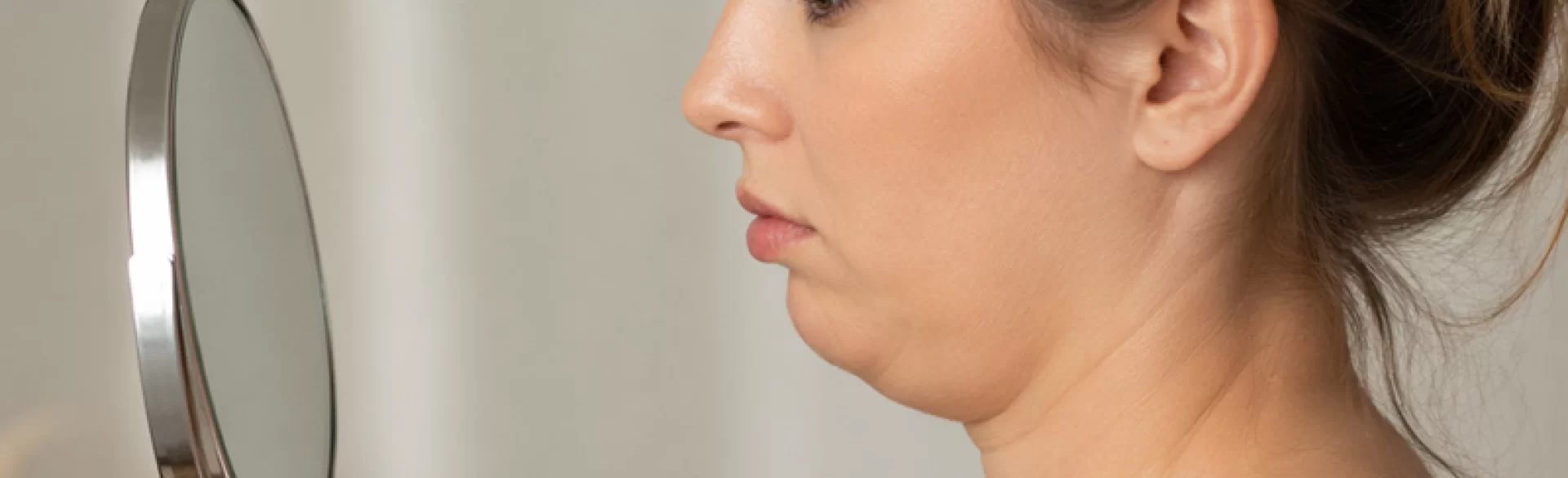
A receding chin (retrogenia or micrognathia depending on the etiology) is a disproportion of the craniofacial complex consisting of the posterior positioning of the chin relative to other facial structures, especially in relation to the nose and forehead. It can be congenital or acquired and involve both soft tissues and the bony structures of the mandible. This problem affects not only the aesthetics of the facial profile but also the functions of the stomatognathic system, breathing, and the alignment of the cervical spine. Nowadays, a receding chin represents an important diagnostic and therapeutic area in orthodontics, maxillofacial surgery, and aesthetic medicine.
Receding chin – causes
The etiology of a recessed chin is complex and includes genetic, developmental, and environmental factors. Depending on the basis, various mechanisms leading to the disproportion of the lower facial segment are distinguished.
The most common causes include:
1. Genetic and congenital factors:
- congenital micrognathia (underdevelopment of the mandible),
- genetic syndromes (e.g., Pierre Robin syndrome),
- hereditary predisposition to a specific facial profile.
2. Growth and development disorders:
- abnormal development of the mandible during childhood,
- predominance of maxillary growth over the mandible (skeletal disproportion),
- malocclusions, especially retrognathism (Angle’s Class II).
3. Functional factors:
- chronic mouth breathing,
- abnormal swallowing (the so-called infantile swallowing pattern),
- low activity of the muscles of the floor of the mouth and the tongue.
4. Acquired factors:
- craniofacial injuries,
- degenerative processes and tissue aging,
- atrophy of bone and subcutaneous tissue.
It is worth emphasizing that a recessed chin is rarely an isolated problem - it most often coexists with malocclusion, changes in muscle tone, and incorrect body posture.
Receding chin – exercises
Conservative treatment includes myofunctional therapy and exercises strengthening the muscles of the lower face. Their effectiveness remains limited in the case of skeletal changes, but they constitute significant support in functional therapy and the prevention of the deepening of the defect.
The most commonly recommended exercises include:
Mandibular and neck muscle exercises:
- protruding the mandible forward and maintaining the position for several seconds,
- tensing the chin muscles with the mouth closed,
- controlled opening and closing of the mouth with resistance.
Tongue and swallowing exercises:
- lifting the tongue to the palate,
- training the correct swallowing pattern,
- stabilization of the resting tongue position.
Postural exercises:
- correction of head posture (reduction of forward head posture),
- strengthening the muscles of the neck and nape,
- exercises stabilizing the shoulder girdle.
The effects of the exercises depend on the patient's age and the severity of the disorder. The best results are observed in children and adolescents during the growth period. In adults, exercises primarily play a supporting role, improving muscle tone and function, but do not correct significant skeletal changes.
Receding chin – treatment
Treatment of a receding chin requires an interdisciplinary approach and should be tailored to the cause and degree of deformity. Diagnostics is of key importance, including cephalometric analysis, assessment of the bite, and the function of the stomatognathic system.
1. Orthodontic treatment:
- used mainly in children and adolescents,
- functional appliances stimulating mandibular growth,
- correction of malocclusions (e.g., distocclusion).
2. Orthodontic-surgical treatment:
- indicated in cases of significant skeletal disproportions,
- mandibular osteotomy (surgical bone repositioning),
- comprehensive correction of jaw relationships.
3. Functional therapy:
- myofunctional therapy,
- re-education of breathing and swallowing,
- cooperation with a physiotherapist and a speech therapist.
4. Conservative treatment in aesthetic medicine:
- correction of the chin contour and facial profile,
- improvement of proportions without surgical intervention.
The choice of method depends on:
- patient's age,
- severity of the defect,
- aesthetic expectations,
- presence of functional disorders.
Receding chin – treatments
Modern aesthetic medicine offers a wide range of procedures enabling effective correction of a receding chin without the need for surgical treatment. These treatments allow for the improvement of facial proportions, chin projection, and profile harmony.
Most commonly used methods:
1. Chin modeling with hyaluronic acid
- chin volumetry (so-called chin augmentation),
- improvement of projection and contour,
- immediate effect,
- possibility of precise asymmetry correction.
- improvement of skin quality and tension,
- stimulation of collagen production,
- subtle improvement of the facial oval.
- lifting of soft tissues,
- improvement of tension in the lower face area,
- lifting effect without surgery.
4. Treatments using energy technologies:
- microneedle radiofrequency (e.g., Reaction RF) – skin thickening and tension improvement,
- HIFU – lifting and stimulation of deep skin layers,
- laser therapy – improvement of skin quality and tissue structure.
5. Comprehensive modeling of the lower face
- combining several techniques (e.g., hyaluronic acid + RF),
- harmonization of the jawline, chin, and neck.
Treatment effects include:
- improvement of facial proportions,
- clearer profile,
- rejuvenation of the lower face,
- increased skin tension and firmness.
In the case of a significantly receding chin resulting from a bone deficit, aesthetic treatments are compensatory and optical in nature, while surgical treatment remains the causal method.

