Blackheads on the chin
back to main page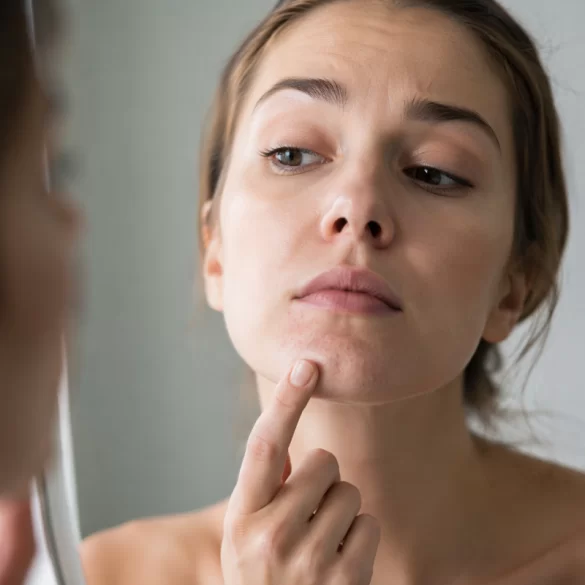

Blackheads on the chin are one of the most common forms of non-inflammatory lesions in the course of acne, referred to as open comedones (comedones aperti). They develop as a result of excessive sebum production and disturbances in the keratinization of hair follicle openings, which leads to their blockage. The characteristic dark coloration results from the oxidation of lipids and melanin, and not – as is often mistakenly believed – from the presence of impurities. The chin area belongs to the so-called T-zone, rich in sebaceous glands, which is why lesions in this area tend to recur and require a multidirectional therapeutic approach.
Blackheads on the chin - causes
The etiopathogenesis of blackheads on the chin is multifactorial and includes both endogenous and environmental mechanisms. A key role is played by dysfunctions of the pilosebaceous unit.
The most important causes include:
1. Excessive sebum production (seborrhea)
Stimulated mainly by androgens, it leads to increased activity of the sebaceous glands. Excess sebum promotes the formation of keratin-sebum plugs.
2. Keratinization disorders
Abnormal exfoliation of corneocytes (cells of the stratum corneum) causes them to accumulate in the follicular opening.
3. Hormonal factors
- hyperandrogenism,
- hormonal fluctuations (e.g., menstrual cycle),
- endocrine disorders (e.g., polycystic ovary syndrome).
4. External factors (exogenous)
- use of comedogenic cosmetics,
- inadequate skin cleansing,
- exposure to environmental pollutants,
- chronic stress (impact on the hypothalamus-pituitary-adrenal axis).
5. Genetic predispositions
Individual tendency toward sebum overproduction and keratinization disorders is of significant clinical importance.
It is worth emphasizing that blackheads often represent the first stage of development of inflammatory lesions (papules and pustules), therefore their early control is of preventive importance.
Blackheads on the chin - how to get rid of them
Effective treatment of blackheads on the chin requires a multi-stage approach, including both home care and specialized procedures.
1. Topical treatment (dermatological and cosmetological)
The most commonly used active substances are:
- retinoids (e.g., adapalene, tretinoin) – they normalize keratinization and prevent the formation of new comedones,
- salicylic acid (BHA) – has a keratolytic effect and penetrates the openings of the sebaceous glands,
- azelaic acid – exhibits anti-inflammatory effects and regulates sebum secretion,
- AHA acids (e.g., glycolic, mandelic) – accelerate epidermal renewal,
- niacinamide – reduces seborrhea and has anti-inflammatory effects.
2. Professional cosmetological treatments
In clinical practice, procedures aimed at cleansing and regulating skin function show high effectiveness:
- manual cleansing – controlled removal of comedones,
- chemical peels – especially using AHA, BHA, or PHA acids,
- diamond microdermabrasion and hydradermabrasion – mechanical and water exfoliation of the epidermis,
- hydrogen cleansing – reduction of free radicals and thorough cleaning of pores,
- oxygen infusion – improvement of cellular metabolism,
- Geneo (OxyGeneo technology) – simultaneous exfoliation, oxygenation, and nourishment of the skin.
Systematic use of these methods allows for reducing the number of comedones and improving skin structure.
Blackheads on the chin - how to squeeze
Mechanical blackhead removal is a procedure that requires knowledge and proper technique. Incorrect squeezing leads to skin damage, inflammation, and the risk of scarring.
Rules for proper procedure:
- the skin should be prepared beforehand (cleansed and softened),
- sterile tools are used (e.g., Unna extractor),
- pressure should be controlled and even, without excessive force,
- after the procedure, disinfection and soothing action are necessary.
Why self-squeezing is problematic:
- it increases the risk of bacterial superinfection,
- it can lead to the spread of lesions,
- it promotes the formation of post-inflammatory hyperpigmentation (PIH),
- it causes skin micro-injuries.
From a clinical perspective, squeezing should be performed by a qualified specialist in a clinical setting.
What for blackheads on the chin
Therapeutic management should be individually tailored; however, effective strategies with confirmed clinical efficacy can be identified.
1. Daily care
Basic elements:
- gentle cleansing (without disrupting the hydrolipid barrier),
- use of seboregulating products,
- regular exfoliation (1–3 times a week),
- photoprotection (SPF), especially when using acids and retinoids.
2. Highly effective active substances
Substance | Mechanism of action |
|---|---|
Retinoids | normalization of keratinization |
Salicylic acid | |
Azelaic acid | anti-inflammatory effect |
Niacinamide | sebum regulation |
3. Supporting treatments
In the practice of modern cosmetology and aesthetic medicine, procedures improving skin function are used:
- hydradermabrasion – cleansing and moisturizing the skin in a single step,
- medical peels – intensive exfoliation and regulation of cell renewal,
- needle-free and needle mesotherapy – improvement of skin quality and cellular metabolism,
- LED light therapies – anti-inflammatory effect and normalization of sebaceous gland function.
4. Importance of lifestyle
Systemic factors also remain significant:
- low-glycemic index diet,
- limitation of highly processed products,
- stress reduction,
- proper sleep hygiene.

