Muscle re-education
back to main page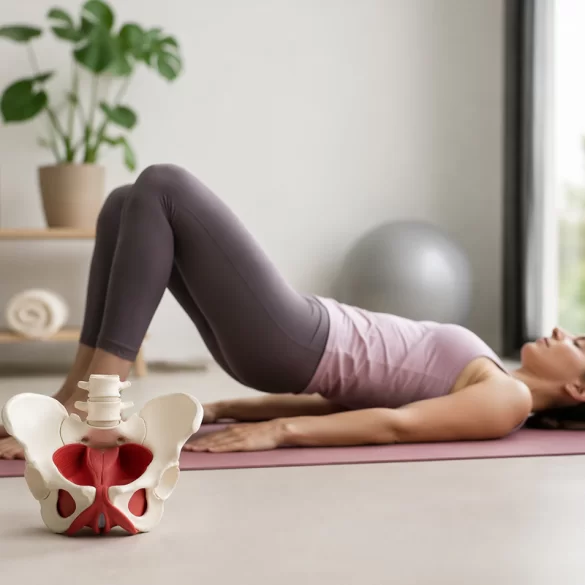
Muscle re-education is a therapeutic process aimed at restoring proper patterns of muscle activation and their cooperation within the locomotor system. It includes improving muscle strength as well as coordination, neuromuscular control, and body awareness. It is used in physiotherapy, neurological and orthopedic rehabilitation, and also in urogynecological therapy. Its goal is not merely "strengthening," but above all the restoration of the physiological function of muscles, which translates into improved posture, stability, and the elimination of pain complaints and functional disorders.
Muscle re-education – what is it?
Muscle re-education constitutes a comprehensive process of teaching the body to correctly reuse muscles in movement and stabilization. From a neurophysiological perspective it is based on the phenomenon of neuroplasticity, that is the nervous system's ability to adapt and reorganize after injuries, overloads, or long-term incorrect movement habits.
The basic elements of muscle re-education include:
- activation of weakened or "functionally turned-off" muscles,
- inhibition of excessively tense muscular structures,
- restoring the correct sequence of muscle activation,
- improvement of proprioception (deep sensation),
- integration of muscles into global movement patterns.
Disorders requiring re-education may result from:
- injuries and surgeries,
- chronic pain,
- static overloads (e.g., a sedentary lifestyle),
- hormonal changes (e.g., menopause),
- pregnancy and childbirth.
The essence of re-education is not isolated action on a single muscle, but restoring its function in the context of the entire motor system, including cooperation with the fascia, the respiratory system and the nervous system.
Muscle re-education – what it looks like
The process of muscle re-education is individually tailored to the patient and includes several therapeutic stages that may overlap.
1. Functional diagnostics
Includes assessment of:
- muscle tone,
- movement patterns,
- central (core) stabilization,
- breathing control,
- body symmetry and posture.
2. Tissue preparation
In cases of increased tension or tissue restrictions, the following are used:
- manual therapy,
- fascial techniques,
- joint mobilization,
- work on scars.
3. Learning muscle activation
The patient learns to consciously contract specific muscle groups. Commonly used are:
- exercises in unloaded positions,
- breathing techniques,
- biofeedback (e.g., EMG),
- visualization and tactile control.
4. Functional integration
After mastering basic activation, muscles are incorporated into more complex movements:
- dynamic stabilization exercises,
- training of movement patterns (e.g., walking, sitting),
- work within muscle chains.
5. Automatization
The final stage involves consolidating correct patterns in daily activities and physical activity.
It is worth emphasizing that muscle re-education requires consistency and the active participation of the patient. The effectiveness of therapy largely depends on regularly performing the prescribed exercises and conscious body control in daily life.
Pelvic floor muscle re-education
Pelvic floor muscle re-education is a particular area of physiotherapy, due to the complex function of these structures and their connection with the urogenital system and central stabilization.
The pelvic floor muscles play key roles:
- support the pelvic organs,
- are responsible for control of urination and defecation,
- are involved in sexual function,
- work together with the diaphragm and the transverse abdominal muscle.
Re-education in this area includes:
1. Learning to locate the muscles
Many people are unable to consciously activate the pelvic floor muscles or do so incorrectly (e.g., by tensing the buttocks or abdominal muscles).
2. Normalization of muscle tone
Both weakness and excessive tension require therapy:
- in the case of hypotonicity – strengthening exercises,
- in the case of hypertonicity – relaxation and loosening techniques.
3. Integration with breathing
Proper function of the pelvic floor is closely related to breathing mechanics:
- inhalation → descent of the diaphragm and relaxation of the pelvic floor,
- exhalation → elevation of the pelvic floor and stabilizing activation.
4. Functional training
Includes learning control of the muscles in situations of increased intra-abdominal pressure (e.g., coughing, lifting heavy objects).
Pelvic floor muscle re-education is applied in problems such as:
- urinary incontinence,
- pelvic organ prolapse,
- pelvic pain,
- dyspareunia,
- postpartum disorders.
In clinical practice, it is often combined with other therapeutic methods, which increases treatment effectiveness.
Muscle re-education – effects
The effects of muscle re-education include both local and global changes that affect the functioning of the entire body. Their extent depends on the type of dysfunction, the duration of the problem, and the patient's engagement.
The most important therapeutic benefits:
- improvement of neuromuscular control,
- increased central stabilization,
- reduction of musculoskeletal pain,
- improvement of body posture,
- restoration of proper movement patterns,
- reduction of the risk of injuries and overload,
- improvement of genitourinary function.
In the case of pelvic floor therapy, the following are additionally observed:
- improved control of urination and defecation,
- reduction of symptoms of organ prolapse,
- improvement in sexual quality of life.
The modern therapeutic approach often integrates muscle re-education with other methods that support tissue and functional regeneration, such as:
- urogynecological physiotherapy,
- manual and fascial therapy,
- biofeedback and electrostimulation of muscles,
- procedures supporting tissue remodeling (e.g., technologies using thermal energy and light).
Such an approach enables not only the elimination of symptoms but also a lasting improvement in the body's functions by removing the causes of the disorders.

