Onycholysis
back to main page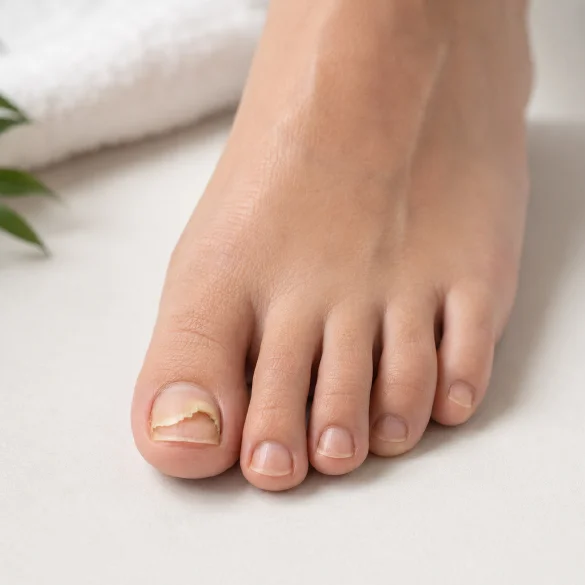
A white or yellowish area at the end of the nail that gradually enlarges - this is the most common sign of onycholysis. The problem is sometimes confused with a fungal infection, but its causes can be completely different, from improper footwear to thyroid diseases. Find out how to recognize onycholysis, what causes it, and when you can count on full nail regrowth.
Onycholysis - what it is
Onycholysis is the separation of the nail plate from the nail bed, most often beginning at the free edge of the nail and gradually progressing towards its base. It is not an independent disease, but a symptom that can result from trauma, chronic irritation, dermatological diseases, infections, or systemic disorders.
Normally, the nail plate is firmly attached to the nail bed thanks to numerous connections between cells, as well as proper hydration and keratin structure. When these connections are damaged, an air-filled space forms between the plate and the nail bed, which causes a characteristic change in nail color.
Onycholysis can affect both fingernails and toenails. However, it develops much more frequently on the feet, where the plates are exposed to chronic pressure from footwear, micro-traumas, and higher humidity. The problem can affect a single nail or multiple plates at the same time, and its course depends on the cause and duration of the changes.
Although onycholysis itself does not usually cause pain, the exposed nail bed becomes more susceptible to bacterial and fungal infections. For this reason, any persistent change requires proper diagnosis and appropriately selected management.
Onycholysis - what it looks like
The first symptom of onycholysis is the appearance of a whitish or yellowish area at the free edge of the nail. In reality, this is not a discoloration of the plate itself, but the result of the presence of air between the nail and the nail bed.
As the process progresses, characteristic features can be observed:
- white, milky, or yellowish discoloration of the end part of the nail resulting from the separation of the plate from the nail bed,
- a clear boundary between the healthily adhering and detached part of the nail,
- gradual enlargement of the separation area,
- color change to yellow, greenish, brownish, or black in the case of secondary bacterial or fungal infection,
- accumulation of keratinous material under the nail,
- increased brittleness and susceptibility of the plate to mechanical damage,
- the nail catching more easily on clothing or objects.
In most cases, there is initially no pain. Pain may only appear when there is injury to the exposed nail bed, infection, or significant separation of the plate.
The earlier the cause of onycholysis is determined, the greater the chance of inhibiting the process and proper nail regrowth.
Onycholysis - how to distinguish from nail fungus
Onycholysis is very often confused with nail fungus, as in both cases a change in color and partial detachment of the nail plate are observed. In practice, however, these are two different problems that require different treatment.
The most important differences include:
- the cause
- onycholysis is a symptom of mechanical damage, disease, or systemic disorders,
- nail fungus is an infection caused by dermatophytes, yeasts, or molds;
- the appearance of the nail plate
- in onycholysis, the nail plate initially retains its normal thickness and structure,
- in nail fungus, the nail usually becomes thickened, dull, and brittle;
- the progression of changes
- onycholysis most often begins at the free edge of the nail,
- nail fungus can affect different parts of the plate and often gradually covers its entire surface;
- accompanying symptoms
- in nail fungus, excessive keratosis under the nail, an unpleasant odor, and the involvement of several nails at the same time are more common,
- in onycholysis, the dominant symptom is the separation of the nail plate without significant thickening.
It is worth remembering that both conditions can coexist. The plate detached from the nail bed creates a space that favors colonization by fungi and bacteria, which is why chronic onycholysis increases the risk of secondary infection.
Diagnosis should be based on a dermatological or podiatric examination and, in case of suspected infection, on a mycological examination. Starting antifungal treatment without confirming the infection often turns out to be ineffective.
Onycholysis - most common causes
Onycholysis can develop as a result of one or several factors acting simultaneously. In many patients, it is essential to find the primary cause, as treating the nail itself does not solve the problem.
The most common causes include:
- chronic microtraumas caused by tight footwear,
- mechanical injuries to the nail,
- intense sports activity, especially running and contact sports,
- incorrectly performed manicure or pedicure,
- excessive preparation of the nail plate with a nail drill,
- frequent use of hybrid polishes or gels accompanied by damage to the nail plate,
- contact with detergents and chemical substances,
- nail fungal infection,
- bacterial infections, especially by the bacterium Pseudomonas aeruginosa,
- nail psoriasis,
- lichen planus,
- atopic dermatitis,
- thyroid diseases, especially hyperthyroidism,
- iron, zinc, and biotin deficiencies,
- autoimmune diseases,
- certain medications, including tetracyclines, retinoids, or chemotherapy drugs,
- chronic soaking of hands or feet.
In the case of recurrent onycholysis or onycholysis affecting multiple nails, broader internal medicine or dermatological diagnostics are often necessary.
Onycholysis - will the nail plate grow back
In most cases, the answer is yes. However, the condition is maintaining a healthy nail matrix, i.e., the place responsible for the production of the new plate.
The separated part of the nail does not reattach to the bed. Improvement occurs only through the gradual growth of a new, properly adhering nail that replaces the damaged fragment.
The rate of regrowth is relatively slow:
- fingernails grow on average about 2–3 mm per month,
- complete replacement of a fingernail usually takes 4–6 months,
- toenails grow significantly slower,
- full regrowth of a toenail can take from 12 to even 18 months.
The chances of full regeneration are increased by:
- rapid removal of the cause of onycholysis,
- proper nail care,
- maintaining an appropriate length of the plate,
- protection against further injuries,
- treatment of any potential infections,
- management of systemic diseases and deficiencies.
If the nail matrix has been damaged, the regrowing plate may remain permanently deformed. For this reason, chronic or recurrent onycholysis always requires specialist evaluation.
Modern dermatology and podiatry have effective methods of diagnosing and treating onycholysis. Early diagnosis of the cause allows not only to inhibit the progression of changes, but also to create optimal conditions for the proper regrowth of a healthy nail and reduce the risk of permanent deformities.

