Sagging buttocks
back to main page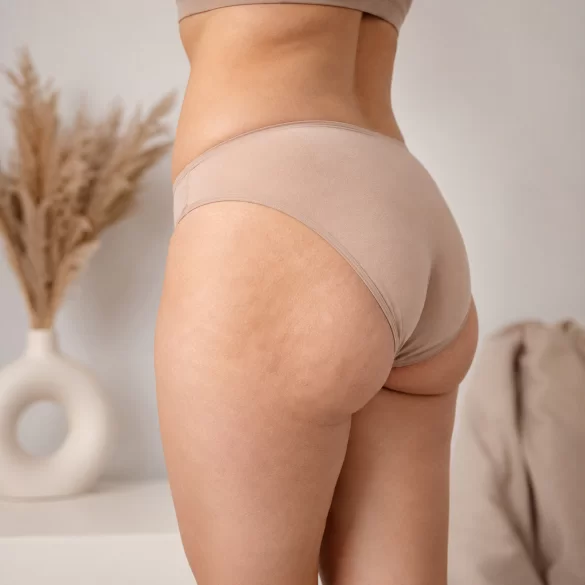
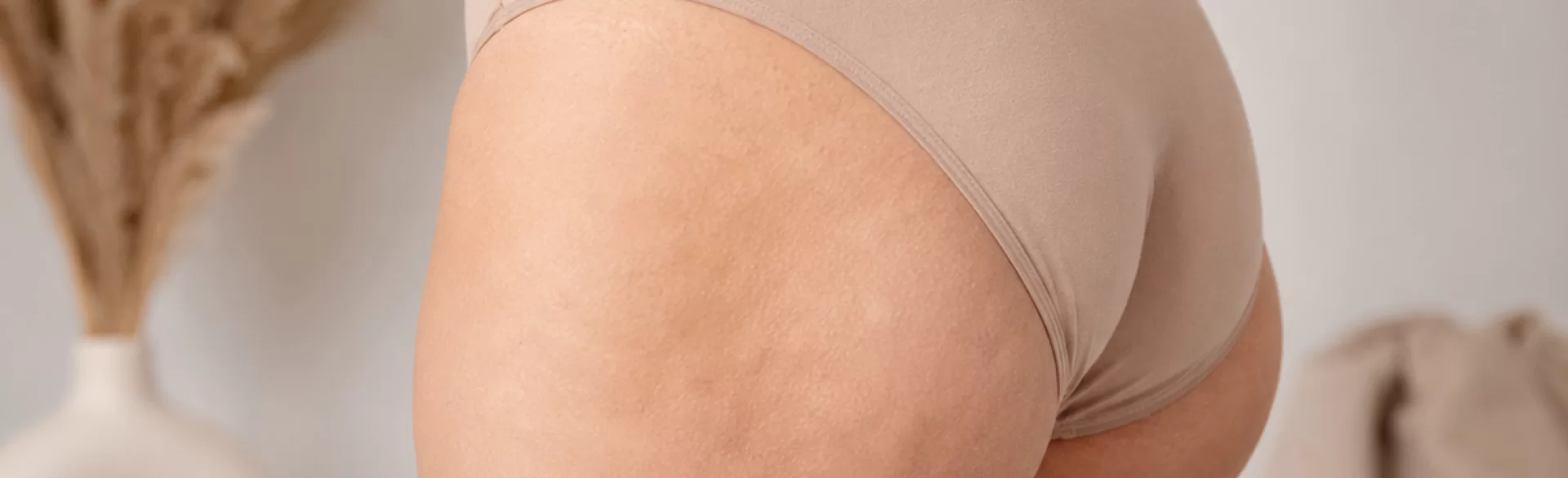
Sagging buttocks are an aesthetic problem associated with the loss of firmness, volume, and proper support of the tissues in the gluteal area. This phenomenon results from both the body's natural aging processes and anatomical changes affecting the skin, adipose tissue, fascia, and gluteal muscles. As a result, there is a lowering of the position of the buttocks, a flattening of their profile, and a loss of a distinct lift in the upper part. Sagging buttocks can occur in slim and physically active individuals, although it is more frequently observed after significant body weight fluctuations, pregnancy, with age, or with a sedentary lifestyle. This problem affects not only the proportions of the silhouette, but also the appearance of the lower back, hips, and thighs.
Sagging buttocks - anatomical causes
The shape of the buttocks depends on the complex interaction of several anatomical structures: the gluteal muscles, adipose tissue, skin, fascia, and supporting ligaments. The process of buttock sagging usually begins with a decline in the quality of the supporting tissues and volume changes occurring within the adipose tissue.
Gravity plays a significant role, causing a gradual downward displacement of tissues over the years. With age, the amount of collagen and elastin in the skin decreases, making it less firm and more prone to sagging. Additionally, there is a weakening of the fibrous septum of the subcutaneous tissue, which is responsible for maintaining the proper position of the adipose tissue.
The most important anatomical causes of sagging buttocks include:
- decreased skin tension,
- loss of collagen and elastin fibers,
- weakening of the gluteal muscles,
- downward displacement of adipose tissue,
- genetic predisposition regarding pelvic structure and fat distribution,
- loss of buttock volume after weight loss,
- hormonal changes affecting the metabolism of adipose tissue and skin.
The skeletal structure of the pelvis also plays a role. Individuals with more vertically oriented iliac wings and less developed buttock projection more frequently observe the effect of “flattened” and lowered buttocks. In some patients, the problem stems primarily from insufficient volume in the upper part of the buttock, which visually intensifies the impression of sagging.
In aesthetic medicine and plastic surgery, buttock sagging is often referred to as an element of global tissue ptosis, i.e., their gradual lowering under the influence of aging and mechanical strain.
Sagging buttocks - the role of muscles and fat tissue
The gluteus maximus muscle (musculus gluteus maximus), which is the largest muscle in the human body, is primarily responsible for the appearance and lifting of the buttocks. Its proper tension gives the buttocks projection, firmness, and a characteristic prominence.
A sedentary lifestyle leads to a phenomenon known as “gluteal amnesia,” which consists of the weakened activation of the gluteal muscles. In practice, this means that the muscles lose their volume and the ability to maintain proper tissue tension. The buttocks become flatter, less elastic, and begin to sag.
The distribution of adipose tissue is also important. In younger individuals, buttock adipose tissue is usually evenly distributed and supports the natural shape of the gluteal region. With age, however, the following occur:
- uneven fat atrophy in the upper part of the buttocks,
- migration of tissue towards the lower parts,
- increased laxity of the subcutaneous tissue,
- loss of a clear boundary between the buttock and the posterior surface of the thigh.
As a result, the lower part of the buttock becomes heavier, while the upper part loses volume and support. This creates a characteristic “sagging” and lengthening effect of the buttocks.
Another important factor is the quality of the superficial and deep fascia. These structures form a kind of “scaffolding” for the skin and adipose tissue. Their weakening leads to a loss of tissue stability and a deterioration of the buttock contour.
Modern aesthetic medicine utilizes various methods to improve the quality of this area, including:
- treatments stimulating collagen production,
- technologies that firm the skin and deep tissues,
- volumetric modeling,
- biostimulating treatments,
- procedures that strengthen muscle tone.
The offer of Ambasada Urody Clinic & SPA includes, among others, microneedle radiofrequency treatments, HIFU, LPG endermologie, acoustic waves, tissue biostimulators, and body contouring procedures that help improve the tone and contour of the buttocks.
Sagging buttocks - when they appear
The first signs of sagging buttocks can appear as early as after the age of 30, especially in people with a sedentary lifestyle or after significant changes in body weight. This process usually occurs gradually and remains unnoticed for many years.
Most often, the problem worsens:
- after pregnancies,
- after rapid weight loss,
- during the perimenopausal period,
- with chronic lack of physical activity,
- after prolonged immobilization,
- along with the physiological aging of the body.
In postmenopausal women, there is a decrease in estrogen levels, which are responsible, among other things, for maintaining proper skin and connective tissue quality. As a result, skin laxity and loss of tissue tension develop more rapidly.
The problem of sagging buttocks can also occur in young and slim people. In such cases, genetic predisposition, anatomical structure, and insufficiently developed muscle mass are of decisive importance.
Symptoms indicating developing buttock sagging include:
Symptom | Characteristics |
|---|---|
Loss of projection | The buttocks become flatter |
Lowering of the gluteal fold | The buttock appears „elongated” |
Skin laxity | The skin loses tension and elasticity |
Atrophy of the upper buttock | Loss of volume occurs |
Worsening of body proportions | The hip and thigh line changes |
Early implementation of preventive measures can significantly slow down the development of the problem. Crucial factors include:
- regular physical activity that strengthens the gluteal muscles,
- maintaining a stable body weight,
- a diet that supports collagen synthesis,
- treatments that improve skin tension and the quality of subcutaneous tissue,
- avoiding chronic sitting without gluteal muscle activation.
In advanced cases, when significant tissue ptosis occurs, surgical procedures are considered, such as a buttock lift or volume modeling using own fat tissue.

