Thin hair on the head
back to main page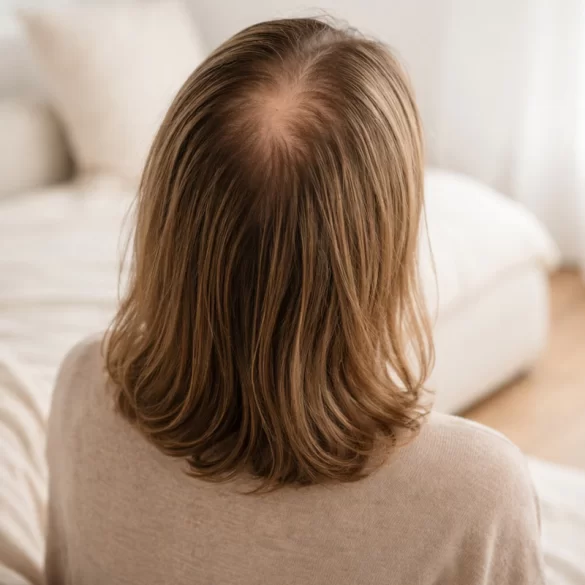

Rare hair on the head is a clinical condition characterized by reduced hair density per unit area of the scalp, resulting from a reduction in the number of active hair follicles or their miniaturization. The physiological hair density in Caucasian individuals averages 150–250 hairs/cm², although these values are variable among individuals and depend on genetic factors. The issue of rare hair can be congenital (constitutionally determined) or acquired, developing in the course of androgenetic, telogen, scarring alopecia, or systemic disorders. It should be emphasized that hair thinning is not solely an aesthetic defect—in many cases, it represents a manifestation of hormonal, metabolic disorders, nutritional deficiencies, or chronic stress.
Rare hair – causes
Reduced hair density is a multifactorial phenomenon. It is crucial to distinguish between the maintained number of hair follicles with their miniaturization and the actual loss of follicles (e.g., in scarring alopecias).
1. Androgenetic Alopecia (AGA)
The most common cause of thinning hair in both genders. The mechanism involves:
- hypersensitivity of hair follicles to dihydrotestosterone (DHT),
- shortening of the anagen phase (growth phase),
- gradual miniaturization of the hair follicle,
- replacement of terminal hairs with vellus hairs.
In women, the clinical picture typically includes thinning in the crown area with a preserved frontal hairline, whereas in men, receding hairlines and vertex balding are characteristic.
2. Telogen Effluvium
A condition of temporary excessive transition of hairs into the telogen phase (resting phase), often triggered by:
- acute physical or psychological stress,
- surgical procedures,
- infections (including post-COVID-19),
- childbirth,
- restrictive diets.
Unlike AGA, this process is potentially reversible after the elimination of the triggering factor.
3. Hormonal Disorders
- Hypothyroidism and hyperthyroidism
- Polycystic Ovary Syndrome (PCOS)
- Hyperandrogenism
- Perimenopausal period
Hormones affect the hair cycle by regulating the proliferation of hair matrix keratinocytes.
4. Nutritional Deficiencies
Hair is a structure with high metabolic activity. Particularly important are:
- iron deficiency (low ferritin),
- vitamin D deficiency,
- zinc deficiency,
- insufficient protein intake.
Chronic deficiency of these components leads to shortening of the anagen phase and weakening of the hair shaft structure.
5. Autoimmune and Inflammatory Diseases
- Alopecia areata
- Lupus erythematosus
- Lichen planopilaris
In these cases, there is immunological damage to the hair follicle.
6. Mechanical and Environmental Factors
- Traction alopecia (tight hairstyles),
- aggressive chemical treatments,
- chronic exposure to high temperatures,
- environmental pollutants and oxidative stress.
Diagnosis should include a medical history, trichoscopy, hair density assessment, and laboratory tests (e.g., TSH, ferritin, vitamin D, androgens).
Thin Hair - Ways to Thicken
Effective hair thickening requires a causal approach. Therapy should be based on the pathophysiological mechanism, not solely on symptomatic action.
- Topical Minoxidil – increases blood flow and prolongs the anagen phase.
- Finasteride (in men) – a 5α-reductase inhibitor, reduces DHT levels.
- Anti-androgen therapy in women in justified cases.
- Iron supplementation when ferritin < 40–70 ng/ml (in clinical context).
- Optimization of vitamin D levels (30–50 ng/ml).
- A diet rich in sulfur-containing amino acids (cysteine, methionine).
- Reduction of chronic stress (cortisol negatively affects the hair cycle).
- Adequate length and quality of sleep.
- Avoiding restrictive low-calorie diets.
- Gentle scalp cleansing,
- trichological peeling to improve product penetration,
- products with caffeine, biomimetic peptides, and niacinamide.
It must be clearly stated: real hair thickening involves activating follicles in the telogen phase and inhibiting miniaturization, not just a temporary cosmetic effect.
Thin hair – treatments
Contemporary aesthetic medicine offers biologically targeted therapies for follicular regeneration and improvement of scalp microcirculation.
Needle Mesotherapy of the Scalp
It involves intradermal administration of preparations containing:
- vitamins from the B group,
- amino acids,
- biomimetic peptides,
- growth factors.
The effect is improved microcirculation, increased cellular metabolism, and stimulation of follicular stem cells.
Autologous therapy using growth factors:
- PDGF (Platelet-Derived Growth Factor),
- VEGF (Vascular Endothelial Growth Factor),
- TGF-β.
PRP:
- extends the anagen phase,
- increases angiogenesis,
- stimulates proliferation of hair papilla cells.
Carboxytherapy of the Scalp
The administration of medical CO₂ causes:
- vasodilation,
- improved tissue oxygenation,
- increased follicular metabolism.
INDIBA® (448 kHz Technology)
Controlled frequency radiofrequency therapy:
- improves cell membrane potential,
- increases blood flow,
- supports regenerative processes within the scalp.
Microneedling of the Scalp
Mechanism of action:
- release of growth factors (PDGF, EGF, FGF),
- activation of stem cells within the "bulge" area of the follicle,
- stimulation of angiogenesis and improvement of microcirculation,
- increased penetration of topical preparations (e.g., minoxidil, biomimetic peptides).
Combined Therapies
The best results are achieved by:
- combining PRP with mesotherapy,
- combining carboxytherapy with mesotherapy,
- using INDIBA® therapy as regenerative support,
- multi-step protocols tailored to the stage of alopecia.
In advanced cases, where permanent loss of hair follicles has occurred, hair transplantation (e.g., FUE method) remains the only method to restore density.
Sparse hair on the head is a symptom, not a diagnosis in itself. Effective therapy requires:
- accurate diagnosis,
- determination of the type of alopecia,
- implementation of causal treatment,
- application of regenerative therapies.
The earlier the intervention begins, the greater the chance of halting miniaturization and rebuilding density. In the case of a chronic process, it is possible to significantly slow down progression and partially regenerate hair follicle activity.

