Rash under the armpit
back to main page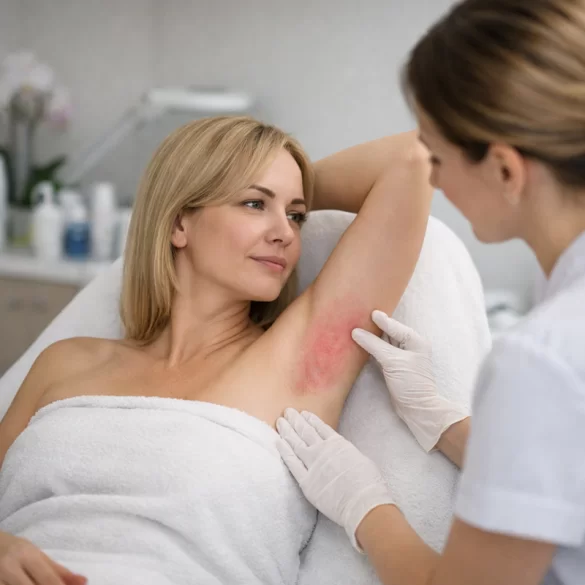

Erythema under the armpit is a localized redness of the skin in the axillary area, resulting from the dilation of blood vessels in the dermis. It can be temporary (e.g., in response to irritation), but may also be a symptom of dermatological, infectious, or systemic diseases. The axillary area is anatomically unique – thin skin, high humidity, the presence of apocrine sweat glands, and constant friction promote the development of inflammatory changes. Erythema may be accompanied by itching, burning, maceration of the epidermis (softening in a moist environment), or erosions. Proper diagnosis requires differentiating between contact, infectious, and inflammatory causes.
Redness under the armpit – causes
The causes of erythema in this location are varied and often overlap. The most common include:
1. Irritant and contact factors
- Irritant contact dermatitis – reaction to deodorants, antiperspirants, soaps, detergents.
- Allergic contact dermatitis – type IV immune reaction to fragrances, preservatives (e.g., formaldehyde, parabens), aluminum.
- Shaving the armpits and microtrauma to the epidermis.
- Wearing tight, synthetic clothing increasing friction and sweating.
2. Moisture and skin microbiota disturbances
- Hyperhidrosis.
- Obesity and deep skin folds.
- Chronic maceration of the epidermis promoting microbial colonization.
3. Infections
- Fungal – most commonly yeasts of the genus Candida.
- Bacterial – e.g., erythrasma caused by Corynebacterium minutissimum.
- Secondary infections in the course of other dermatoses.
4. Inflammatory and systemic diseases
- Inverse psoriasis.
- Atopic dermatitis.
- Metabolic diseases (e.g., diabetes – predisposes to yeast infections).
In clinical practice, it is crucial to determine whether the erythema is acute, sudden, and itchy (often allergic), or chronic, well-demarcated, and recurrent (often infectious or inflammatory).
Underarm Rash – Diseases
Redness under the armpit can be a symptom of specific medical conditions. The most important ones include:
1. Erythrasma
- Chronic bacterial infection.
- Red-brown patches with well-defined borders.
- Characteristic coral-red fluorescence under a Wood's lamp.
- Common among individuals with diabetes and obesity.
2. Fungal infection of the armpits
- Intensely red erythema with satellite papules and pustules.
- Itching and burning sensation.
- Often accompanied by maceration and a white coating.
- Smooth, shiny erythematous lesions without the typical scales.
- Located in skin folds.
- Often coexists with classical psoriasis in other locations.
4. Atopic dermatitis
- Erythema with intense itching.
- Tendency for dry skin.
- Recurrent in nature.
5. Hidradenitis suppurativa (inverse acne)
- Painful inflammatory nodules and abscesses.
- May begin with erythema.
- Chronic course, with scarring.
Differentiation requires dermatological examination, and sometimes mycological, bacteriological examination or skin biopsy.
Redness under the armpit – treatment
The treatment of erythema depends on its cause and should be causal, not solely symptomatic.
General Management
- Limit irritants (discontinue use of deodorants, change cosmetics).
- Wear breathable, cotton clothing.
- Keep skin folds dry.
- Weight reduction in case of obesity.
Topical Treatment
- Low potency glucocorticoids – short-term for contact dermatitis.
- Calcineurin inhibitors (tacrolimus, pimecrolimus) – for chronic dermatoses in sensitive areas.
- Antifungal medications (clotrimazole, ketoconazole).
- Topical antibiotics (erythromycin, clindamycin) for erythrasma.
- Barrier preparations (zinc oxide) to reduce maceration.
Systemic Treatment (in selected cases)
- Oral antifungal medications.
- Systemic antibiotic therapy.
- Treatment of the underlying condition (e.g., glycemic control in diabetes).
In chronic and recurrent inflammatory conditions of skin folds, procedures to reduce hyperhidrosis (e.g., botulinum toxin) and dermatological procedures supporting skin regeneration may also be helpful.

