Skin revitalization
back to main page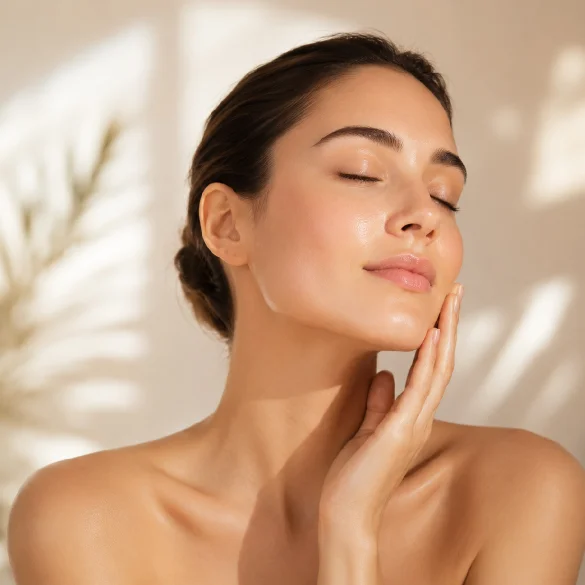
Skin revitalization is a comprehensive process of restoring a healthy appearance, proper functioning, and optimal conditions for regeneration to the skin. Its goal is not only to improve aesthetics, but above all to rebuild skin quality by increasing its hydration, improving microcirculation, stimulating cell activity, and rebuilding the extracellular matrix.
Contemporary aesthetic medicine is increasingly moving away from the concept of masking signs of aging in favor of biological tissue regeneration. Revitalization forms the foundation of modern anti-aging therapies because it improves skin condition at the cellular level, increasing its capacity for natural renewal.
The revitalization process can include both preventive treatments in young people and advanced regenerative therapies in patients with visible signs of aging, sun damage, or deterioration of skin quality after past illnesses or intense stress.
Skin revitalization - what is it
Skin revitalization means restoring its proper biological functions and improving the quality of all skin layers, rather than just superficial smoothing of the epidermis.
Skin subjected to the revitalization process regains its ability to effectively regenerate thanks to the stimulation of natural repair mechanisms.
During the therapy, the following occur, among others:
- an increase in the activity of fibroblasts responsible for the production of collagen, elastin, and hyaluronic acid,
- improvement of microcirculation and better tissue nourishment,
- an increase in skin hydration,
- reconstruction of the hydrolipid barrier,
- reduction of chronic micro-inflammation associated with aging (inflammaging),
- improvement in the organization of collagen fibers,
- reduction of oxidative stress,
- improvement of cellular metabolism.
In practice, this means that the skin becomes firmer, more elastic, radiant, and copes better with daily damaging factors.
Revitalization is not a single treatment. It is a group of therapies whose common goal is to improve the biological quality of the skin.
Skin revitalization - how it differs from rejuvenation
Although the concepts of revitalization and rejuvenation are often used interchangeably, in aesthetic medicine they mean two different processes.
Revitalization focuses on improving skin condition and restoring its proper functioning.
Its goal is:
- improving skin quality,
- increasing hydration levels,
- stimulating natural regeneration,
- rebuilding the extracellular matrix,
- improving cellular metabolism.
Rejuvenation, on the other hand, includes actions aimed at reducing the visible signs of aging.
It most commonly involves:
- reducing wrinkles,
- improving the facial oval,
- increasing skin tension,
- replenishing lost volume,
- tissue lifting.
In practice, most modern therapies combine both goals. Skin that has been effectively revitalized responds much better to rejuvenating treatments, and the achieved effects last longer and look more natural.
Therefore, revitalization is often the first stage of comprehensive anti-aging programs.
Skin revitalization - who is it indicated for
Revitalization is used both in the prevention of aging and the treatment of deteriorating skin quality.
It is most commonly recommended for people observing:
- loss of skin radiance and freshness,
- sallow, tired skin tone,
- skin dehydration,
- loss of elasticity,
- first wrinkles,
- skin laxity,
- deterioration of skin structure,
- enlarged pores,
- uneven surface,
- post-inflammatory and sun discoloration,
- effects of chronic stress,
- signs of photoaging,
- deterioration of skin quality after pregnancy,
- regeneration after intensive weight loss,
- weakening of the skin after exposure to UV radiation.
Revitalization is also recommended for people:
- before important events requiring improvement of skin quality,
- after laser treatments,
- after medical peels,
- after dermatological treatment,
- as an element of anti-aging prevention already after the age of 25–30.
The age of the patient is not the main qualification criterion. The biological condition of the skin and the degree of its damage are of much greater importance.
Skin revitalization - mesotherapy, plasma and biostimulators - overview of methods
Modern revitalization includes many methods differing in their mechanism of action, intensity, and indications. The selection of therapy should be based on skin diagnostics and the expected effect.
Needle mesotherapy
Mesotherapy involves administering preparations containing active substances into the dermis.
Most commonly, these are:
- non-cross-linked hyaluronic acid,
- amino acids,
- biomimetic peptides,
- vitamins,
- antioxidants,
- nucleotides,
- microelements.
The main effect of mesotherapy is the improvement of hydration, cellular metabolism, and skin nourishment. The therapy works particularly well in the prevention of aging and the treatment of dehydration.
Platelet-rich plasma
Platelet-rich plasma uses natural growth factors contained in the patient's blood.
After administration into the skin, it leads to:
- activation of repair processes,
- stimulation of fibroblasts,
- increase in collagen synthesis,
- improvement of angiogenesis,
- acceleration of healing.
The method is used especially in individuals who prefer autologous therapies and in skin regeneration after medical procedures.
Platelet-rich fibrin
Fibrin is a development of plasma therapy.
Thanks to the presence of a three-dimensional fibrin network, growth factors are released gradually over many days, which ensures longer stimulation of regenerative processes.
Fibrin works particularly well in patients with thin, lax and aging skin.
Tissue biostimulators
Biostimulators are currently among the most advanced methods of skin revitalization.
Their task is not to fill tissues, but to stimulate the body to produce its own supporting structures.
The most commonly used include preparations containing:
- polynucleotides (PN),
- calcium hydroxyapatite,
- polylactic acid (PLLA),
- poly-D,L-lactic acid (PDLLA),
- hybrid hyaluronic acid complexes,
- amino acids and regenerative complexes.
The effects develop gradually over the following weeks and include improving skin quality, increasing its density, elasticity, and resistance to aging processes.
Combination therapies
The best results are very often achieved by combining various revitalization methods.
Sample therapeutic programs include:
- mesotherapy and biostimulators,
- platelet-rich plasma with microneedling,
- biostimulators with fractional lasers,
- microneedle radiofrequency and regenerative preparations,
- laser therapy with autologous therapies.
Such an approach enables the simultaneous stimulation of many regenerative mechanisms, making the effects more comprehensive, natural, and long-lasting.
The effectiveness of revitalization is determined not only by the choice of a specific preparation, but above all by proper patient qualification, an individual treatment plan, and the appropriate combination of regenerative methods with daily skincare and effective sun protection. It is this approach that allows to achieve a lasting improvement in skin quality, and not just a short-term aesthetic effect.

