Sunken cheeks
back to main page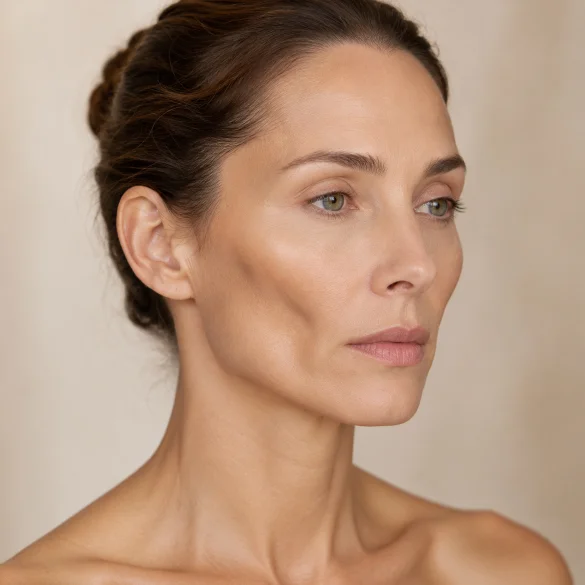
Sunken cheeks is a term for the loss of volume in the middle part of the face, leading to a deepening of the area under the zygomatic bones and a more "skeletal" appearance of the face. This phenomenon can be natural, related to anatomical structure, or develop with age, weight loss, or atrophy of adipose tissue. Sunken cheeks affect facial proportions, often giving it an expression of fatigue, severity, or premature aging. In aesthetic medicine, this problem is analyzed not only in terms of the skin, but also changes within the facial fat pads, mimic muscles, supporting ligaments, and bone structures. Assessment of the cause is crucial for the proper planning of therapeutic management.
Sunken cheeks - what they are
Sunken cheeks are the result of a reduction in the volume of soft tissues in the middle part of the face. They most commonly affect the cheek area located below the zygomatic bones, where fat pads responsible for a youthful and harmonious appearance of the face are physiologically located. Under normal conditions, facial adipose tissue performs a supportive, cushioning, and aesthetic function.
The process of cheek sinking can result from:
- atrophy of adipose tissue,
- displacement of fat pads,
- loss of collagen and elastin,
- age-related bone changes,
- significant reduction in body weight,
- genetic predispositions.
In facial anatomy, of particular importance are:
- deep cheek fat pad,
- superficial zygomatic adipose tissue,
- retaining ligaments,
- zygomatic bone and maxilla.
Sunken cheeks can occur unilaterally or bilaterally. In some people, they are a constitutional feature and are associated with a naturally thin face. In other cases, they are a symptom of progressive aging or wasting of the body.
Sunken cheeks - what they look like
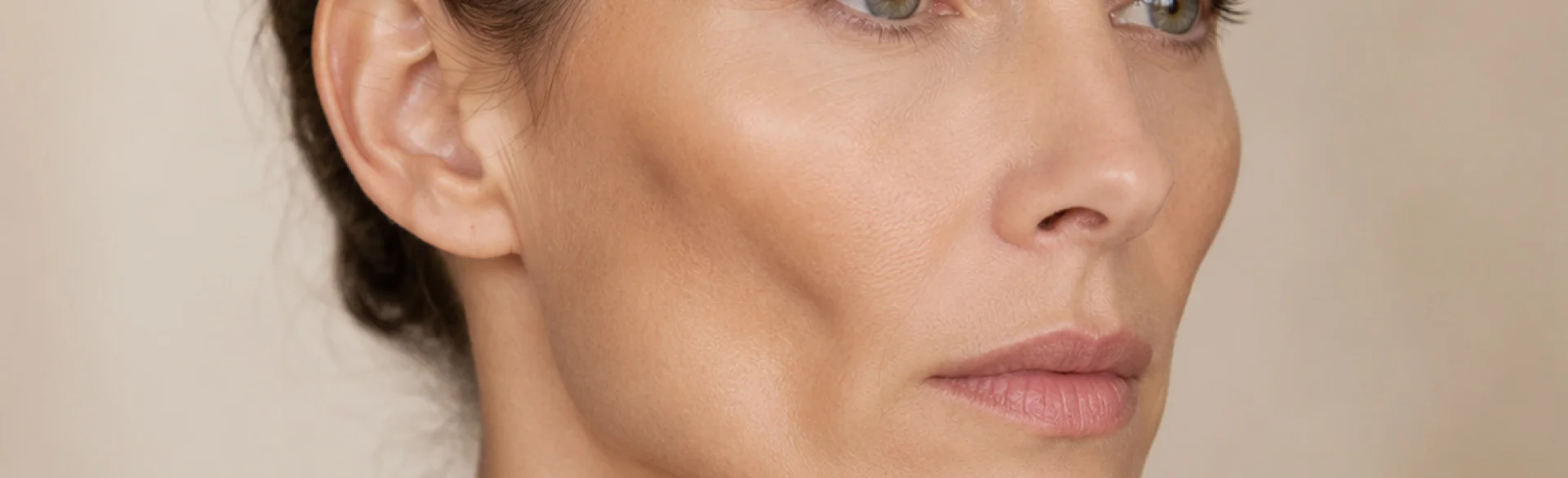
A characteristic symptom is a visible hollow below the cheekbones and the loss of a soft transition between the cheek and the tear trough or jawline. The face becomes less convex, more angular, and loses its youthful fullness.
The most common appearance features:
- more prominent cheekbones,
- deepened nasolabial folds,
- shadows in the middle part of the face,
- a slim or “sharp” appearance,
- visible hollows under the cheeks,
- increased visibility of bony structures,
- tired face effect.
In advanced cases, there is also:
- sagging of facial tissues,
- loss of the facial oval,
- appearance of so-called jowls,
- deepening of the tear trough,
- increased contrast between the cheeks and the jaw.
Sunken cheeks can give the impression of low body weight even in people with a normal BMI. For this reason, facial assessment requires an analysis of tissue quality, proportions, and fat distribution, rather than body weight alone.
Sunken cheeks - causes of formation
The development of sunken cheeks is multifactorial. The greatest role is played by the atrophy of subcutaneous fat and the aging process of the supporting structures of the face.
With age, the following are observed:
- decreased fibroblast activity,
- degradation of collagen fibers,
- loss of elastin,
- weakening of the supporting ligaments,
- redistribution of facial fat,
- craniofacial bone resorption.
This process leads to a reduction in the volume of the midface. Particularly significant is the atrophy of deep fat compartments, which are responsible for supporting the cheeks.
Other causes include:
- rapid weight loss,
- chronic stress,
- intense physical activity combined with low body fat,
- tobacco smoking,
- chronic wasting diseases,
- hormonal disorders,
- genetic predisposition.
Exposure to UV radiation is also of significant importance. Photoaging accelerates collagen degradation and leads to faster skin thinning and loss of facial volume.
In aesthetic medicine, the phenomenon of increased loss of facial volume after intensive weight-loss therapies using GLP-1 receptor agonists is also increasingly described, colloquially referred to as “Ozempic face”.
Sunken cheeks and weight loss - the connection
Facial fat tissue belongs to structures that are highly sensitive to the body's energy deficit. During weight loss, there is a reduction in the volume of adipocytes, i.e., fat cells, also within the cheeks.
The greatest risk occurs with:
- rapid weight loss,
- restrictive diets,
- low levels of body fat,
- prolonged caloric deficit,
- intense endurance training,
- pharmacological treatment of obesity.
The face often loses volume faster than other areas of the body. This is due to a small amount of fat tissue and high mimic activity. In some people, even moderate weight loss causes a significant change in facial features.
It is worth emphasizing that fat reduction does not occur evenly. The body does not allow for selective “slimming” of only selected body parts. For this reason, people striving for a very slim figure often observe:
- sunken cheeks,
- deepening of the tear trough,
- loss of skin firmness,
- a more severe facial appearance.
In clinical practice, this is particularly common in people with a naturally fine facial structure or a small amount of fat tissue before starting weight loss.
Sunken cheeks - risk factors
The risk of sunken cheeks increases with age, however, the problem can also affect young people. Both genetic predisposition and lifestyle are important.
The most important risk factors include:
- slender facial structure,
- low body fat content,
- rapid weight loss,
- frequent body weight fluctuations,
- smoking cigarettes,
- chronic oxidative stress,
- protein and nutrient deficiencies,
- excessive exposure to UV radiation,
- intense aerobic exercise,
- chronic systemic diseases.
Hormonal factors are also important. The decline in estrogen after menopause affects the deterioration of skin quality, a decrease in collagen synthesis, and faster loss of facial volume.
In aesthetic medicine, various methods are used to improve the volume and quality of facial tissues. Depending on the cause of the problem, the following are used, among others:
- tissue biostimulators,
- hyaluronic acid,
- autologous fat transfer,
- collagen-stimulating treatments,
- radiofrequency technologies,
- HIFU ultrasound,
- regenerative treatments improving skin density.
The goal of the therapy is not only to increase cheek volume, but above all to restore natural facial proportions and improve tissue quality.

