Acidic skin pH - why the skin "stings" after cosmetics and how to restore pH?
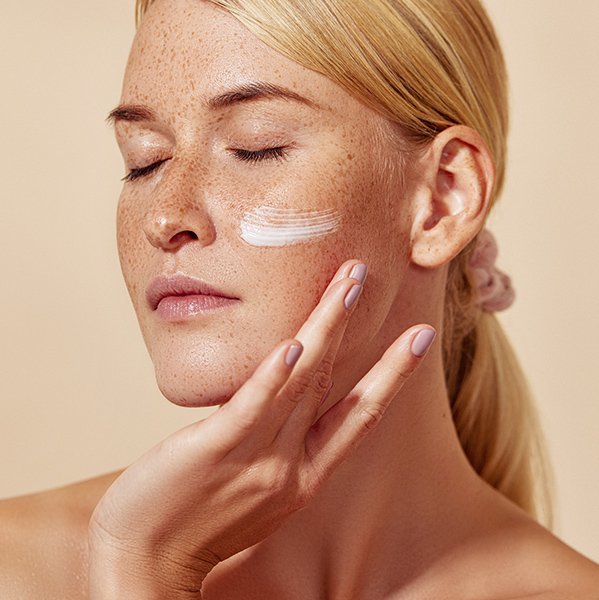
Burning, pH and the epidermal barrier – a quick overview:
- Acid mantle – a mixture of sebum and free fatty acids that keeps the skin's pH on the acidic side.
- Burning after a cosmetic product – a sign that the barrier no longer retains water and lets irritating substances inside.
- Stinging after acids – passes after a moment; burning that intensifies and persists for the following days indicates irritation.
- Bar soap and hard water – the most common household causes of elevated pH and a weakened lipid layer.
- Selecting the method based on skin tolerance – for skin that burns, we use solutions that avoid disrupting the integrity of the epidermis: delivering ingredients via iontophoresis and sonophoresis, and for intolerance to classic acids, peels using nanotechnology.
- Restoration – toning, humectants, and lipids in a fixed order; acids, retinoids, and alcohol return once symptoms subside.
Table of Contents
- Why does the skin have a naturally acidic pH?
- Why does the skin burn after cosmetics?
- Stinging after acids vs. irritation - how to tell them apart
- Soap, hard water, and cosmetics – what disrupts skin pH
- Gentle cleansing gels and emulsions instead of classic soap
- How to restore the skin's acidic pH after irritation?
- When to stop using a cosmetic, and when to see a dermatologist?
- Frequently Asked Questions about acidic skin pH
Why does the skin have a naturally acidic pH?
The skin maintains an acidic pH because its protective mechanisms function effectively in such an environment. Healthy skin falls within the range of 4.5-5.5 pH. It is created by the acid mantle – a mixture of sebum and free fatty acids covering the stratum corneum with a thin, slightly sticky film.
The acidic pH affects several skin functions at once:
- Inhibition of microorganisms – low pH makes it difficult for pathogenic bacteria and fungi to multiply.
- Microbiome balance – beneficial strains tolerate the acidic environment well and displace undesirable ones.
- Ceramide synthesis – enzymes that produce lipids work only within a narrow pH range.
- Epidermal tightness – a cohesive lipid layer reduces water loss through the stratum corneum.
- Resistance to stimuli – skin with the correct pH tolerates frost, wind, and detergents better.
The pH level changes with age, differs between women and men, and also depends on the area of the body – hands have a different pH than the thin skin of the face. The closer the skin stays to its natural range, the longer it retains its elasticity and the less severely it reacts to external factors.
Why does the skin burn after cosmetics?
The skin burns after cosmetics when the protective barrier has lost its integrity and stopped acting as an insulator. A damaged stratum corneum lets water escape outward, so the skin quickly dehydrates and loses elasticity. The path is just as open in the other direction: preservatives, fragrances, and emulsifiers penetrate deeper instead of staying on the surface.
They then reach nerve endings and trigger a reaction perceived as burning or stinging. The surface pH also changes. At a higher pH, the microbiome loses balance, and persistent inflammation sustains hypersensitivity. Skin in such a state reacts to almost every ingredient, including a cream that previously worked flawlessly for it. Tolerance can be regained, although it requires a few weeks of gentle skincare.
Stinging after acids vs. irritation - how to tell them apart
A mild tingling sensation right after applying an acid product can be a normal reaction to the penetration of active ingredients. The intensity of the sensation depends on the type of acid. AHAs work on the surface of the epidermis, BHAs penetrate the openings of the sebaceous glands, and PHAs have the largest molecules and are the least irritating. The diagnosis is determined by the duration of the symptom and its extent, which is why the skin's reaction is interpreted from several signals at once.
The comparison below outlines both scenarios:
| Normal reaction | A sign that it is already irritation |
| Tingling appears upon application and subsides after a while | Burning intensifies and does not subside even after washing off the product |
| Redness is transient and subsides the same day | Redness persists over subsequent days and covers a larger area |
| The skin reacts exclusively to the acid product | The skin also reacts to water, moisturizer, and touch |
| The epidermis exfoliates gently and evenly | Sheets/flakes of skin, rough patches, and skin cracking appear |
| Sebum secretion returns to the normal level without changing the skincare routine | Sebum suddenly increases, or tightness and tenderness to the touch persist |
Soap, hard water, and cosmetics – what disrupts skin pH
Daily washing has the greatest impact on skin pH, as it is repeated twice a day for years. Traditional bar soaps have a strongly alkaline pH and raise the epidermal pH for several hours before the acid mantle manages to restore itself.
Several daily habits contribute to disrupting the pH balance:
- High-pH soaps – leave the skin alkaline long after rinsing.
- SLS and SLES detergents – remove impurities along with the lipids that protect against moisture loss.
- Hard water – calcium and magnesium salts settle on the skin and intensify the feeling of tightness.
- Hot water – dissolves sebum faster than the skin can rebuild it.
- Alcohol and strong fragrance compositions – add an irritating stimulus to an already weakened barrier.
This is felt most quickly by people with acne, couperose skin, or seborrheic dermatitis – in their case, washing the face with soap just once can cause burning and halt regeneration for several days.
Gentle cleansing gels and emulsions instead of classic soap
A gel or emulsion with a pH close to physiological removes impurities and leaves lipids in place. Two-step cleansing works best: an oil or milk dissolves sebum, sunscreen, and makeup, so there is no need to rub the face, and the gel finishes cleansing and rinses away the rest. An SLS-free syndet maintains the skin's pH close to pH 5.5 and gives it time to return to balance between consecutive washes.
When the skin stings despite gentle washing, further action is determined by its tolerance. In the clinic, we then reach for methods that introduce ingredients without breaking the continuity of the epidermis – iontophoresis transports active substances deep into the skin via electric field forces, and sonophoresis uses ultrasound for this purpose. A separate path is nanotechnology peels, in which active substances are encapsulated in liposomes, which are lipid vesicles that transport them to the deeper layers of the skin.
How to restore the skin's acidic pH after irritation?
The skin's acidic pH is restored from toning right after washing the face all the way to the lipid layer, which retains water in the epidermis. The order matters here: humectants bind water, and emollients reduce its evaporation, so humectants alone on overly dry skin can intensify the feeling of tightness.
In post-irritation care, the following work best:
- Hyaluronic acid – retains water molecules in the stratum corneum and smooths the surface of the skin.
- Panthenol – soothes redness and accelerates the healing of micro-damage.
- Squalane – replenishes the lipid layer and reduces water loss.
- Ceramides – rebuild the intercellular cement between corneocytes, the cells of the stratum corneum.
- Niacinamide – supports barrier restoration and calms inflammation.
- Thermal water – soothes the epidermis and brings relief during the phase of highest hypersensitivity.
When to stop using a cosmetic, and when to see a dermatologist?
A cosmetic should be discontinued the moment intense burning or itching appears, and a visit to a dermatologist should be planned when symptoms persist despite a simplified skincare routine. The first step is to wash off the product and return to a simple routine: gentle cleansing, moisturizer, sunscreen. Retinoids, acids, and alcohol-based cosmetics return after the symptoms subside. If redness, itching, and cracking skin persist for following days, a medical diagnosis is needed – it could be rosacea or eczema.
The longer the skin functions with a compromised barrier, the harder it is to calm it down – hypersensitivity becomes established, and the choice of care methods becomes increasingly narrow. Start with the simplest: cut down to three cosmetics and give your skin two weeks of rest. If the burning sensation persists despite this – we invite you for a free consultation at Ambasada Urody!
Frequently Asked Questions about acidic skin pH
What contraindications rule out a chemical peel?
A chemical peel is not performed on couperose skin and rosacea, during the use of retinoids, antibiotics, and photosensitizing medications, as well as immediately after laser therapy, microdermabrasion, fillers, or Botox. Eligibility is determined by a cosmetologist after assessing the skin condition.
How to protect the skin after an acid peel?
After an acid peel, SPF 50 sunscreen is applied daily for at least 4 weeks, and for the first few days, cosmetics containing alcohol, retinoids, AHA and BHA acids, and vitamin C are discontinued.
How to wash your face after an acid peel?
To wash the face after an acid peel, mild, fragrance-free products are used, without mechanical scrubs and rough towels – the epidermis needs gentle treatment then.
How many treatments does a series include for skin intolerant to classic acids?
Usually, a series of 6-10 treatments is recommended, performed at intervals tailored to the skin's reaction. There is no single universal method here – the choice is determined by diagnostics and the skillful combination of techniques.

