Eczema on the hands
back to main page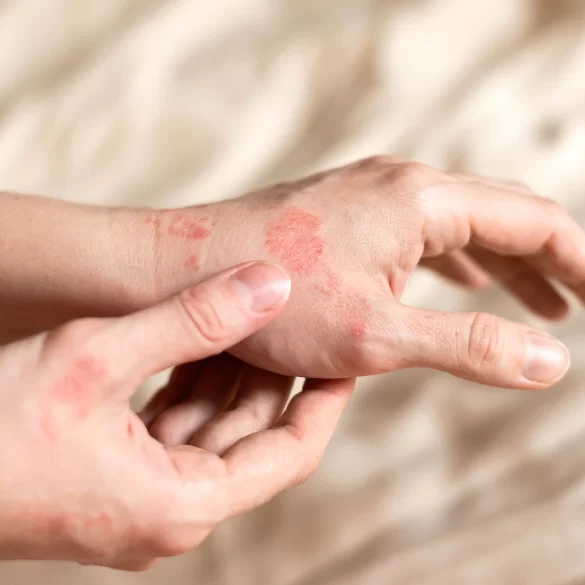
Hand eczema (hand dermatitis) is a chronic or recurrent inflammatory skin disease that leads to damage of the epidermal barrier and immunological hyperreactivity. The changes are most often located on the backs of the hands, fingers, and in the interdigital spaces, significantly affecting the quality of life and the ability to perform manual work. The disease has a multifactorial etiology – including genetic predispositions, environmental factors, and contact with irritating or allergenic substances. The course can be variable: from acute exacerbations with exudation to chronic forms with pronounced keratinization and skin cracking. Effective management requires identification of the type of eczema, elimination of causative factors, and causal-symptomatic treatment.
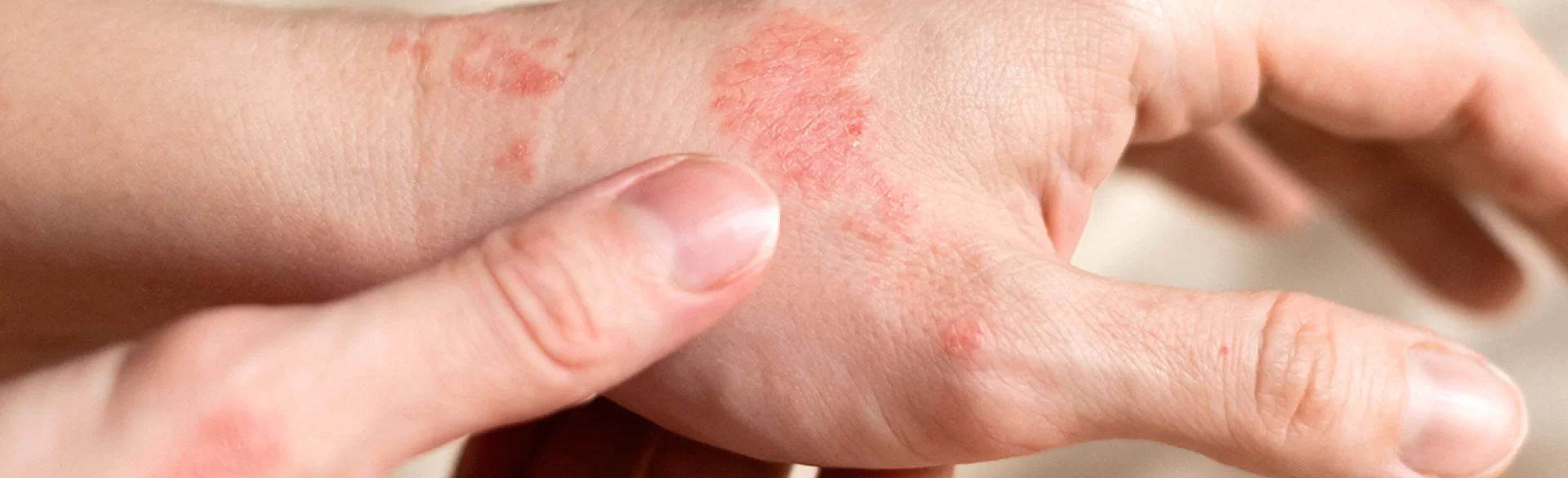
Eczema on the hands – what it looks like
The clinical picture of hand eczema is varied and depends on the phase of the disease and its type. Acute, subacute, and chronic forms are distinguished.
Most common symptoms:
- Erythema (redness of the skin),
- Itching of varying intensity (often the dominant symptom),
- Serous vesicles (particularly in dyshidrotic eczema),
- Erosions and exudation in the acute phase,
- Scaling, thickening, and cracking of the skin in the chronic course,
- Painful fissures, predisposing to superinfections.
Location of lesions:
- Dorsal sides of the hands,
- Fingertips,
- Interdigital spaces,
- Nail areas (often with secondary changes to the nail plate).
In chronic forms, lichenification (thickening of the skin with an enhanced skin pattern) occurs, which is a consequence of prolonged inflammation and scratching.
Eczema on hands – causes
Hand eczema is not a homogeneous disease entity. Its development results from the interaction of endogenous and exogenous factors, leading to dysfunction of the epidermal barrier and activation of the inflammatory response.
Main causes and risk factors:
- Contact with irritants (detergents, disinfectants, solvents, cement),
- Contact allergens (nickel, chromium, cobalt, fragrances, preservatives),
- Atopy (individual or familial predisposition to atopic dermatitis),
- Frequent hand washing and "wet work",
- Occupational factors (healthcare, cosmetology, hairdressing, construction),
- Disruption of the skin's hydrolipid barrier,
- Stress and neuroimmunological factors (exacerbating factor).
It includes:
- Irritant contact dermatitis,
- Allergic contact dermatitis,
- Atopic hand eczema,
- Dyshidrotic eczema (dyshidrosis).
Precisely determining the cause is crucial for effective treatment.
Eczema on hands – how to treat
The treatment of hand eczema is a multi-step process that requires an individualized approach and often long-term maintenance therapy. The goal is to reduce inflammation, rebuild the epidermal barrier, and prevent relapses.
Basic elements of management:
1. Elimination of causative factors
- avoiding allergens and irritants,
- using protective gloves (while adhering to proper usage guidelines),
- modifying work conditions.
2. Topical treatment
- topical glucocorticosteroids (short cycles, tailored to the location and severity of changes),
- calcineurin inhibitors
- preparations with anti-inflammatory and regenerative effects.
3. Intensive emollient care
- regular use of preparations that restore the lipid barrier,
- avoiding soaps and traditional cleansing agents,
- choosing dermocosmetics with confirmed tolerance.
4. General treatment (in severe cases)
- antihistamines (for symptomatic relief),
- phototherapy,
- immunomodulatory treatment – strictly under medical supervision.
The effectiveness of therapy depends on consistency, appropriate selection of preparations, and patient education.
Treatment of eczema on hands
Therapeutic management should be individualized and based on clinical diagnosis and, if necessary, patch test results.
Stages of treatment:
- Acute phase
- rapid suppression of inflammation,
- limitation of exudation and itching,
- protection against bacterial superinfections,
- Chronic phase
- reduction of hyperkeratosis and cracks,
- improvement of skin elasticity,
- long-term reconstruction of the epidermal barrier,
- Prevention of recurrences
- consistent emollient care,
- avoidance of occupational and domestic exposure,
- periodic dermatological check-ups.
In clinical practice, the combination of pharmacological treatment with proper skin care and lifestyle modification is crucial. Omitting any of these elements significantly reduces the effectiveness of the therapy and promotes recurrences of the disease.
Hand eczema, although not a life-threatening disease, is a significant medical and functional problem that requires thorough diagnostics and consistent, evidence-based treatment.

