Enlarged pores on the face
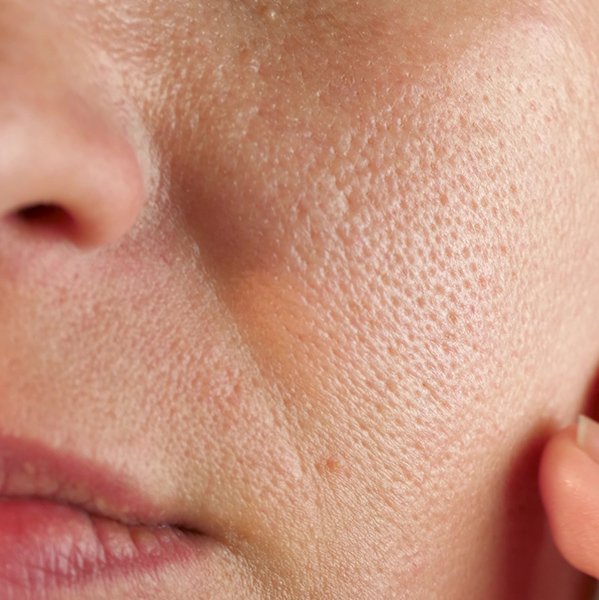
What determines pore size:
- T-zone – sebaceous glands are the largest there, so their openings are wider.
- Temperature – neither hot steam nor cold water changes the pore diameter.
- Shape – round pores respond to sebum regulation, elongated ones to collagen rebuilding.
- Retinoids – the first line of home care, with results after about three months.
- SPF filter – protects the fibers that keep pore walls taut.
- Order – first normalization of gland activity, then remodeling of the skin structure.
Table of Contents
- Why are enlarged pores most visible on the nose and cheeks?
- Sebum, genes, and the sun: what really enlarges pores
- Can pores open and close?
- Enlarged pores change shape after the age of 30
- Which active ingredients actually minimize pores?
- Treatments for enlarged pores: from microdermabrasion to microneedle mesotherapy
- When does home care stop being enough?
- Frequently asked questions about enlarged pores
Why are enlarged pores most visible on the nose and cheeks?
Enlarged pores are most visible on the nose and cheeks because in the T-zone, sebaceous glands are the largest and most densely distributed, and their openings are simply wider. A pore is the opening of a hair follicle with an adjacent sebaceous gland, so its diameter goes hand in hand with the size of this gland. At the same time, the skin of the nose and the inner part of the cheeks is thicker and reflects light more strongly, which highlights every unevenness.
Hence the impression that the problem only affects the center of the face, even though pores cover its entire surface. On the temples and along the jawline, the openings are usually smaller, which is why they are less noticeable.
Sebum, genes, and the sun: what really enlarges pores
Pore size is influenced by several factors with varying degrees of impact:
- Genes and sex – androgens stimulate the sebaceous glands, which is why men more often have visible pores.
- Amount of sebum – the more sebum, the more the follicle opening is stretched from the inside.
- Age – the decline in collagen and elastin levels deprives the pore walls of tension.
- UV radiation – photoaging breaks down supporting fibers faster than the passage of time alone.
- Hormonal balance – in women, sebum secretion increases around ovulation.
Genetics sets the starting point, while sebum and the sun determine how much pores will enlarge over subsequent decades. This part of the equation can be controlled, and all skincare is based on it.
Can pores open and close?
Pores do not have the ability to open and close, because the opening of the hair follicle has no muscle that controls its diameter. Steam softens hardened sebum and facilitates its removal, cold temporarily constricts vessels and reduces swelling. Both effects are real, they just last for a dozen or so minutes.
A lasting change only comes with consistent reduction of seborrhea and thickening of the dermis, and that is a process measured in months.
Enlarged pores change shape after the age of 30
In young people and in oily skin, pores remain round and are often filled with blackheads. When the collagen network around the opening weakens, they take on a teardrop or Y-shape and align in the direction of tissue sagging. This distinction directly translates into therapy: round pores respond to sebum regulation, while elongated ones require stimulation of collagen rebuilding.
The starting point is an assessment of the skin condition during a consultation, because in the mirror it is easy to confuse one type of opening with the other. This diagnosis determines whether the skin first needs cleansing and seborrhea regulation, or rather treatments that densify its structure.
Which active ingredients actually minimize pores?
Four groups of ingredients tighten pores, and a fifth skincare element stops the process that enlarges them:
- Retinoids – normalize the keratinization of the follicular opening and stimulate fibroblasts, acting on both mechanisms at once.
- Salicylic acid – as a lipophilic compound, it penetrates sebum and cleanses the opening from the inside, which is why it works well for blackheads.
- Niacinamide – reduces sebum secretion and strengthens the epidermal barrier.
- AHA acids – smooth the surface of the epidermis and improve light reflection.
- SPF – protects the collagen fibers that keep pore walls taut.
A skincare routine is built around a retinoid, and the remaining ingredients are selected according to skin tolerance. You need to allow about three months for the first results.
Treatments for enlarged pores: from microdermabrasion to microneedle mesotherapy
We always start with normalization, which means cleansing the pores and regulating the activity of sebaceous glands, and only then do we move on to treatments that rebuild the skin structure, such as microneedle radiofrequency, which densifies it. Therapy started with strong treatments, without prior skin preparation, yields short-lived results or none at all.
Enlarged pore therapy is divided into four stages:
- Cleansing the pore openings – manual cleansing and cavitation peeling unblock pores and regulate the activity of sebaceous glands.
- Exfoliation of the epidermis – microdermabrasion and carbon peeling remove the calloused layer of the epidermis, while acid peels additionally dissolve the sebum lingering in the pores.
- Structural remodeling – microneedle mesotherapy, microneedle radiofrequency, and fractional lasers trigger collagen synthesis, helping the pore walls regain their tension. After microneedle mesotherapy, changes appear gradually, usually after a series of 3-6 treatments.
- Maintaining the effect – the most stable results are provided by combination therapy performed in a series, with skin response monitored after each stage.
When does home care stop being enough?
Home skincare is no longer enough when, after a quarter of consistent use of a retinoid and sunscreen, the skin texture does not change at all. The dominant cause is then the loss of collagen support, and cosmetics reverse this stage only to a minor extent. The situation is similar when pores are accompanied by post-acne scars, stubborn blackheads, or uneven skin tone – in such cases, daily care maintains the achieved effect, and professional treatments take over rebuilding the structure.
Book a free consultation at Ambasada Urody – we will check whether your pores are round or elongated, and at which stage to start the therapy!
Frequently asked questions about enlarged pores
Does squeezing blackheads enlarge pores?
Squeezing blackheads on your own stretches the follicle opening and damages its walls, while also spreading bacteria to neighboring pores. It is safer to dissolve the pore contents with salicylic acid or entrust the cleansing to a cosmetologist.
How often should you cleanse skin with enlarged pores?
Squeezing blackheads on your own stretches the follicle opening and damages its walls, while also spreading bacteria to neighboring pores. It is safer to dissolve the pore's contents with salicylic acid or entrust the cleansing to a cosmetologist.
Does foundation worsen the problem of enlarged pores?
Foundation does not change the diameter of pore openings, but thick and oily formulas settle in the pores and emphasize their outline. Lighter textures and thorough makeup removal in the evening reduce this effect.
Does diet affect pore size?
High-glycemic index products are sometimes linked to increased seborrhea, so diet can indirectly affect the visibility of pores. However, a change in diet alone will not rebuild collagen around the pore opening.

