Enlarged pores on the nose
back to main page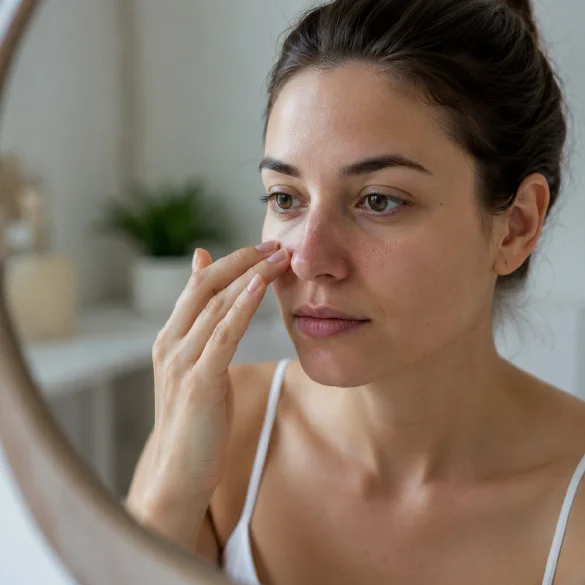
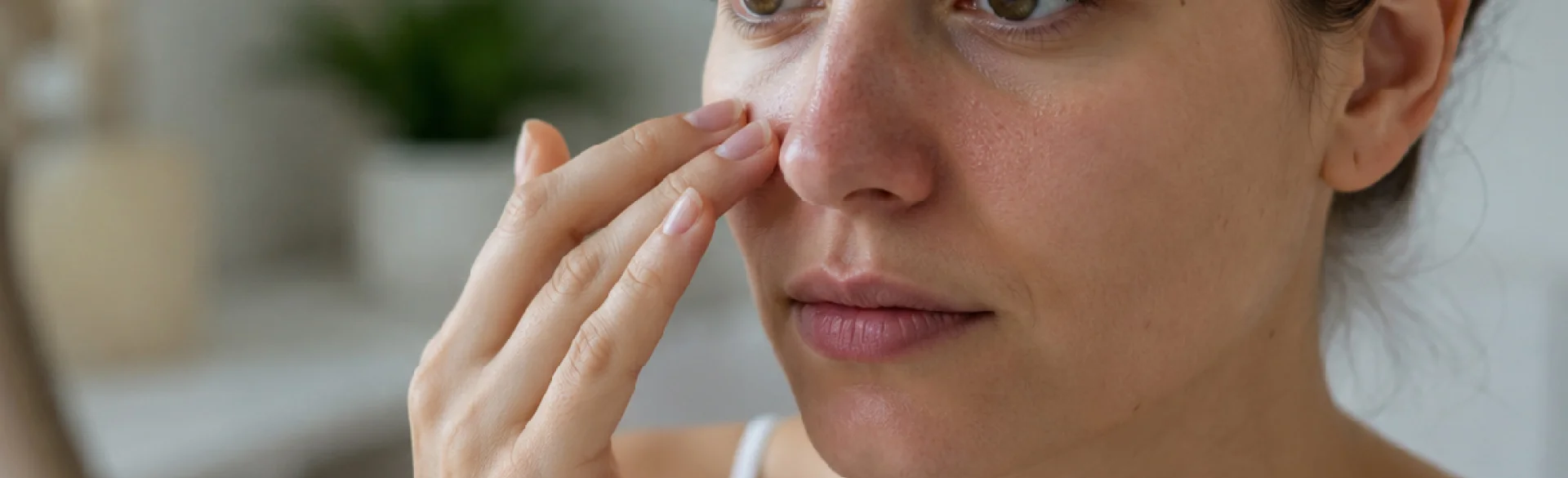
Enlarged pores on the nose are a common aesthetic problem related to skin structure and high activity of sebaceous glands in the central part of the face. Pores are natural openings of hair follicles and sebaceous glands, therefore they cannot be completely removed. Their visibility depends on many factors, including sebum production, skin thickness, genetic factors, age, and the degree of damage to collagen and elastin fibers. The T-zone, encompassing the forehead, nose, and chin, is most prone to their enlargement. Modern dermatology emphasizes that proper care and treatments stimulating skin remodeling can significantly reduce the visibility of pores, although they do not lead to their permanent closure.
Enlarged pores on the nose - how they differ from blackheads
Enlarged pores and blackheads (open comedones) are often confused with each other because both problems occur primarily on the nose and affect the openings of hair follicles. However, they are not the same phenomenon.
Enlarged pores are widened openings of sebaceous glands that can be visible even when they do not contain any content. The skin appears uneven, and the surface of the nose resembles a structure of tiny indentations.
A blackhead, on the other hand, is a dermatological lesion resulting from the accumulation of:
- sebum,
- dead skin cells,
- keratin,
- microorganisms.
The characteristic dark color of a blackhead does not result from the presence of dirt, but from the oxidation of melanin and lipids located on the surface of the keratin plug.
On the nose, sebaceous filaments are also frequently observed. These are natural structures filling the sebaceous ducts that help transport sebum to the skin's surface. Unlike comedones, they occur in almost everyone, have a grayish or yellowish color, and reappear very quickly after removal.
Identifying the type of lesions has practical significance because:
Enlarged pores | |
|---|---|
are a feature of the skin's structure | are an acne lesion |
can be empty | contain a keratosebaceous plug |
do not require mechanical cleansing | may require acne treatment |
improvement relies on skin remodeling | treatment involves unclogging follicle openings |
Enlarged pores on the nose - why the nose has larger pores than the rest of the face
The nose belongs to the areas with the highest number and activity of sebaceous glands. Sebum production here is significantly higher than on the cheeks or temples, which is why the hair follicle openings are physiologically larger.
Factors responsible for pore enlargement include:
- genetic predisposition,
- seborrhea,
- acne vulgaris,
- chronic skin inflammation,
- aging and loss of collagen fibers,
- chronic exposure to UV radiation,
- improper care and frequent skin irritation.
Excessive sebum production causes constant widening of the excretory ducts of the sebaceous glands. In turn, with age, there is a decrease in the amount of collagen and elastin in the dermis. Tissues lose their ability to support the walls of the hair follicle openings, making the pores even more visible.
Photoaging is also an important factor. Ultraviolet radiation damages the supporting fibers of the skin, leading to a loss of its firmness and an increase in pore diameter.
Contrary to popular opinions, enlarged pores are not caused by:
- frequent face washing,
- using makeup,
- the temperature of consumed food,
- drinking hot beverages.
These factors may temporarily affect skin blood circulation, but they do not change the permanent size of the sebaceous gland openings.
Enlarged pores on the nose - can they be permanently shrunk
From a medical point of view, there is no method that allows for the permanent closure or removal of pores, as they constitute a physiological element of skin structure. However, it is possible to reduce their visibility in the long term by reducing sebum secretion and improving skin structure.
The best results are achieved through simultaneous action on several mechanisms:
- normalization of epidermal keratinization,
- reduction of sebaceous gland activity,
- stimulation of collagen synthesis,
- improvement of skin tension,
- reduction of chronic inflammation.
In daily care, substances with proven effectiveness are of particular importance:
- retinoids,
- salicylic acid,
- niacinamide,
- azelaic acid,
- AHA and PHA acids used in accordance with recommendations.
It is worth emphasizing that the improvement effect is maintained only with systematic care and periodic dermatological treatments. Discontinuation of therapy usually leads to a gradual return of the skin's previous appearance, especially in people with severe seborrhea.
One should also not succumb to popular myths according to which cold water, ice cubes, or cosmetics with a “pore-closing” effect change their diameter. They may cause short-term constriction of blood vessels and improve the appearance of the skin, but they do not affect the structure of hair follicle openings.
Enlarged pores on the nose - tightening treatments
Modern aesthetic medicine offers numerous methods to improve skin structure and reduce the visibility of enlarged pores. The choice of therapy depends on the patient's age, the degree of seborrhea, the presence of acne, and skin quality.
The most commonly used are:
- chemical peels, especially with the use of salicylic, mandelic, pyruvic, or retinoic acid, which regulate keratinization and cleanse the openings of sebaceous glands;
- fractional ablative and non-ablative laser, stimulating collagen remodeling and improving skin firmness;
- microneedle radiofrequency, combining microneedling with radiofrequency energy, leading to the thickening of the dermis and reducing the visibility of pores;
- microneedling, stimulating natural regenerative processes and collagen synthesis;
- IPL treatments, which improve skin quality in patients with coexisting erythema and photoaging;
- medical cleansing and hydrodermabrasion, removing excess sebum and impurities, making the pores less visible;
- retinoid therapies conducted by a dermatologist, especially in people with severe seborrhea and acne.
The greatest effectiveness is achieved by combination therapy, including appropriate home care and a series of skin remodeling treatments. Thanks to this approach, it is possible to achieve long-term improvement in skin texture, reduction of sebum secretion, and a clear reduction in the visibility of enlarged pores.

