Electrical muscle stimulation
back to main page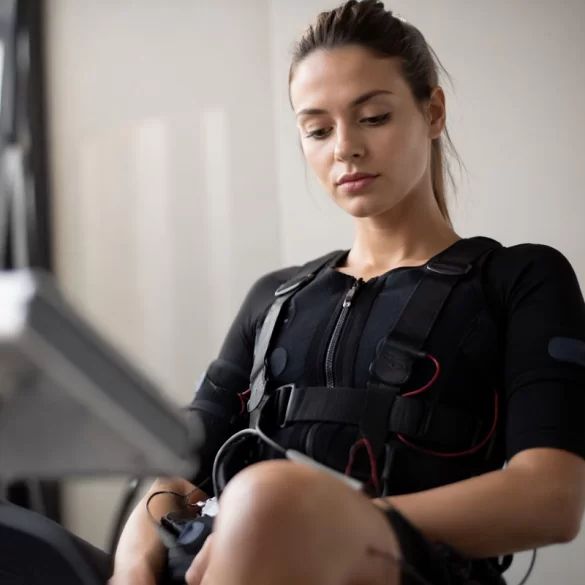
Muscle electrostimulation is a therapeutic and physiotherapeutic method involving the induction of controlled muscle contractions using electrical pulses with specific parameters. This technique is used in rehabilitative medicine, sports, as well as in aesthetic medicine. Through appropriately selected electrical stimuli, it is possible to stimulate muscle fibers, improve their function, increase strength, and support regenerative processes. Electrostimulation can be used as a supplement to physical activity or as a therapeutic method in cases of mobility limitations, muscle atrophy, or neuromuscular conduction disorders.
Muscle electrostimulation – what it is
Electrical Muscle Stimulation (EMS) is based on the use of electrical impulses that imitate natural signals sent by the nervous system to the muscles. Under physiological conditions, muscle contraction is the result of a nerve impulse being conducted from a motor neuron to muscle fibers. In electrical stimulation, this process is artificially induced by an electric current delivered via electrodes placed on the skin.
Impulse parameters - such as frequency, amplitude, duration, and waveform - determine the biological effect. Depending on their settings, various results can be achieved, including:
- muscle contraction (tonic or phasic),
- stimulation of blood and lymph circulation,
- reduction of muscle tension,
- analgesic (pain-relieving) effect.
Electrical stimulation directly affects type I (slow-twitch) and type II (fast-twitch) muscle fibers, allowing for their selective activation. In a clinical context, it is particularly important to use this method in preventing muscle wasting (atrophy), improving tissue trophism, and supporting muscle re-education after injuries or surgeries.
Muscle electrostimulation – types
In medical and aesthetic practice, several basic types of electrostimulation are distinguished, differing in their mechanism of action and therapeutic indications.
1. Neuromuscular Electrical Stimulation (NMES)
The most commonly used form, the aim of which is to induce muscle contraction by stimulating motor nerves. Used in post-traumatic and neurological rehabilitation, as well as in muscle training.
2. Functional Electrical Stimulation (FES)
An advanced form of NMES used mainly in patients with nervous system damage (e.g., after a stroke or spinal cord injury). The impulses are synchronized with functional movement, such as walking.
3. TENS Electrostimulation (Transcutaneous Electrical Nerve Stimulation)
A method of transcutaneous nerve stimulation used mainly in pain management. It works by modulating pain conduction at the spinal cord level (gate control theory of pain).
4. EMS Electrostimulation for aesthetic and training purposes
Used in body contouring and improving muscle tone. In this case, electrical impulses cause intense muscle contractions that can exceed the intensity of contractions achieved during traditional training.
5. Microcurrents (MENS - Microcurrent Electrical Neuromuscular Stimulation)
They use very low current intensities, similar to the body's natural bioelectrical potentials. They act mainly at the cellular level, supporting regeneration, repair processes, and improvement of cellular metabolism.
This classification has practical significance, as the choice of the type of electrostimulation should be strictly matched to clinical indications and the goal of therapy.
Muscle electrostimulation – treatments
Muscle electrostimulation treatments are widely used in both physiotherapy and aesthetic medicine. Their effectiveness depends on proper patient qualification, selection of parameters, and the regularity of therapy.
Treatment procedure
The procedure consists of placing electrodes on the skin surface in locations corresponding to the muscle paths. The device then generates electrical impulses that trigger rhythmic muscle contractions. The intensity of the stimuli is individually adjusted - it should be perceptible, but not painful.
The duration of a single treatment is usually between 20 and 45 minutes, and the full therapy includes a series of treatments performed several times a week.
Indications for electrostimulation treatments:
- muscle weakness and atrophy (e.g., after immobilization),
- rehabilitation after orthopedic injuries and surgeries,
- chronic pain syndromes,
- muscle tone disorders,
- improvement of muscle performance,
- body contouring and tissue firming.
Biological and clinical effects:
- increased muscle strength and endurance,
- improvement of blood supply and tissue nutrition,
- acceleration of regeneration,
- reduction of edema,
- improvement of skin tension by affecting muscle structures.
In the context of aesthetic medicine, electrostimulation serves as a supplement to therapies that improve tissue quality. It is often combined with other technologies, such as:
- radiofrequency (e.g., treatments improving skin tension),
- high-intensity electromagnetic waves stimulating muscles,
- mesotherapy supporting tissue regeneration,
- body contouring treatments.
However, it should be emphasized that electrostimulation does not replace physical activity, but is a supplement or alternative in situations where movement is limited.
Contraindications for treatments:
- presence of a pacemaker,
- heart disease and rhythm disorders,
- pregnancy,
- skin inflammation at the application site,
- cancers (depending on the location and stage),
- venous thrombosis.
The choice of therapy should always be preceded by a specialist consultation, as incorrect application of electrostimulation can lead to irritation, muscle overload, or treatment ineffectiveness.

