Hair loss after summer - is it actually the effect of the sun and do you need to worry about it
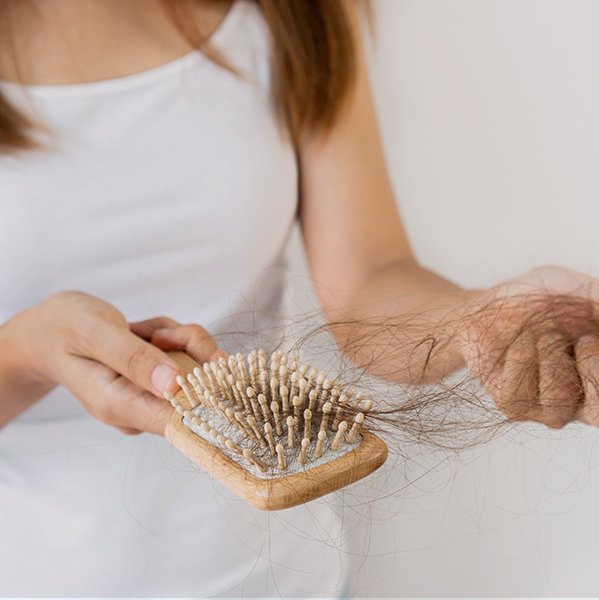
Autumn hair loss - key signs:
- Around a hundred hairs a day is normal - seasonal shedding after summer usually goes away on its own.
- The hair life cycle determines this - in autumn, more strands enter the resting phase (telogen) at once.
- Worrying signs - hair loss lasting over three months, thinning patches, or a sudden loss of density are a reason to visit a trichologist.
- Home care helps - cleansing, peeling, and scalp massage support the condition of the roots.
- Treatments are support, not a miracle - they do not reverse androgenetic alopecia, which is treated by a doctor.
Table of Contents
- Is autumn hair loss normal?
- How does the sun weaken the hair structure?
- How does the hair life cycle drive seasonal shedding?
- When to see a trichologist?
- Which tests will indicate the cause of hair loss?
- Home scalp care step by step
- Trichological treatments supporting regeneration
- Most frequently asked questions about hair loss
Is autumn hair loss normal?
Increased hair shedding after the holidays is most often a natural stage of their cycle, not a symptom of a disease. Increased hair loss occurs after summer because a portion of the hair bulbs enter the resting phase all at once, and new hair needs a few weeks before replacing them.
Several factors influence the severity of seasonal hair loss:
- Hair life cycle - after summer, more follicles enter the resting phase at once,
- Less sun stimulation - as the days get shorter, the hair bulbs are less stimulated,
- Chronic stress - is sometimes linked to the shortening of the hair growth phase,
- Hormonal shifts - e.g., after pregnancy or during menopause, the condition of the hair bulbs changes,
- Individual sensitivity - some people react to the change of season more strongly.
Usually, the problem resolves on its own. If the increased hair loss lasts longer than three months, it is a good idea to consult a trichologist.
How does the sun weaken the hair structure?
In summer, hair is mainly damaged by UV radiation, which causes oxidative stress and destroys keratin - the basic building block of hair. When this protein degrades, the cuticles open up, and the strands become dull, rough, and brittle.
Hair is best protected with simple habits: cosmetics with UV filters and heat protection products, and in full sun with a head covering, which also protects the skin from overheating. Caring for the protective barrier, weakened by salt and chlorine, also helps.
How does the hair life cycle drive seasonal shedding?
More hair stays on the brush in autumn because that is how their natural life cycle works. In summer, the bulbs are more stimulated, and with colder days their activity drops and some of the hair enters the resting phase all at once.
Seasonal change drives several overlapping mechanisms:
- Natural hair cycle - growth, transition, and resting phases,
- Lower bulb stimulation - the sun stimulates them less than in summer,
- Telogen effluvium - more hair enters the telogen phase at once,
- Delayed body response - shedding is visible a few weeks after summer,
- Temporary nature - the process is reversible, and density returns.
Therefore, autumn hair weakening usually does not require treatment - once the bulbs return to the growth phase, the hair recovers on its own.
When to see a trichologist?
A signal for a consultation is increased hair loss persisting for longer than three months, as well as noticeable thinning or a sudden loss of density.
A trichologist will examine the scalp and help distinguish seasonal shedding from more permanent conditions, such as androgenetic alopecia, and if necessary, refer for tests or to an endocrinologist to rule out a hormonal cause.
The treatment itself depends on the cause and remains the doctor's decision - pharmacotherapy (for example, minoxidil or finasteride) or a transplant is considered only after diagnostics, apart from in-clinic care.
Which tests will indicate the cause of hair loss?
The basis for an accurate diagnosis is trichoscopy - an evaluation of the scalp and hair bulbs under high magnification - and blood tests ordered by a specialist. They show whether deficiencies or hormonal disorders are behind the hair loss.
In the diagnosis of excessive hair loss, a specialist most often checks several blood parameters: TSH for the thyroid, cortisol as a trace of chronic stress, ferritin indicating iron reserves, as well as zinc and vitamin D3, the deficiency of which weakens the hair bulbs. The interpretation of the results is conducted by a trichologist or a doctor, not a beauty salon.
Home scalp care step by step
Healthy hair starts with a well-cared-for scalp. The foundation is regular cleansing, which removes excess sebum, and once a week it is good to reach for a trichological peeling - it stimulates microcirculation and unblocks hair follicle openings.
Home care is supported by several proven habits:
- Herbal scalp lotions - with fenugreek or black radish,
- Scalp massage - stimulates circulation and oxygenation of the hair bulbs,
- Hair oiling tailored to porosity - smooths and protects the strands,
- Humectants - retain moisture inside the hair,
- Gentle, regular washing - keeps the scalp in balance.
Home remedies support hair condition, but in the case of long-term hair loss, they will not replace identifying the cause.
Trichological treatments supporting regeneration
When home care is no longer enough, in-clinic treatments support the condition of the scalp - they improve blood circulation and follicle nourishment, and the effects appear gradually, depending on the cause of hair loss. For the scalp at Ambasada Urody, treatments such as scalp mesotherapy, platelet-rich plasma, polynucleotides, scalp microneedling, or carboxytherapy are used, and their action is complemented by LED therapy.
They are sometimes supplemented by preparations containing biostimulators and ingredients that stimulate the hair bulbs, for example, caffeine or plant extracts. However, none of these treatments reverse androgenetic alopecia - in this case, treatment conducted by a doctor is necessary, and the best results are brought by a combination of care, a diet rich in omega-3 fatty acids, and a therapy tailored after determining the cause.
Don't panic at the sight of hair on your brush in September - observe how long the hair loss lasts, support your scalp with home care, and when thinning areas don't disappear after a few months, book a consultation with a trichologist and act on the cause, not just the symptom!
Most frequently asked questions about hair loss
Will hair grow back on its own after seasonal hair loss?
Seasonal hair loss is temporary, so after the seasonal shift ends, hair usually grows back without treatment – new strands appear within a few weeks to a few months. If the density does not return, the cause may be different than the season itself.
Does frequent hair washing increase hair loss?
Washing itself does not cause hair loss – the hair that remains on your hands or in the drain was already in the resting phase and would have fallen out anyway. Less frequent washing will not stop anything, and sometimes it worsens the condition of the scalp.
How to distinguish seasonal hair loss from androgenetic alopecia?
Seasonal hair loss is evenly distributed, lasts a few weeks, and goes away on its own. Androgenetic alopecia progresses gradually, thins hair in typical areas – in women on the top of the head, in men at the temples and crown – and does not reverse on its own.
Does stress worsen autumn hair loss?
Chronic stress shortens the hair growth phase and can intensify seasonal shedding. Taking care of sleep, rest, and a calmer daily routine supports the hair roots, although if hair loss persists for longer than a few weeks, it is best to check the cause with a trichologist.

