Trichologist
back to main page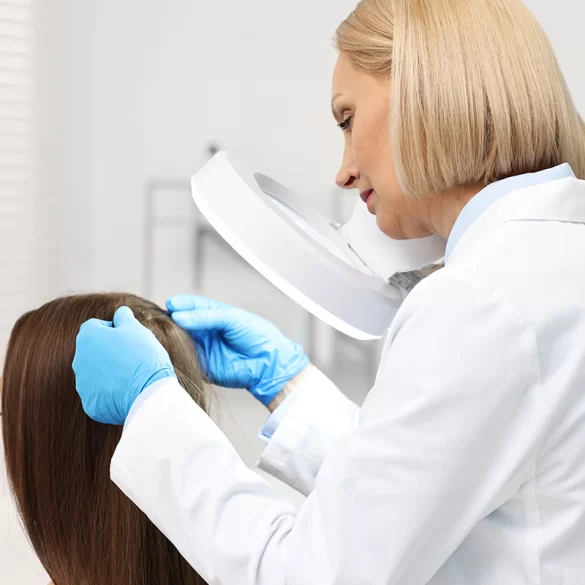

A trichologist is a specialist focused on the diagnosis, prevention, and treatment of hair and scalp diseases. This field lies at the intersection of dermatology, cosmetology, and skin biology, concentrating on hair growth disorders, alopecia, and abnormalities in hair follicle function. Trichology is not a separate medical specialty, yet it is based on well-established knowledge in skin physiology, endocrinology, immunology, and dietetics. A trichologist analyzes both local and systemic factors affecting hair condition, including hormonal imbalances, autoimmune diseases, nutritional deficiencies, or chronic stress. Modern trichology employs advanced diagnostic tools, such as trichoscopy or hair shaft analysis, aiming not only to halt the symptoms but also to identify and correct the root cause of the problem.
Trichologist – Who Are They
A trichologist is a specialist with specialized education (usually in cosmetology, biology, or medicine) as well as additional, advanced training in clinical trichology. Their competencies include assessing the condition of the scalp, hair follicles, and hair from both a structural and functional perspective.
Characteristics of a trichologist's work:
- Holistic approach to the patient, taking into account overall health status,
- Analysis of lifestyle, diet, hormonal and environmental burdens,
- Interpretation of laboratory test results in the context of hair problems,
- Close collaboration with doctors (dermatologist, endocrinologist, gynecologist, internist).
It should be clearly emphasized that:
- A trichologist does not diagnose systemic diseases,
- Does not replace a dermatologist,
- Acts as a primary contact specialist for hair and scalp issues, referring the patient for further diagnostics if necessary.
Trichologist – What They Do
The scope of a trichologist's work is broad and involves both diagnostics and conducting supportive therapies for scalp disorders and hair growth issues.
The main areas of a trichologist's work include:
Trichological Diagnostics
- trichoscopy (examination of the scalp and hair follicles under magnification),
- assessment of the hair growth cycle (anagen, catagen, telogen),
- analysis of hair density, diameter, and structure,
- evaluation of the scalp's epidermal barrier condition.
Therapy for Scalp Problems
- normalization of sebaceous gland activity,
- reduction of inflammation and irritation,
- support for treating dandruff, seborrhea, and scalp hypersensitivity.
Support for Treating Hair Loss
- androgenic alopecia,
- telogen effluvium,
- alopecia areata (supportively, in cooperation with a doctor),
- hair thinning with metabolic or stress-related causes.
Prevention and Patient Education
- care recommendations tailored to the scalp type,
- correction of care mistakes,
- dietary advice in the context of hair health,
- support during special periods (pregnancy, postpartum, menopause).
A trichologist does not work symptomatically – their goal is the stabilization of the scalp environment, which is a prerequisite for proper hair growth.
Trichologist – What Tests Do They Order
If there is a suspicion that the hair problem has a systemic origin, a trichologist refers the patient for laboratory tests to identify the cause of the disorders. These tests are not performed independently by the trichologist but are commissioned to diagnostic laboratories or conducted during medical consultations.
The most commonly recommended tests include:
Blood tests
- complete blood count with differential,
- ferritin and iron,
- vitamin B12 and folic acid,
- vitamin D (25-OH),
- zinc, selenium, magnesium.
Hormonal tests
- TSH, FT3, FT4 (thyroid function assessment),
- prolactin,
- total and free testosterone,
- DHEA-S,
- SHBG,
- estradiol and progesterone (in women – depending on the phase of the cycle).
Additional tests (in selected cases)
- glucose and insulin (assessment of insulin resistance),
- CRP and ESR (inflammatory markers),
- tests for autoimmune diseases,
- microbiological analysis of the scalp.
The interpretation of results is always performed in the context of clinical symptoms, and in the case of abnormalities, the patient is referred to the appropriate medical specialist.
Trichologist – Most Commonly Treated Conditions
A trichologist deals with a wide spectrum of disorders concerning the scalp and hair, with therapy often being long-term and phased.
The most common problems include:
Scalp disorders
- dry and oily seborrhea,
- dry and oily dandruff,
- scalp sensitivity,
- itching and burning of the scalp,
- chronic inflammatory conditions of the hair follicles.
Hair growth disorders
- excessive hair loss,
- weakening and miniaturization of hair follicles,
- slowed hair growth,
- deterioration of hair shaft quality (brittleness, fragility).
Types of alopecia
- androgenic alopecia,
- telogen effluvium (acute and chronic),
- postpartum alopecia,
- alopecia related to deficiencies and stress,
- alopecia accompanying systemic diseases.
Secondary problems
- hair loss after infections and surgeries,
- hair loss after prolonged stress,
- trichological disorders during menopause and andropause.
It is worth emphasizing that the effectiveness of trichological therapy depends on:
- accurate diagnosis of the cause,
- patient cooperation,
- duration of the problem,
- simultaneous treatment of coexisting diseases.
Trichology does not offer "immediate" solutions, but rather is based on the process of restoring the biological balance of the scalp, which translates into long-term improvement in hair condition.
