Pimples and breakouts after a seaside vacation - why does the skin rebel after summer?
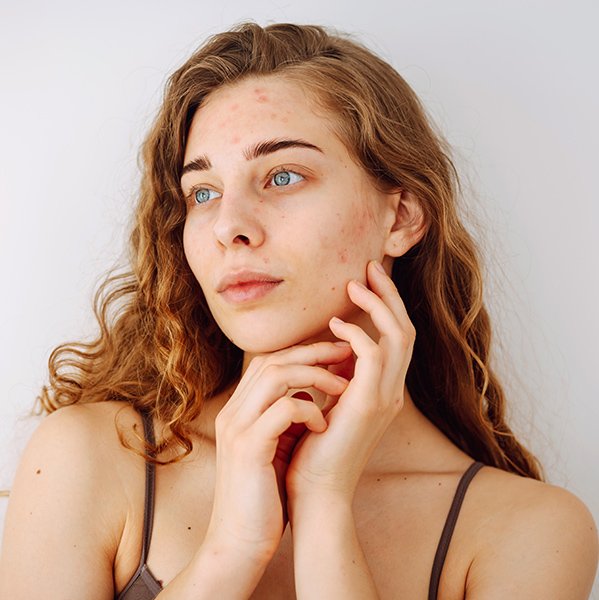
In brief about breakouts after a vacation by the sea:
- UV radiation - damages the epidermal protective barrier and triggers sebum overproduction.
- Thickened epidermis - clogs the openings of the sebaceous glands and traps sebum under a layer of dead cells.
- Mallorca acne - a phototoxic reaction to emulsifiers and fragrances from cosmetics.
- Salt, chlorine, and sweat - wash away lipids and ceramides and disrupt the microbiome balance.
- Repair plan - cleansing, exfoliation, and hydration, and in the case of persistent lesions, a visit to a specialist.
Table of contents
- Why do pimples appear after a vacation by the sea?
- Thickened epidermis and clogged pores after sunbathing
- What is Mallorca acne?
- How do salt water and sweat weaken the skin barrier?
- How to regenerate skin after vacation?
- Ingredients that will calm breakouts and discoloration after summer
- When do post-vacation pimples require a visit to a specialist?
- Frequently asked questions about pimples after vacation
Why do pimples appear after a vacation by the sea?
Breakouts after a seaside holiday appear because intense UV radiation damages the natural protective barrier of the epidermis, and the skin responds with a rapid overproduction of sebum. The sun provides only an illusory improvement - the epidermis then loses its seal, and the sebaceous glands work in overdrive. The skin crisis usually appears about two weeks after the end of the holiday.
Breakouts after returning from vacation are the result of several overlapping causes:
- UV radiation - disrupts the epidermis and weakens its protective function.
- Sebum overproduction - the skin's defensive reaction to surface dryness.
- Sugar from ice cream and drinks - the holiday menu fuels inflammation.
- Blocked sebaceous gland openings - sebum has no way to escape to the surface.
- Lack of regular exfoliation - impurities accumulate under the keratinized layer.
Thickened epidermis and clogged pores after sunbathing
During sun exposure, the skin triggers a defense mechanism in the form of hyperkeratosis. The thickened stratum corneum is intended to act as a protective barrier, but it backfires on the patency of the sebaceous glands: the openings narrow, and sebum becomes trapped under a layer of dead cells.
The oxygen-deprived environment becomes an ideal breeding ground for Cutibacterium acnes bacteria. Their proliferation triggers inflammation, and blackheads and painful papules appear on the surface. This explains why the face after returning from vacation can be both rough and congested, even though it looked good throughout the entire trip.
What is Mallorca acne?
Mallorca acne is a phototoxic reaction that occurs as a result of UV rays coming into contact with specific cosmetic ingredients. It is most commonly triggered by emulsifiers and fragrances present in sun care products and body care cosmetics.
The clinical picture is characteristic enough to distinguish this condition from other skin lesions:
Feature of Mallorca acne | How to distinguish it from regular breakouts and heat rash |
Small, itchy papules | Regular breakouts rarely itch, and heat rash takes the form of clear blisters. |
Absence of open and closed comedones | In acne vulgaris, comedones are a key feature and are visible to the naked eye. |
Lesions on the arms/shoulders, back, and décolletage | Breakouts caused by clogged pores more often affect the facial T-zone. |
The reaction appears suddenly after sun exposure | Inflammatory lesions from clogged pores develop gradually over several days. |
Improvement after changing sun protection products | Heat rash resolves after cooling the skin, regardless of changes in cosmetics. |
Prevention relies on making conscious cosmetic choices. In the summer, lightweight SPF filters with a non-comedogenic formula work best.
How do salt water and sweat weaken the skin barrier?
Salt and chlorinated water weaken the skin barrier, washing out lipids and ceramides—the cement that holds water in the epidermis. When the natural protective barrier loses its seal, the epidermis becomes dry and prone to damage. An additional challenge is lingering sweat, which disrupts the microbiome balance and promotes the proliferation of bacteria.
Weakened skin regenerates more slowly, so an individual breakout takes longer to heal than usual and more frequently leaves a mark. The symptoms form a recurring set: roughness, a feeling of tightness, a burning sensation after applying cosmetics, and a tendency to develop new blemishes.
How to regenerate skin after vacation?
Skin after vacation is regenerated in a set order: first thorough cleansing, then exfoliation, and finally restoring hydration. The process requires patience, as the hydrolipid barrier rebuilds gradually.
The order of skincare steps after returning from vacation is as follows:
- Two-step makeup removal - micellar water dissolves SPF filters and makeup, then the face is washed with a gentle gel.
- Toning - a toner balances the natural pH and prepares the skin for subsequent products.
- Exfoliation - an enzymatic peel or a gentle acid formula unclogs pores and smooths the texture of the epidermis.
- Hydration - a lightweight serum combined with a soothing emulsion rebuilds the barrier, and thermal water soothes redness.
Cleansing masks with clay or activated charcoal and ultrasonic cavitation are useful for visibly congested skin. However, they are introduced only after the redness from the sun has subsided.
Ingredients that will calm breakouts and discoloration after summer
After the summer months, the skin needs both exfoliation and regeneration at the same time, which is why ingredients are chosen in pairs: one works on keeping pores clear, the other on the barrier and hyperpigmentation.
The main ingredients that target post-summer breakouts and hyperpigmentation are:
- Salicylic acid (BHA) - unclogs pores and soothes inflammation.
- AHA acids - lactic and mandelic remove dead skin cells and smooth the skin's surface.
- Azelaic acid - has anti-inflammatory properties and supports acne-prone skin.
- Retinoids, vitamin C, and ferulic acid - reduce hyperpigmentation left after the summer.
- Niacinamide and zinc - regulate the activity of sebaceous glands.
- Hyaluronic acid and ceramides - hydrate and rebuild the protective barrier.
Sensitive skin will be soothed by gentle PHA acids, aloe vera, panthenol, and green tea.
When do post-vacation pimples require a visit to a specialist?
Post-vacation breakouts require a visit to a specialist when home care brings no improvement after two weeks, and the lesions are painful, deep, and spread to the décolletage and back. A lack of skin response to acid-based products, as well as lesions that leave indentations and discoloration, is also concerning. A dermatologist or cosmetologist begins by assessing the type of lesions.
After such an assessment, salicylic, azelaic, or pyruvic acid peels, as well as water cleansing, are used in the clinic. At Ambasada Urody, we tailor them to the current condition of the skin, and in the case of a fresh tan, we reschedule some of the appointments.
Tanning shortly before a laser treatment increases the risk of complications, and IPL photorejuvenation is not combined with sun exposure. We postpone LED therapy as long as sun erythema persists. Therefore, the first post-vacation visits focus on cleansing and soothing the complexion, while stronger technologies are introduced later.
We invite you for a free consultation - we will schedule the treatment dates according to the current condition of your skin!
Frequently asked questions about pimples after vacation
Can you pop pimples after vacation?
Post-vacation pimples should not be squeezed on your own, because inflammation spreads easily on a weakened epidermal barrier. Mechanical pressure deepens the lesion and increases the risk of scarring and post-inflammatory hyperpigmentation.
Can acids be used immediately after returning from the beach?
Acids are introduced to the skin gradually after returning from the beach, only once the redness and the sensation of heat have subsided. Freshly tanned skin reacts more strongly to exfoliation, and the risk of discoloration is higher then. It is safer to start with an enzymatic peel and low concentrations.
Do breakouts after summer appear only on the face?
Post-summer breakouts also affect the back, shoulders, and décolletage, which are the areas most exposed to the sun and sweat. The skin on the torso has a thicker epidermis and larger sebaceous glands, which is why blemishes there tend to be deeper and take longer to heal. It is worth extending skincare beyond the face.
What distinguishes post-vacation breakouts from hormonal acne?
Post-vacation breakouts have a clear temporal link with sun exposure and subside once the skin rebuilds its barrier. Hormonal breakouts return cyclically, most often around the jawline and chin, regardless of the season. This difference in the rhythm of the lesions' appearance is usually the first clue for a specialist.

