Urogynecological physiotherapy during pregnancy - what is safe and what to avoid
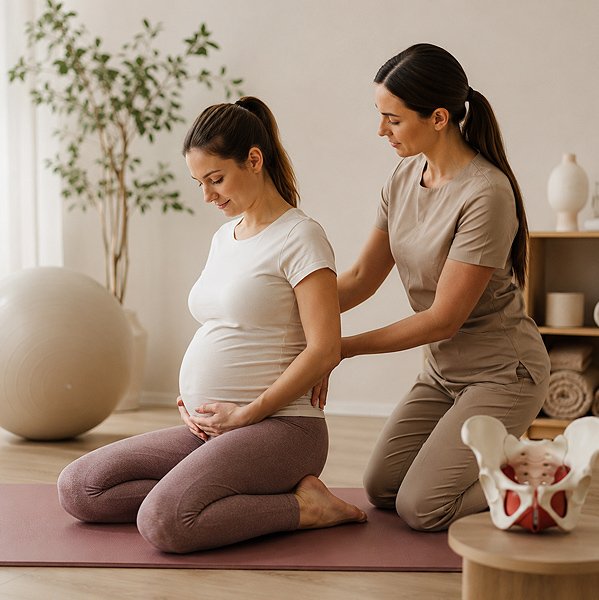
Key information in brief:
- Pelvic floor training has the strongest evidence in the prevention of urinary incontinence, rather than in the promise of an “easier childbirth”.
- Good therapy is not a single set of exercises for everyone, but an assessment of function and learning contraction and relaxation.
- Ambasada Urody provides urogynecological physiotherapy at the branches on Wilcza and in Wilanów, in coordination with the attending physician.
- Bleeding, leaking of amniotic fluid, or a decrease in the baby's movements is a signal to stop the activity and contact a doctor.
Table of Contents
- What is urogynecological physiotherapy during pregnancy?
- What pregnancy ailments does urogynecological physiotherapy treat?
- How does urogynecological physiotherapy prepare the body for childbirth?
- Safe urogynecological treatments and exercises during pregnancy
- Which physical treatments and activities to avoid during pregnancy?
- Medical contraindications to urogynecological physiotherapy during pregnancy
- Is a vaginal examination safe during pregnancy?
- FAQ: most frequently asked questions about urogynecological physiotherapy during pregnancy
What is urogynecological physiotherapy during pregnancy?
This is specialized care focused on the lesser pelvis area, which combines the assessment of pelvic floor function, learning conscious contraction and relaxation, working with breath, and education regarding daily loads. Intensive hormonal changes – especially the action of relaxin – make joints and ligaments more flexible, preparing the body for childbirth. Regular visits to the therapist teach how to respond to the body's needs.
Professional support includes the following elements:
- Body signals: learning to read signals coming from the body,
- Posture: ongoing body posture correction,
- Pelvic floor: regaining full control over the pelvic floor muscles,
- Education: education on lifting, coughing, and sneezing,
- Training: personalized medical training,
- Manual techniques: safe therapy methods.
Close cooperation between the physiotherapist and the gynecologist ensures safety. A good consultation checks whether the patient can activate the pelvic floor and relax it just as consciously.
What pregnancy ailments does urogynecological physiotherapy treat?
The best-documented effect concerns the prevention and alleviation of urinary incontinence, especially stress incontinence, in later pregnancy and after childbirth. The therapist focuses on restoring the proper functioning of the pelvic floor muscles and preventing organ prolapse, while simultaneously caring for the regeneration of the linea alba in rectus abdominis diastasis.
Support also covers a range of troublesome ailments:
- Back pain: severe back and pelvic pain,
- Sciatica: sciatica and pubic symphysis pain,
- Leg swelling: leg swelling and lymphatic congestion,
- Dysfunctions: such as endometriosis or vaginismus,
- Post-operative adhesions: requiring professional mobilization.
Thanks to a comprehensive approach, women regain a sense of confidence. This is long-term care for intimate health and getting back in shape after childbirth.
How does urogynecological physiotherapy prepare the body for childbirth?
Preparation for childbirth is based on learning conscious body relaxation and working with breath, and not on the promise of a faster or painless delivery. Mastering diaphragmatic breathing allows for better oxygenation of the baby and effective use of the abdominal press. Around the 34th week of pregnancy, unless the gynecologist recommends otherwise, it is worth taking care of making soft tissues more elastic.
Preparation under the guidance of a specialist begins with learning conscious relaxation of tension and training the correct breathing technique, which together give control over the work of the abdominal press. In the third trimester, this is accompanied by perineal massage protecting against incision and learning active vertical positions, which support childbirth. The whole is complemented by pelvic exercises facilitating its course. Learning vertical positions relieves pain and facilitates subsequent stages of labor. This is a real investment in comfort, although no exercise program replaces the obstetric decisions of the attending team.
Safe urogynecological treatments and exercises during pregnancy
Thanks to manual techniques and osteopathy, it is possible to relieve tension. However, the core remains education, breathing, and pelvic floor exercises, rather than home stimulating devices, whose safety during pregnancy has not been established.
The therapeutic program may include:
- osteopathy and gentle manual techniques,
- prenatal massages and lymphatic drainage,
- kinesiotaping supporting the spine,
- safe activity in the form of yoga or pilates,
- medical training of the pelvic floor with biofeedback.
Small everyday habits matter more here than it seems. Getting up correctly on your side protects the back, and conscious contraction of the pelvic floor before coughing or sneezing reduces strain. Care also continues during the postpartum period – that is when the mobilization of the cesarean section scar and tissue regeneration matter.
Which physical treatments and activities to avoid during pregnancy?
During pregnancy, most physical treatments based on heat, electric current, and magnetic fields are excluded because their safety for the child's development is not confirmed.
Methods that should be avoided include:
- Laser therapy: absolutely excluded during pregnancy,
- Ultrasound: therapeutic – safety not established,
- Magnetic field: without confirmed safety for the fetus,
- Cryotherapy and currents: excluded during the entire pregnancy,
- Sauna: and intensely warming treatments.
Exercise special caution with intense manual techniques, such as dry needling or pinotherapy – each time requires a doctor's confirmation. In your daily routine, avoid overexertion and “coning” of the abdomen, lifting heavy objects, and interrupting the flow of urine in the toilet. After about the 16th week, replace lying flat on your back with a side or supported position if it causes discomfort.
Medical contraindications to urogynecological physiotherapy during pregnancy
Although urogynecological rehabilitation provides great support, there are situations that require it to be postponed or discontinued.
The main health contraindications include:
- Severe anemia: requiring treatment first,
- Uncontrolled diabetes: unstable glycemia,
- Exacerbated hemorrhoids: active inflammation,
- Genital tract infections: active inflammation,
- Pelvic inflammation: acute organ inflammation.
The beginning of pregnancy requires special caution, which is why the first visit is usually planned for the second trimester, after consultation with the attending gynecologist.
Therapy should be discontinued immediately and a doctor contacted if the following occur:
- Bleeding: bleeding from the genital tract,
- Premature contractions: regular painful uterine contractions,
- Gestational hypertension: a rapid increase in blood pressure,
- Leaking of waters: passage of amniotic fluid,
- Alarming symptoms: sudden swelling of the face or hands, or reduced baby movements.
Such symptoms are a signal to stop activity and urgently contact a doctor. The per vaginam examination precisely assesses the pelvic floor muscles – always with the patient's consent. If you feel resistance to this diagnostic procedure, there are effective external techniques.
Is a vaginal examination safe during pregnancy?
A vaginal examination in a normally progressing pregnancy is safe and constitutes the foundation of pelvic floor assessment – provided that the gynecologist rules out contraindications.
During such an examination, a specialist assesses muscle strength and tension as well as the tissue response to loads, and then corrects exercise errors and prepares a work plan for delivery. Professional support primarily brings peace of mind and teaches mindful listening to the body's signals. A good consultation starts with a functional assessment, not with a list of exercises – it is this conversation that determines the plan.
Take care of your pelvic floor consciously, not by guesswork – book a consultation, undergo a functional assessment, and enter childbirth with a plan tailored to you, not to an online exercise list!
FAQ: most frequently asked questions about urogynecological physiotherapy during pregnancy
From which week of pregnancy can you start urogynaecological physiotherapy?
The first visit is most often planned in the second trimester, after consultation with a gynecologist. The date is determined individually – depending on the course of pregnancy and well-being.
Will pelvic floor exercises ensure I have no urinary incontinence?
Pelvic floor training clearly reduces the risk of urinary incontinence, especially stress incontinence, but does not “guarantee” it. The strongest data concern prevention, and the effect is assessed over weeks and months.
Can home pelvic floor stimulating devices be used during pregnancy?
Home electrostimulators and vaginal probes should not be a routine option during pregnancy, as their safety during this period has not been established. Education, breathing, and exercises under the supervision of a physiotherapist remain the foundation.
When should you immediately stop exercising?
Bleeding, leakage of amniotic fluid, regular painful contractions, shortness of breath, fainting, pain or swelling of the calf, or decreased movement of the baby are a signal to stop activity and urgently contact a doctor.

