Kinesiotaping
back to main page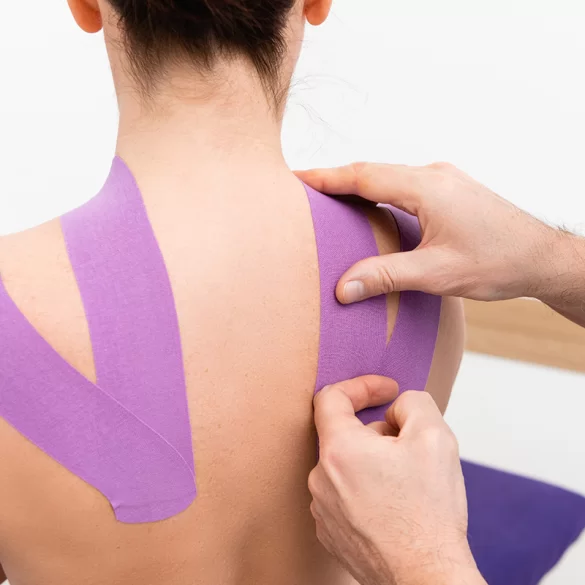
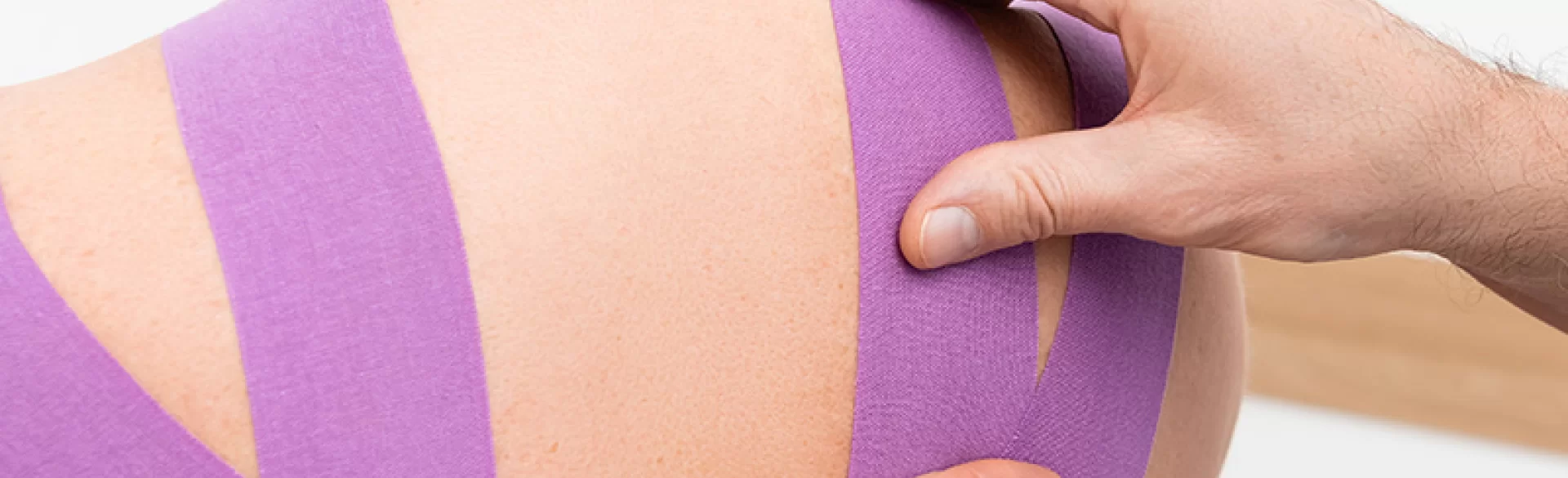
Kinesiotaping (kinesiotaping, dynamic taping) is a therapeutic method used in physiotherapy, involving the application of elastic tapes (the so-called tapes) to the skin in order to modulate the tension of soft tissues, improve muscle function and support regenerative processes. This technique was developed in the 1970s and is now widely used in rehabilitation medicine, orthopaedics, sports and urogynecological physiotherapy. Kinesiotaping does not restrict joint mobility, and its effect is based on biomechanical and neurophysiological interactions through the skin and the fascial system.
Kinesiotaping – what is it?
Kinesiotaping is a non-invasive therapeutic method using specialized, elastic tapes most often made of cotton, coated with a hypoallergenic acrylic adhesive activated by body heat. Their mechanical properties (stretch similar to human skin) allow working with tissues without restricting the range of motion.
In clinical practice, several basic tape application techniques are distinguished, depending on the therapeutic goal:
- muscle techniques - influencing muscle tone and function,
- fascial techniques - affecting tissue mobility,
- lymphatic techniques - supporting the drainage of swelling,
- stabilization techniques - improving joint control.
Kinesiotaping does not act by mechanical "stiffening" like classic sports taping, but rather as a method that modulates the function of the nervous and fascial systems. Because of this, it is used both in acute injuries and in chronic dysfunctions.
Kinesiotaping – how it works
The mechanism of action of kinesiotaping is multifactorial and includes both mechanical effects on tissues and influence on the nervous system and circulation.
The most important mechanisms include:
1. Efekt uniesienia skóry (lifting effect)
Applying the tape causes microscopic lifting of the epidermis and dermis, which leads to:
- reduced pressure on pain receptors,
- improved microcirculation,
- improved lymphatic flow.
2. Modulation of muscle tone
Depending on the direction and tension of the tape application, it is possible to:
- decrease excessive muscle tension (relaxing effect),
- stimulate weakened muscles (activating effect).
3. Effect on the proprioceptive system
The tapes act on skin mechanoreceptors, improving:
- deep sensation (proprioception),
- postural control,
- movement coordination.
4. Pain-relieving effect
Pain reduction results from:
- reduced pressure on nerve endings,
- activation of the pain-gate mechanism (Melzack-Wall theory),
- improved local blood flow.
5. Support of regenerative processes
By improving hemodynamic conditions, kinesiotaping promotes:
- resorption of edema,
- acceleration of tissue healing,
- reduction of inflammation.
It should be emphasized that the effectiveness of kinesiotaping depends on correct functional diagnosis and precise application technique.
Kinesiotaping – application in physiotherapy
Kinesiotaping is widely used in many fields of physiotherapy, both as a standalone method and as an element of comprehensive therapy.
The most common indications include:
1. Musculoskeletal system dysfunctions
- spinal pain (cervical, thoracic, lumbar),
- muscle overuse syndromes,
- sports injuries (strains, tears),
- joint instability.
2. Fascial disorders
- restrictions of tissue glide,
- chronic myofascial tensions,
- trigger points.
3. Edema and lymphatic disorders
- post-traumatic edema,
- postoperative edema,
- support for lymphatic therapy.
4. Support of rehabilitation after surgical procedures
- improvement of scar elasticity,
- reduction of tension around the operated area,
- reduction of pain and swelling.
5. Support of postural therapy
- correction of postural abnormalities,
- improvement of central (core) stabilization,
- re-education of movement patterns.
In clinical practice, kinesiotaping is often used as a complement to other therapeutic methods, such as:
- manual therapy,
- functional exercises,
- fascial physiotherapy,
- physical treatments (e.g. laser therapy, radiofrequency).
Kinesiotaping in urogynecological physiotherapy
In urogynecological physiotherapy, kinesiotaping plays an important supportive role in the treatment of pelvic floor dysfunctions and disorders related to pregnancy, the postpartum period, and menopause.
The main areas of application include:
1. Support of pelvic floor muscle function
- improvement of muscle awareness (cutaneous biofeedback),
- assistance in activating weakened muscles,
- reduction of excessive tension in cases of hypertonicity.
2. Therapy for diastasis recti (separation of the rectus abdominis muscle)
- support for approximation of the muscle edges,
- improvement of core stabilization,
- reduction of overloads in the linea alba.
3. Pelvic pain complaints
- pubic symphysis pain,
- sacroiliac pain,
- tension in the perineal area.
4. Support during pregnancy and the postpartum period
- relieving load on the abdominal structures and spine,
- reduction of lower limb edema,
- supporting tissue regeneration after childbirth.
5. Scar therapy (after cesarean section or episiotomy)
- improvement of tissue elasticity,
- reduction of adhesions,
- improvement of blood flow and nourishment of the skin.
6. Disorders of pelvic organ support
- supporting therapy for pelvic organ prolapse,
- improvement of intra-abdominal pressure control.
Kinesiotaping in this field is rarely used as a standalone therapy. The best results are achieved in combination with:
- urogynecological physiotherapy,
- pelvic floor muscle training,
- manual therapy,
- modern methods supporting tissue regeneration, such as gynecological laser therapy or microneedle radiofrequency.
In the context of clinical practice (e.g., in centers such as Ambasada Urody Clinic & SPA) kinesiotaping can be an adjunct element of comprehensive therapeutic programs, particularly in the treatment of functional disorders and in post-procedure convalescence.
